Five endangered African birds hatch at Chester Zoo

 Chester Zoo
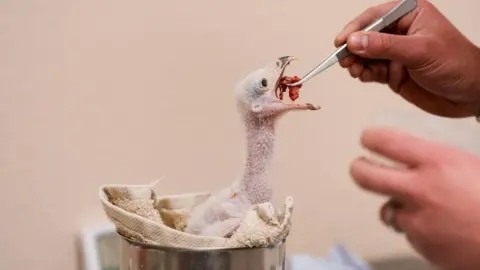
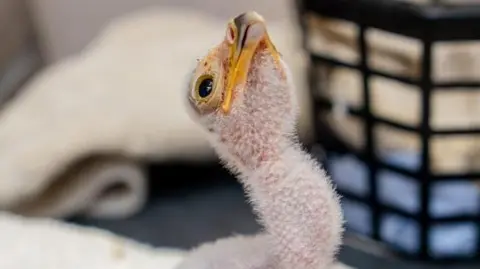
Five chicks from an endangered African bird of prey have hatched at Chester Zoo.
It is the first time the species, known as the secretarybird, has bred at the zoo in its 95-year history.
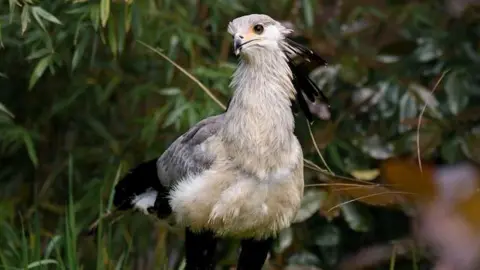
Secretarybirds are long-legged birds that live in African grasslands. Unlike eagles and hawks, they spend much of their time hunting on foot and can kill venomous snakes by stamping on them.
Chester Zoo said techniques developed by its keepers could help other European zoos breed more of the species.
 Chester Zoo
The zoo said 79 secretarybirds were part of a breeding programme involving zoos across Europe. Only three other chicks had hatched elsewhere in the programme during the previous 12 months, it added.
The chicks' parents, John and Jolene, arrived at Chester Zoo a few years ago. Keepers then spent years studying their courtship and the conditions they needed to breed.
Keepers raised the first chicks by hand and recorded how they developed before John and Jolene hatched and reared three more themselves, the zoo said.
 Chester Zoo
Bird keeper Jamie Cartwright-Stock said: "Seeing five healthy chicks hatch in such a short space of time is an incredible achievement for everyone involved."
The species has been classed as endangered since 2020 by the International Union for Conservation of Nature, according to the zoo.
It said secretarybirds had disappeared from some parts of Africa where they were once common, as farming and urban development reduced their grassland habitat and prey.
The zoo said keepers would share their observations with other conservation zoos to help more of the birds breed.
Read more stories from Cheshire on the BBC, watch BBC North West Tonight on BBC iPlayer and follow BBC North West on X. You can also send story ideas via Whatsapp to 0808 100 2230.
