Rare piglet the size of 'a grapefruit with legs' born at zoo

 Chester Zoo
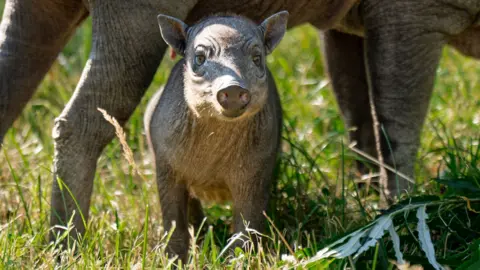
An endangered piglet the size of a "grapefruit with legs" when it was born has made its debut at Chester Zoo, conservationists have said.
Rana - a babirusa known as a "pig-deer" - has been described as a "lifeline for the species" which is in rapid decline in the wild.
Babirusas in the wild are found on just four Indonesian islands and the zoo said they were being wiped out due to African swine fever reaching the islands five years ago.
The attraction's Hannah Owens said Rana was "tiny" at birth but has "grown a lot and is doing really well".
Until recently, babirusas were considered vulnerable to extinction by the International Union for the Conservation of Nature, but were due to be upgraded to "critically endangered", the zoo said.
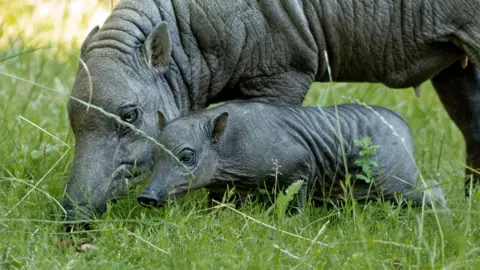
Rana is the fifth piglet born to mother Matano, who was also born at Chester Zoo 11 years ago and now has descendants living in zoos across Europe.
Owens said while babirusas were "doing well in our care", numbers in the wild were "radically reducing" and it would be "horrendous if they disappeared, because they were amazing, charismatic animals".
"Piglets like Rana are a lifeline for the species," she added.
Unlike most pigs, babirusas typically have just one or two offspring at a time rather than large litters - one reason their numbers recover slowly when wild populations are hit hard.
New mothers are also highly sensitive to disturbance, so keepers kept an eye on Rana and Matano remotely via a baby monitor until the pair were ready to be seen in public.
 Chester Zoo
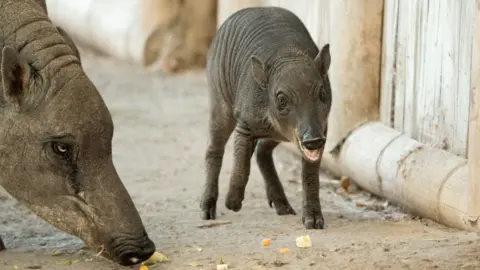
Owens said babirusa meant "pig-deer" in Malay because of their distinctive look.
"They're much less hairy than other pigs - Rana had ginger fuzz when she was born, but that's gone now," she said.
"Males are the only pigs whose upper tusks erupt through the snout bone and curve back towards their face."
 Chester Zoo
Chester Zoo conservationists are working with partners to protect wild babirusa populations through the Action Indonesia Global Species Management Plans.
Conservationist Amy Humphreys said Rana's arrival was worth celebrating as it was a "race against time".
She said they were important to island ecosystems as they dropped seeds as they foraged, helping forest regeneration, and were a key indicator species for overall ecosystem health.
But the situation remained "bleak".
"We risk losing a truly unique species, one that's an important part of Indonesia's cultural and natural heritage and one of the oldest pig species still living," she said.
Read more stories from Cheshire on the BBC, watch BBC North West Tonight on BBC iPlayer and follow BBC North West on X. You can also send story ideas via Whatsapp to 0808 100 2230.
