Christianity still 'core element' of new Religious Education syllabus

 Getty Images
Christianity will still be the "core element" of a new Religious Education (RE) syllabus for schools in Northern Ireland.
But pupils will also be taught about other world religions like Islam or Judaism from the early years of primary school.
The new syllabus has been drawn up after the UK's highest court previously ruled the RE taught here was unlawful.
The UK Supreme Court ruled that RE in Northern Ireland was not taught in an "an objective, critical, and pluralistic manner".
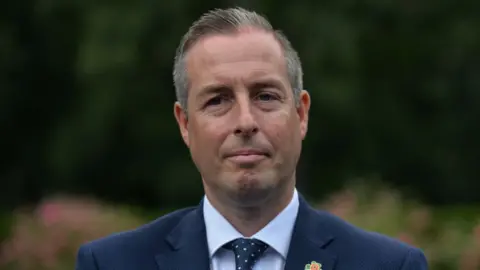
That led the Education Minister Paul Givan to appoint a panel to reform what children are taught in RE in schools.
The Supreme Court ruling acknowledged that "Christianity is the most important religion in Northern Ireland", and that the greater part of RE would still "focus on knowledge of Christianity".
Givan also pointed out that the ruling had not struck out existing law - the Education and Libraries (Northern Ireland) Order 1986 - which requires that schools hold "collective worship" every day and teach RE based on the "Holy Scriptures".
However, the minister appointed a panel of experts and teachers to draw up a new RE syllabus for primary and post-primary schools.
The draft syllabus is to be published for public consultation on Wednesday.
 Getty Images
What is currently taught in RE in Northern Ireland?
The existing core syllabus for RE was drawn up by the Department of Education (DE) and the four main Christian churches.
From the early years of primary school, it teaches children Christian beliefs about God, Jesus Christ and the Bible.
For instance, in primary school children are taught that Christians believe that God is "the creator of all things", and are taught in detail about the life and death of Jesus.
They are also taught about the growth of the Christian church, and aspects of morality.
It is not until they are in post-primary school that pupils are introduced to other world religions, "in order to develop knowledge of and sensitivity towards, the religious beliefs, practices and lifestyles of people from other religions in Northern Ireland".
If pupils choose to take a GCSE in Religious Studies, they can be taught in more depth about Islam and Judaism.
Parents, though, have the right to withdraw their child from part or all of RE and collective worship like school assemblies.
What changes are planned in the new RE syllabus?
Christianity is still the "core element" of the syllabus, reflecting its significant role in the history, culture and society of Northern Ireland.
For instance, pupils will be taught about the Bible, the life of Jesus and about the main Christian denominations in Northern Ireland.
But from the early years of primary school, pupils will now learn about Islam and Judaism as well as Christianity and the different beliefs they hold about God and the world.
They will also learn that some people hold "non-religious worldviews".
As they move into post-primary school, they have the chance to learn about other religious beliefs including Buddhism, Hinduism and Sikhism, as well as non-religious beliefs like Atheism or Humanism.
Pupils will also begin to consider how religious identity in Northern Ireland can influence political and cultural identity.
Later in post-primary school, they will learn about how different religious beliefs affect attitudes to things like sex and war.
The new syllabus is out for consultation, so people will be able to give their views on it until 30 September.
In a statement, Givan said that the new syllabus responded directly to the Supreme Court judgement.
"It seeks to meet the requirement for greater objectivity and recognises the central place of Christianity in Northern Ireland's history, culture and society," he said.
"It is now important that teachers, parents and wider stakeholders take the opportunity and respond to the consultation to help ensure that Religious Education is both legally robust and fit for purpose."
Who are the experts who drew up the new RE syllabus?
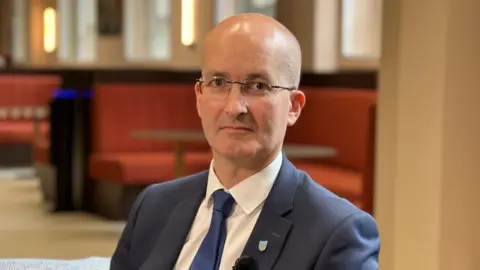
The draft syllabus was produced by a Religious Education Drafting Group led by Prof Noel Purdy from Stranmillis University College, and Joyce Logue, the former Principal of Long Tower Primary School in Londonderry.
Prof Purdy said that the group had worked with teachers and also heard from young people, faith leaders, politicians and education bodies.
"This was a considerable and extensive engagement process," he told BBC News NI.
"I think this an opportunity to bring the RE syllabus up to date for today's Northern Ireland."
Prof Purdy said the new syllabus was "objective, critical and pluralistic", which was "in line with the Supreme Court ruling".
He added that the previous syllabus was "almost 20 years old" and the new syllabus would reflect the "growing diversity of society in Northern Ireland".
"It does retain Christianity as the core element and that again is in line with the Supreme Court judgement and European Court of Human Rights," he said.
"But it does introduce pupils to a diversity of other religious and non-religious beliefs."
He said it also prioritised the development of critical thinking skills in pupils and encouraged them to "engage respectfully with a diversity of other beliefs, and to understand both their own traditions and those of other pupils".
Prof Purdy encouraged people to read the new syllabus and give their views in the consultation.
