Erosion leaves family facing last summer in cliff-edge chalet

 BBC
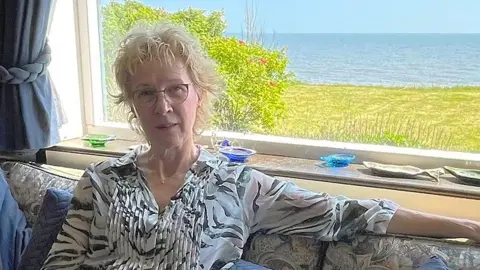
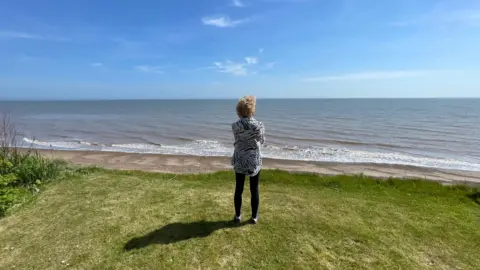
BBCThe owner of a clifftop holiday home on the fast eroding East Yorkshire coast fears this could be the last summer she enjoys there.
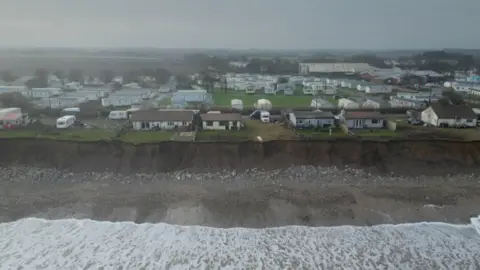
Deborah Hawksley, 68, said the forces of coastal erosion have brought the cliff edge "perilously close" to her bungalow.
East Riding of Yorkshire Council (ERYC) said 127 other residential properties are expected to be lost to coastal erosion over the next 100 years.
The Hawksley family, who have owned the site since the 1940s, are now facing the prospect of moving out.
Hawksley said: "In reality I think this possibly is our last summer. I can't imagine life without it."
Erosion rates vary significantly on the East Yorkshire coast, but recent records suggest parts of the coastline are eroding at an average rate of up to 4.5 metres per year, according to the council.
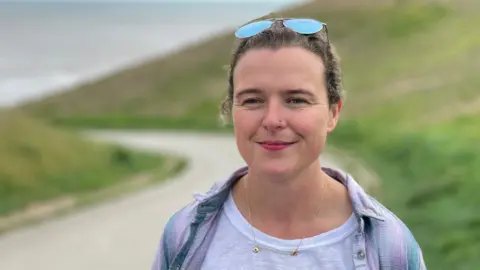
Dr Anna Bird, a professor in geology at the University of Hull, said the rate of erosion is being "accelerated by our changing climate".
She said heavy rainfall was playing a significant part.
"The sediment [mud] just becomes very waterlogged and in between the individual grains ends up filling up with water and that increases the pressure that the sediment is under and we get landslides," she said.
ERYC said in certain, undefended locations, individual cliff losses of 20 metres or more a year can be seen.
A recent report from The University of Hull backed calls for better support for communities impacted by coastal erosion.
A Defra spokesperson said: "This government is determined to make a difference to coastal communities, and over £600m has been invested in protecting communities from sea and tidal flooding over the last two years, with a further £30m specifically for coastal communities facing eroding shores announced in January."
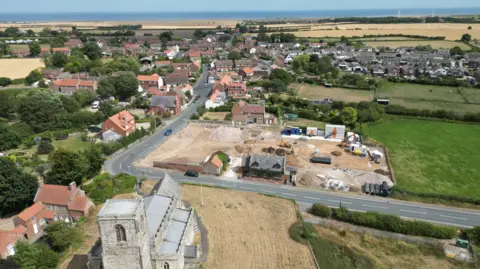
In July, ERYC announced that construction was under way on a housing project on the site of former agricultural buildings in Skipsea designed to accommodate residents affected by coastal erosion.
Councillor Paul West said it was hoped the new homes would be ready for people to move into by March.
"We are going to deliver nine socially affordable homes and the priority will be given to those people affected by coastal change," he said.
Hawksley said her clifftop chalet is living on "borrowed time" and it will be a "wrench" to leave it behind.
"We've agreed [with ERYC] not to stay here any more once the bungalow gets to within 9.3m (30.5ft) from the cliff edge and we are very close now," she said.
The 9.3 metre figure is based on the maximum land loss experienced due to erosion seen in any particular location, according to the council.
Hawksley's holiday home will eventually face demolition because she said there are "safety concerns" for people who may be walking on the beach below.
Richard Jackson, ERYC's coastal change manager told a parliamentary select committee last year that "over the past 10 years we have lost about 66 residential properties which have had to be demolished".
For Hawksley, the rapid erosion at Skipsea could soon bring to a close her family's long association with the area.
"My grandfather built the original bungalow here out of wood but we had to demolish that in the 1980's and build a new one further back as the clifftop got closer," she said.
"I have spent many a happy summer holiday here since childhood and I can't imagine life without it but, you know, everything comes to an end."
Listen to highlights fromHull and East Yorkshire on BBC Sounds, watch the latest episode of Look North.
Download the BBC News app from the App Storefor iPhone and iPad orGoogle Play for Android devices
