How plant-based wound dressing could fight infection

 University of Bath
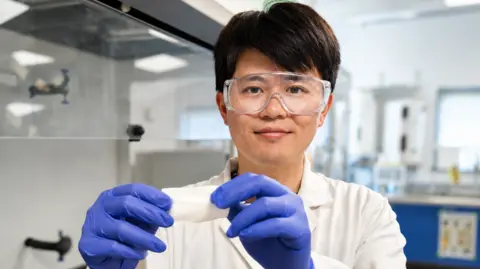
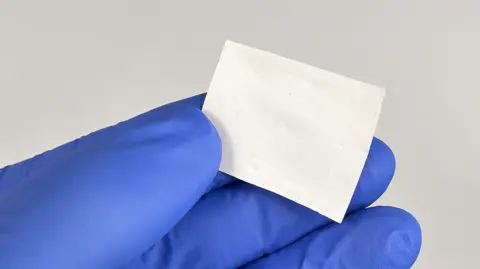
A new dressing made from plant-based materials that releases antibiotics directly to wounds has been developed by researchers.
The two-sided dressing created from plastic-like material sourced from plants aims to target bacteria before they grow, which should make healing faster.
Researchers at the University of Bath, worked with the University of Bristol and Newcastle University on the dressing, and said wound infections are estimated to cost the NHS billions of pounds every year.
Dr Hannah Leese, from the University of Bath, said: "Wound infections are very costly, and they can delay healing and affect people's lives day-to-day."
Results from lab tests showed a significant reduction in bacterial growth after the dressing was applied to two common wound-infecting forms of bacteria.
But further testing is needed before clinical use, researchers added.
 University of Bath
Bacteria can enter a wound and form a protective, slimy layer known as a biofilm within hours, which can slow healing and make infections harder to treat.
Researchers said the development reduces the formation of biofilm by more than 90%, helping to fight infections before they take hold.
"The body itself finds it really hard to fight back against the bacteria and it makes it much harder for the drugs that we use to get into that film to start to break it up and kill the bacteria as well," said Prof Leese.
"We want to try to prevent that from forming as quickly as possible so we can ensure the wound can heal as effectively as possible."
The newly created two-sided dressing works by releasing an effective concentration of antibiotics into the wound within four hours, while the other side acts as a barrier to maintain a protected healing environment.
Dr Xiang Ding, the study's lead author, added that the antibiotics released through the dressing will provide a barrier to protect the wound.
The study, published in Bioactive Materials, is the first to use the family of sustainable furan-based polymers, previously explored for sustainable plastics and packaging, for infection-fighting wound dressings.
Follow BBC Somerset on Facebook and X. Send your story ideas to us on email or via WhatsApp on 0800 313 4630.
