From carer to killer: Urgent calls for change

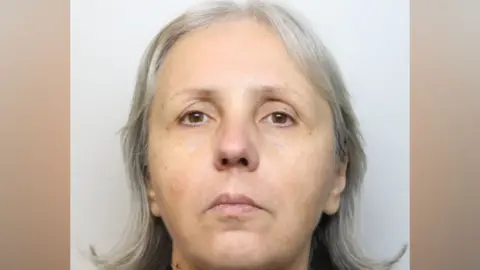 Wiltshire Police
"Professionals simply can't imagine that a devoted carer would ever harm the person they care for. But the reality is, even the most dedicated, loving person can reach breaking point if they're pushed far enough."
Those are the words of Dr Siobhan O'Dwyer, an associate professor at the University of Birmingham, whose research has found that one carer a month across England and Wales goes on to kill the person they are looking after.
Together with other experts, she is calling for urgent reform in the care system to offer more support to isolated carers.
There are an estimated 5.8 million unpaid carers in the UK who can struggle with money, mental health and isolation amid their caring duties.
A spokesperson from the Department for Health and Social Care said it is "committed to building a system that properly recognises and supports unpaid carers" with increased financial assistance.
 Getty Images
Stefania Glowka, 64, was jailed for eight years this week after killing her mother in Devizes, Wiltshire, on Christmas Day. A jury found her not guilty of murder after she admitted manslaughter on the grounds of diminished responsibility.
Dr O'Dwyer said: "The judge described this [the Glowka case] as an extraordinary and deeply sad case. And while it is deeply sad, it is not extraordinary. What's extraordinary is how little is being done to prevent them."
Dr O'Dwyer said while we cannot condone the killing of sick or disabled people, we must recognise the broader social failings.
"Stefania Glowka wasn't just having a hard time coping with her mother's illness, she was a woman whose mental health was so damaged by the caring role that death seemed like the only way out," she said.
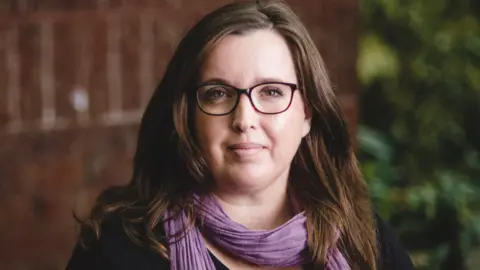 Dr Siobhan O'Dwyer
Glowka had grown up in Poland before moving to the UK in the early 1990s and had a recurrent depressive disorder.
From 2004, she was the primary carer for her mother, who never learned English and towards the end of her life suffered from hallucinations and psychosis.
When her mother got up to use the toilet on Christmas morning, Glowka strangled her before attempting to take her own life.
Glowka, a former vet, told police she "reached the end of her road".
Dr O'Dwyer said the jury's decision to find Glowka not guilty of murder "acknowledges the significant toll that unpaid caring can take on a person's mental health".
After Glowka's trial at Bristol Crown Court, Judge Lambert said depression had "distorted" her care for her mother and it had been "very difficult" to decide a sentence.
Of the 64 deaths in five years that Dr O'Dwyer has analysed involving carers and homicide, there were "risk factors" which she says "went unnoticed by health and social care professionals".
Sue Yeandle OBE, who researches the impact on care research, policy and practice at the University of Sheffield, says cases like Glowka's are rare.
But she added: "Tragedies do occasionally occur, usually when an isolated, unsupported carer reaches breaking point.
"Our care system urgently needs reform and more investment to alleviate the stress of caring round the clock."
Yeandle also pointed to the Casey Commission, which aims to reform adult social care in England and to improve support for unpaid carers, and establish national standards.
Lady Casey, who is leading the review, previously criticised a system which "still behaves as if we are living in 1948 and not 2026" by relying on female carers to care for vulnerable people.
Yeandle said the Casey review "found many carers are under unacceptable strain".
She added: "Government will need to respond to its findings swiftly and with urgency to avoid further tragedies such as that reported in Wiltshire."
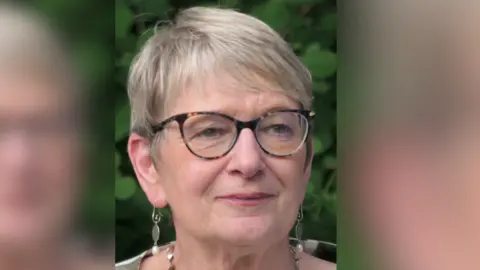 Sue Yeandle OBE
The sentencing of Glowka took place during Carers' Week, which is marked each June, to highlight the support carers' need and the vital contribution they make.
Kirsten Kerr, service delivery manager at Carers Together Wiltshire, said Glowka's case was a "stark and sombre reminder" of the reality for people the charity supports.
Kerr said. "What it reflects, sadly, is a reality we see all too often - carers who are exhausted, isolated, and struggling in silence long before anyone realises how close to the edge they are."
She added there are more than 42,000 unpaid carers in the Wiltshire area.
A government spokesperson said their 10-Year Health Plan will set out how to transform access to mental health support across the country and that it will be inspired in part by the findings of the Casey Commission.
They added: "This is a tragic case, and our thoughts are with all those affected. We recognise that caring can place huge emotional and mental strain on individuals, and they must have the support they need.
"Unpaid carers provide an invaluable service in our communities which is why we have increased financial support, including raising the Carer's Allowance earnings threshold, and reviewing Carer's Leave and wider employment rights."
Follow BBC Wiltshire on Facebook, X and Instagram. Send your story ideas to us on email or via WhatsApp on 0800 313 4630.
