WW2 bunker transformed to help wildlife

 Brookfield Allotment
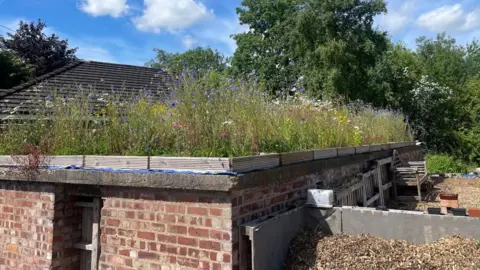
An air raid shelter that once protected families from bombs during World War Two has been turned into a haven for wildlife including birds, insects and hedgehogs.
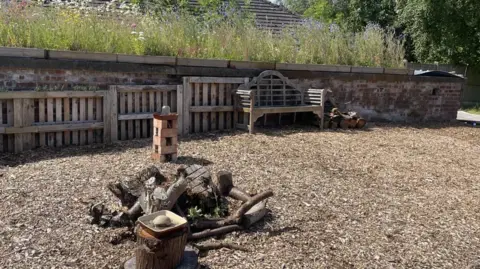
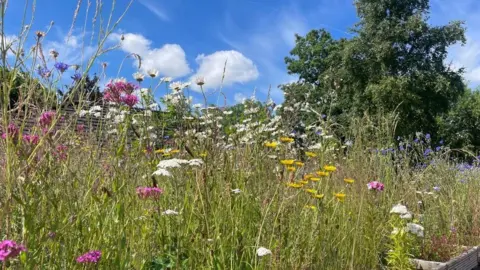
Plot holders at Brookfield Allotment have planted a wildflower garden on the roof of the bunker and installed shelters and drinking stations for insects and animals beside it.
Work at the site in Urmston, Greater Manchester, has been made possible with the help of local businesses.
"It's been absolutely thriving with wildlife, said Lisa Smith, allotment treasurer. "We've even had a fox up there. It's just been such an incredible achievement to create this."
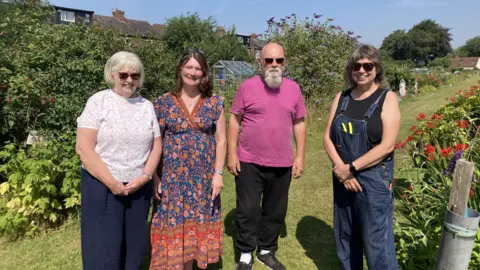
Smith added: "Since World War Two, pollinators have been under threat due to the loss of 97 per cent of wildflower meadows in the UK, so we thought we really need to try and rectify that."
Mick Heery, chairman of Brookfield Allotment, told BBC Radio Manchester sustainability also plays an important role in their work.
"The old pallets you can see against the wall, we use those as planters. We've used logs for the edging.
He said: "Whatever we can reuse, we'll reuse. That's our ethos on the whole site."
 Brookfield Allotment
The group has also planted verbena, foxgloves, strawberries, sunflowers, geraniums, and sweet peas outside the bunker.
Plot holder Catharine Braithwaite said the shelter is an important part of the heritage of the area and the rest of the country.
She said their work won't stop there, with more plans to help the allotment adapt to the impact of climate change.
"We've got nearly £2,000 from the National Lottery to do a bog garden, more wildlife habitat and water harvesting, so it's really amazing to get that money."
 Brookfield Allotment
Trafford Council praised the allotment group for their work, describing it as "inspirational."
Keleigh Glenton, who's responsible for allotments in the borough, said she would like to see similar projects across Trafford.
"Part of our Allotment Strategy includes engaging more people with allotments. We know allotments are amazing for people's mental health and wellbeing.
She added: "It's not just good for people, it's good for the place too in terms of biodiversity."
