Attorney general criticised after errors in rape case

 Getty Images
The attorney general should have publicly corrected reporting errors after three boys were sentenced for raping two girls in Fordingbridge, the most senior judge in England and Wales has said.
The boys, two aged 15 and another aged 14, received non-custodial sentences in May for separate rape offences against two victims in the Hampshire town in November 2024 and January 2025.
Earlier this month the Court of Appeal sentenced the two older boys to four years detention, after finding that their original sentences were "unduly lenient".
After the initial sentencing in May, the Crown Prosecution Service (CPS) incorrectly stated that the boys had used a knife in the attack on the second girl.
Warning: This story contains details some may find distressing
The CPS press release said that the victim had been forced to leave her phone and an AirTag in a shop so their movements could not be tracked.
In his remarks from the sentencing hearing at Southampton Crown Court, Judge Nicholas Rowland said he was sure that a knifepoint rape "did not happen" and that the girl left her possessions at the shop "by choice".
The Lady Chief Justice, Baroness Carr, previously said that the CPS press release contained "very significant errors" which were not corrected until 10 June, almost three weeks later.
In a judgment on Friday, the leading judge said apologies by the director of public prosecutions, the head of the CPS, had been accepted, but that the press release should have been checked sooner and corrected in a more prominent way.
Baroness Carr added: "We find it difficult to understand why the volume of inquiries and extent of misreporting did not trigger a review of the press release."
She said that assurances have been given about clearing press releases in future and added: "With these assurances, and with the acknowledgements and apologies rightly made by the director of public prosecutions, we simply mark our concerns and trust that errors such as these will not be repeated."
 Crown Prosecution Service
Baroness Carr, sitting with Lord Justice Edis and Ms Justice Norton, said they also had concerns about public statements made by Lord Hermer after the referrals to the Court of Appeal, including a video statement on 26 May and a later appearance on the BBC's Political Thinking podcast.
She said that by the time Lord Hermer referred the sentences to the Court of Appeal, there was a "febrile atmosphere" around the case, including personal attacks on Judge Rowland.
The judge continued: "The announcements made immediately after the applications were issued were the first opportunity to correct the factual inaccuracies and also to explain to the public that the system of justice has a mechanism for dealing with unduly lenient sentences which should be allowed to take its course without further attacks on the sentencing judge.
"The public utterances of the attorney general did not achieve either of these objectives and the court is entitled to ask why not."
'Endorsement to the misreporting'
Baroness Carr said she was concerned that Lord Hermer had not tried to correct the inaccuracies being reported, despite speaking publicly about the offending and saying he was aware of the full details of the case.
The judge added that while the attorney general is not "under a general duty to patrol the accuracy of press reporting", he was involved in the cases after referring the sentences for review at the Court of Appeal.
She continued: "If a member of government, and in particular the attorney general, chooses to make public statements about the gravity of offending… then they should ensure that what is communicated is fair and accurate, correcting any widespread misreporting of which they are aware.
"Otherwise, they lend currency and endorsement to the misreporting.
"It therefore seems to us that in these circumstances it did fall to the attorney general publicly to correct the factual inaccuracies – to protect the administration of justice, the safety of all involved, victims and offenders, and to underscore the cardinal importance of the public being given accurate information about what is happening in their justice system, good or bad."
Baroness Carr said that Lord Hermer must have known from the widespread commentary that the sentencing judge was facing personal attacks.
She added: "No-one within government has said publicly, even now, that the attacks on the judge were improper and a threat to the independence of the judiciary."
The judge concluded that the case showed the importance of separating politics from the attorney general's power to refer sentences to the Court of Appeal, adding that it should be exercised "independently and not in pursuit of government agenda, however worthwhile".
An attorney general office spokesperson said: "We still study this judgement carefully. The CPS has rightly accepted responsibility for the inaccuracies in their press release, and once the Attorney was made aware in the weeks after, he sought assurances about what went wrong and what steps are now being taken to avoid this happening again."
"At every turn this attorney has been a staunch defender of the independence of the judiciary and has publicly commented numerous times of his concerns about attacks on judges. The attorney also remains firmly committed to ensuring the criminal justice system has the faith of victims, particularly survivors of violence against women and girls."
All the children in the case have been granted anonymity because of their young age - with the offenders referred to as X, Y and Z.
One of the girls - C1 - was 15 when she was raped by X and Y in November 2024 at an underpass near a river in Fordingbridge after first engaging in some consensual sexual activity with X. Parts of the rape were filmed.
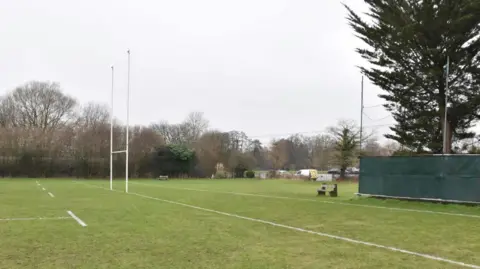
The second girl - C2, who was 14 - was raped by X and Y in January 2025 in a recreation ground in Fordingbridge. Again there had been some consensual sexual activity before the rape began and, again, parts of the rape were filmed, this time by boy Z.
At the time of the rapes X and Y were 14 and Z was 13. They were convicted of 10 rape offences between them.
The mother of one of the teenage girls said four years' detention for the two boys convicted of the attacks is "better" but still "not enough" after their non-custodial sentences were overturned.
If you have been affected by any of the issues raised in this story, information and support can be found at the BBC's Action Line.
