Plan to conserve three of Inverness's oldest graveyards

 BBC
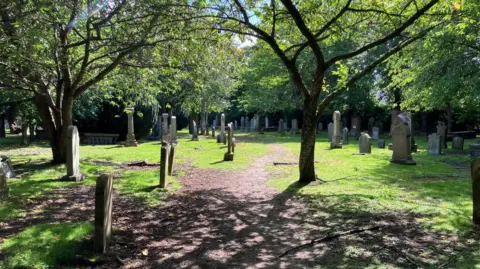
BBCA new project could lead to improvements to three historic graveyards in Inverness city centre.
Highland Council is working with Inverness City Heritage Trust on proposals to conserve the sites' architecture and archaeology while making them available as green spaces open to residents and visitors.
Greyfriars is thought to be the oldest, with connections to a 13th Century Catholic religious order called the Black Friars. Old High burial ground is next to the city's oldest church, while Chapel Yard Cemetery has gravestones that have survived from the 1600s.
Highland councillors will be asked to approve a £20,000 contribution towards a feasibility study at a meeting next week.
The study could lead to gravestones and other features being repaired and new interpretation boards being installed to provide information on the history of the burial grounds.
In a report, council officials said: "The study will seek to identify regeneration opportunities and develop a longer-term vision for the use of these spaces whilst recognising their sensitive nature and significant historic and cultural heritage."
The officers said the study could also look at how the "visitor experience" of each site could be enhanced.
Separately, councillors have been asked to give the go-ahead for £50,000 to be put towards the cost of repairing railings at the city's Tomnahurich Cemetery.
The large Victorian cemetery has 169 Commonwealth War Graves of service personnel killed during the world wars.
Greyfriars, also known as Blackfriars, is almost hidden from view by a large 1960s telephone exchange.
The burial ground has connections to Black Friars, a 13th Century Catholic religious order.
It is said to be haunted by a figure dressed in black and is a popular stop for local ghost and history walking tours.
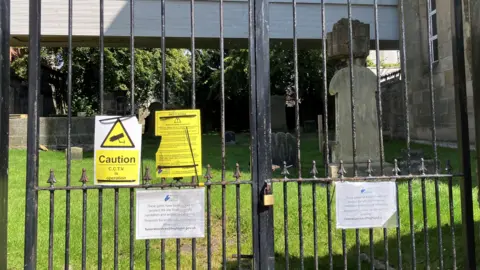
The graveyard's gates are usually locked due to problems with vandalism.
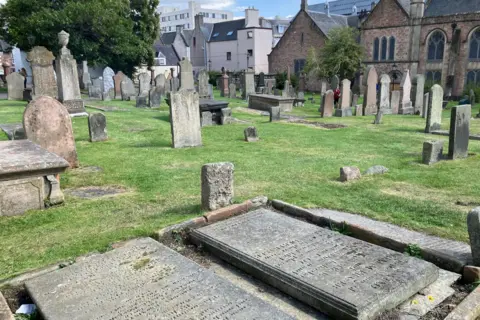
Chapel Yard is the resting place of members of the Forbes and Grant clans, as well as ministers, provosts and surgeons.
A grave from the 1600s is that of Hester Eliot, a great grandniece of Mary Queen of Scots.
Some of the tombs were damaged by Jacobites when they attacked Inverness Castle - a predecessor to the castle that stands today - before the Battle of Culloden in 1745.
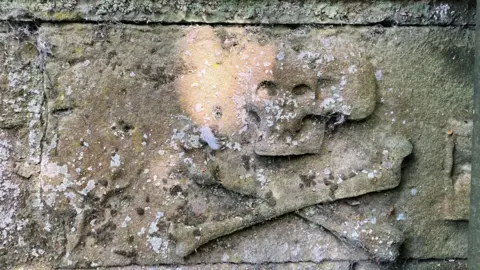
The site has grave markers from the 18th Century decorated with skulls and hourglasses.
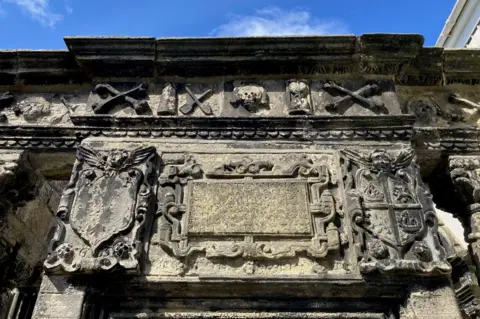
The Old High burial ground overlooks the River Ness and is on the site of the oldest church in Inverness.
The mound on which the Old High Church was constructed is believed to be the site where Irish missionary St Columba converted King Brude to Christianity in 565.
The saint is also linked to the mythology of the Loch Ness Monster.
An account of the missionary's life thought to have been written in the 7th Century tells of him encountering a strange beast in the River Ness.
The oldest part of Old High Church was used as a prison after Bonnie Prince Charlie's defeat at Culloden, and captured Jacobites were executed in the church grounds.
The church, which is now in community ownership, also has a long association with the regiments of the Cameron and Queen's Own Highlanders.
