'Talking therapy has made me more confident'

 Supplied
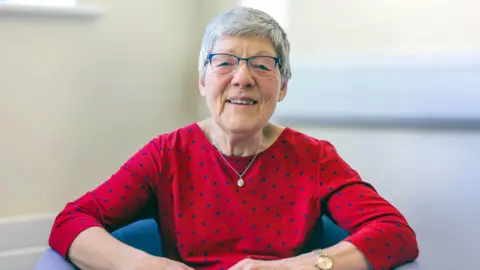
A woman has praised the benefit of talking therapy after seeking help for her anxiety.
Eileen, 74, from Doncaster, said tasks such as calling her GP surgery or using public transport would leave her feeling "agitated and clammy".
But, after a discussion with her doctor she was referred to Doncaster Talking Therapies, and said the sessions had helped her feel "more confident and less anxious".
Eileen said: "I was a little bit lost for words when I started my sessions, but [my therapist] Jaden guided me through. I knew it was all confidential, and I felt listened to, I felt heard."
Eileen said she was referred to Talking Therapies, run by Rotherham, Doncaster and South Humber NHS Trust (RDaSH) after experiencing mood swings, stomach upsets and "a mountain of" other symptoms.
"I hadn't recognised that my problems, both mental and physical, were actually linked to anxiety," she said.
Despite the idea of therapy feeling daunting, she said she felt at ease as soon as she met her therapist.
She said she still used the techniques she had learned and, after being encouraged to get in touch with her local community centre, was now attending a reading group and Tai Chi group and had "made new friends".
"Overall, I now feel more confident and less anxious - even my GP has mentioned that I am looking better and more relaxed – and I am," she added.
According to Age UK older people are as likely to experience mental health difficulties as anyone else. The charity said the most common mental health condition in older people was depression, affecting 22% of men and 28% of women aged 65 or over, followed by anxiety.
As part of Mental Health Awareness Week, taking place between 11 and 17 May, Eileen said she hoped to inspire other older adults to recognise when they might need support, and to ask for help.
"Do not be put off because you are thinking you are older than most people," she said.
"And don't be put off because your therapists are very young, they are very direct, very helpful and very supportive as you go along."
Clinical Lead for RDaSH Talking Therapies, Selina Khunkhuna, added: "If you are concerned that a loved one, friend, work colleague or neighbour might be struggling, start a conversation with them. It can be as simple as saying hello and asking how they are.
"Many people may worry about saying the wrong thing, but showing kindness, listening without judgement, and letting them know about Talking Therapies can really help."
If you have been affected by issues raised in this article, visit the BBC Action Line website for support and information.
Listen to highlights from South Yorkshire on BBC Sounds, catch up with the latest episode of Look North
