Metal detectorist 'could have found belongings of Iron Age queen'

 PA Media
Towards the end of 2021, metal detectorist Peter Heads was exploring a field in Melsonby, near Scotch Corner in North Yorkshire.
A few strong beeps caught his attention and after he contacted archaeologists at Durham University, they uncovered the "largest group of Iron Age metalwork ever found in Britain", which has now gone on display in York.
More than 800 items are part of the Melsonby Hoard, valued at approximately £250,000, which was raised through public fundraising and money from the National Heritage Memorial Fund.
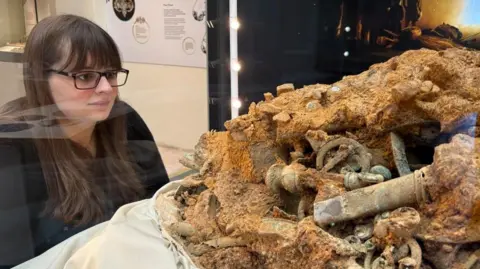
Eighty-eight of the objects are "corroded together" in a part of the exhibition affectionately referred to as "the block", said Emily North, curator of archaeology at the Yorkshire Museum.
Although from the outside, it is possible to see spearheads, parts from chariots and horse harness equipment, "what's inside is largely a mystery", she added - as is why they were deliberately destroyed.
They were wrapped in cloth and placed in a ditch, separate from the rest of the hoard, 2,000 years ago.
Researchers have carried out CT scans on the block and are "painstakingly" working their way through these images.
 BBC/Seb Cheer
In total, the exhibition contains 20% of the entire Melsonby Hoard.
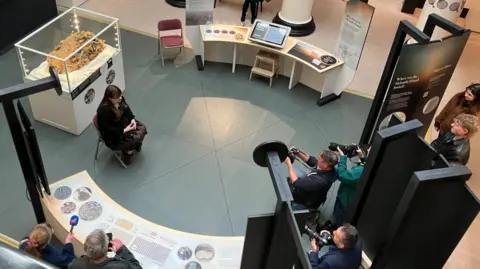
The size and value of the collection suggests an "amount of wealth" which could only have belonged to a "someone very important", North told journalists at a briefing ahead of the public opening.
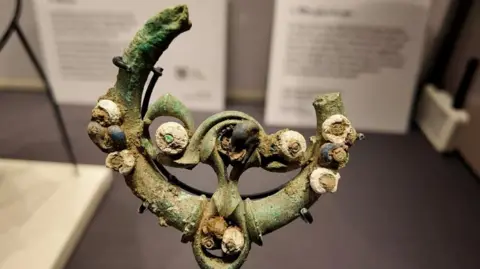
Items include a mirror and blue glass beads, commonly associated with female power in the Iron Age.
"What we could be looking at are the belongings of a queen."
The exhibition demonstrates the "incredibly rich" culture of the Brigante tribe which ruled the region.
The Brigantes were a Celtic people who attempted to stave off the approaching Roman army at Stanwick St John, near Melsonby.
 BBC/Joanita Musisi
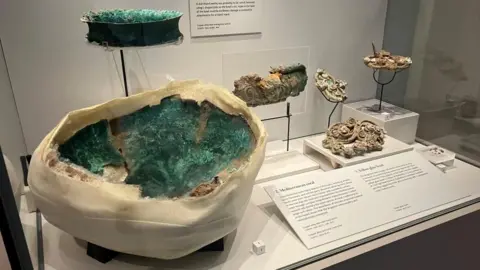
The exhibition also features a wine-mixing bowl, typically found 2,000 years ago in the Mediterranean, likely to have been brought back to Britain.
"It gives us a hint of how interconnected Iron Age people in North Yorkshire were," North said.
"It's an absolute mystery why this vast mass of luxury expensive objects was destroyed and put into the ground."
The exhibition explores four possible answers - a feast, a festival, a fight and a funeral.
"I doubt I'll see anything quite like this again in my career," she added.
 PA Media
As well as members of the public donating to help the museum acquire the collection, another £250,000 is needed to continue conservation and research.
The Yorkshire Museum is carrying out community work in Melsonby, where "everyone's got behind the hoard", said community participation manager Sammi Lukic-Scott.
Alongside local fundraisers, children at a primary school have produced art to "make their own version of the Melsonby Hoard" and have been visited by archaeologists.
"It's been really inspiring for all of us to be inspired by them as well," said Lukic-Scott.
"They're so enthusiastic and they care so deeply about the hoard. We've been speaking to lots of residents who talk about how the Iron Age finds are really part of their heritage.
"It's part of their identity, living in that village."
 BBC/Seb Cheer
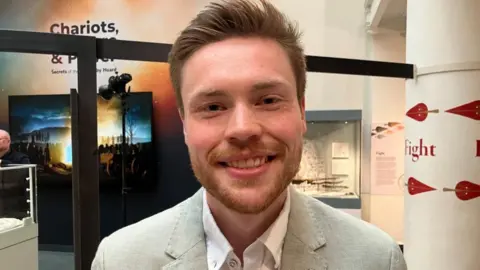
This exhibition is unique because of the amount of conservation work which has not yet been carried out on certain items, according to associate collections curator Harry Ellerd-Cheers.
He said the "earlier stage" of the project has presented challenges and opportunities.
"We still have "the block" which is in situ," he explained.
"Sometimes these are actually broken up post-excavation, so the fact people get to see it in this stage is really really exciting."
Ellerd-Cheers said opening the display to the public "feels a little bit surreal", partly because of the fast turnaround in creating the exhibition.
"We only actually got the Melsonby Hoard in the building in October. Normally we have a much longer run-in for exhibitions, so to get it all in and to get it into this exhibition has been really challenging but I think the team's pulled together really well."
He said the care and skill that went into creating the objects was "amazing".
"To get the little hints of things like the coral and the decorations, it's a hint of a larger world that maybe I didn't quite realise at the time before I started working on this.
"To be able to link this small part of Britain to southern Europe is really cool."
Listen to highlights from North Yorkshire on BBC Sounds, catch up with the latest episode of Look North.
