Calls for better care after first miscarriage

 Leanne Rinne/BBC
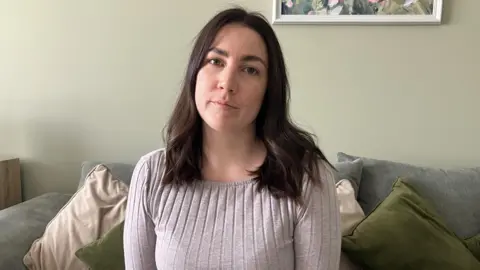
A woman from Eastbourne who has had two miscarriages believes the current NHS position which only sees women receive support after three pregnancy losses is "just not fair".
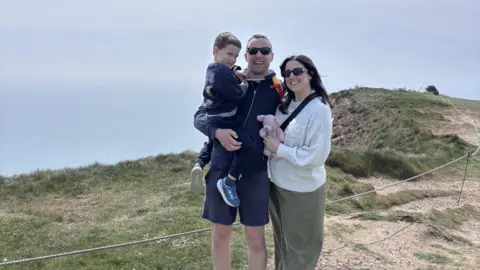
Lucy, 31, first miscarried during the Covid-19 pandemic, then again in August 2025, having given birth to a healthy baby boy in between.
New research by charity Tommy's estimates that more than 10,000 pregnancy losses in the UK could be prevented every year if women received follow-up care after their first miscarriage.
The Department of Health and Social Care (DHSC) said the research would be "carefully considered as part of our ongoing work to make sure women get the high-quality, compassionate NHS care they deserve".
'No empathy'
Lucy, whose son Alfie was born in May, 2021, said she felt "unsupported" after her first miscarriage.
"There was no empathy. I was put in a waiting room with pregnant women and given a leaflet about miscarriages and just told I could try again," she said.
Because Lucy has had one healthy pregnancy, she said it was unlikely she would be offered follow-up support unless she had another two miscarriages - four in total.
She finds this position really difficult.
"Not knowing if I will miscarry again is really making it hard for me to decide if I want to even try for another baby, even though that is something I've always wanted," she said.
In line with the aim of Tommy's campaign, Lucy believes that investigations should be undertaken after one miscarriage.
She said: "Not being able to have support until you have had three losses in a row is just not fair.
"Why should women have to go through more pain and more grief before they get help?"
 Leanne Rinne/BBC
Tommy's is calling for the NHS to adopt a "Graded Model of Miscarriage Care" which would enable earlier identification of risk factors and medical conditions that could contribute to pregnancy loss.
The model was piloted by researchers at Birmingham Women's Hospital between November, 2023, and February, 2024.
This saw 203 women with a history of one or more miscarriages treated according to the graded model, against an identically-sized comparison group which received support after three or more losses.
Under the model, women receive a one-to-one consultation after their first miscarriage, with progesterone offered in later pregnancies if early bleeding suggests increased risk.
After two miscarriages, women are offered blood tests for treatable conditions such as anaemia and thyroid problems, along with reassurance scans in future pregnancies.
After three miscarriages, they are referred to specialist clinics for further investigations, including tests for genetic factors and a pelvic ultrasound.
Preventing loss
The pilot found that women who received graded care were at less risk of experiencing another miscarriage and more likely to have risk factors identified, compared to those under standard NHS care.
The charity estimates that one year of implementing this model could prevent 10,075 miscarriages and save more than £40m, both in cost to the NHS and productivity losses such as work days lost after miscarriage.
Baroness Merron, parliamentary under-secretary of state at the DHSC, said: "Research like this is crucial, and our renewed Women's Health Strategy puts women's voices and experiences at the heart of care.
"It will drive better outcomes so women across the country are better heard and better served by the health system."
- If you have been affected by any of the issues in this story, help and support is available at BBC Action Line.
Follow BBC Sussex on Facebook,X and Instagram. Send your story ideas to southeasttoday@bbc.co.uk or WhatsApp us on 08081 002250.
