Mayors welcome new powers from Burnham

 BBC
BBCThree of Yorkshire's elected mayors have welcomed the announcement that they will be given control of a share of income tax revenue for the first time, as part of Prime Minister Andy Burnham's bid to transfer power from Westminster to local leaders.
The prime minister also announced the mayors would get new powers over public transport, home building and youth employment.
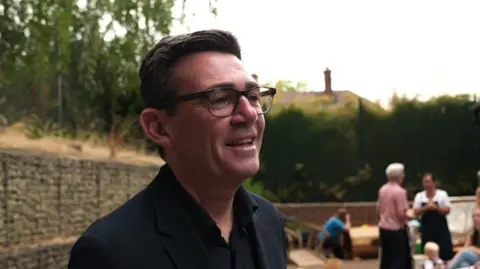
On a visit to a family centre in Sheffield on Friday, Burnham explained he wanted to "change places from the ground up" by giving mayors more control over their regions.
BBC Yorkshire's David Rhodes said it would give mayors more influence but questioned whether the policy would be enough to close the regional inequality gap.
Labour Mayor of South Yorkshire Oliver Coppard, who was also in attendance, said: "Today is the day that devolution has grown up."
During his visit to Sheffield, Burnham said he wanted all mayors of city regions in England "to really lift the places that they represent, get growth going in the economy, improve public transport, lower the fares so people can connect to opportunity".
"If you help more places do more for themselves, you will allow what is available at a national level to be concentrated on the areas that have the lowest growth and really need that investment," he explained.
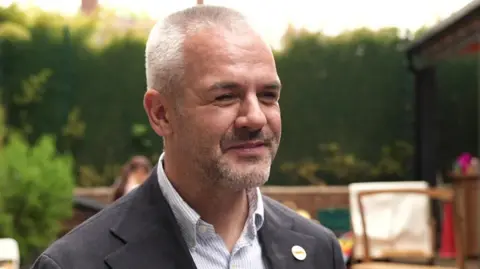
Following Burnham's announcement, Coppard said his region would not necessarily get a huge amount more money and people would not be asked to pay more.
"What it means is we can take charge of our own future in a bigger and better way," he said.
"It's not about the number itself today, it's about what it means over the next five, 10, 15 or 20 years.
"It also means that instead of having a one, two or three-year funding cycle, where we don't know what's coming after that point, we'll have a long-term consistent funding stream that we can potentially borrow against and use to plan for long-term interventions in the economy."
Labour Mayor of West Yorkshire Tracy Brabin said the devolution announcement had been "exactly what mayors have been pushing for".
"Giving extra powers and a proportion of income tax to regions means people will be able to see and feel the real benefit of their hard work and where that money is going," she said.
"This will enable us to deliver on our ambitious plans including vital improvements to public transport, providing better skills and employment support so people can fulfil their potential, and building the homes that people need."
In York and North Yorkshire, Labour Mayor David Skaith said the investment would be used in his region to "transform public transport", which he said was always a talking point on the doorstep.
"It hasn't been good enough. It hasn't been invested in enough, particularly in North Yorkshire, for well over a decade," he said.
"I want to make it work for everyone."
 Reuters
Currently, mayors of English strategic authorities receive most of their funding by central government grants.
Mayors are expected to start retaining some revenue from business rates from April 2027 and receive a portion of income tax from April 2028.
The rates of income tax will not change as a result of the reform.
Responding to Burnham's announcement, Conservative shadow chancellor Sir Mel Stride said it was "very short on the detail" with "no new money being announced".
The Liberal Democrats warned the plans risked "creating a postcode lottery" that would leave millions of people living in rural areas "short-changed and underfunded".
Reform UK home affairs spokesman Zia Yusuf said the prime minister should "fully devolve the power to stop the housing of illegal migrants in local communities by the Home Office".
Analysis by David Rhodes, BBC Yorkshire
Since 2014 and the creation of the Northern Powerhouse under Prime Minister David Cameron, to Boris Johnson in 2019 proclaiming the policy of "levelling up", occupants of Downing Street have extolled the virtues of regional devolution.
Andy Burnham's initial outline is to allow greater sums of money collected in the regions through various forms of taxation to be kept in the region.
Historically, taxes collected by local councils such as business rates were sent to Westminster and then redistributed by central government.
Mr Burnham's announcements should be treated in two parts.
The pledge to allow regional mayors to keep a proportion of local business rates is not new. Since 2017, some councils in Yorkshire have been involved in various pilots where such a measure has been tried before.
Given the huge cuts councils have had to make in the following years, it can hardly be claimed the policy has been fiscally revolutionary for local areas.
The idea of allowing mayors to keep a proportion of income tax is a new proposal.
For a region like Yorkshire keeping just 1-2% of income tax a year could gift all the region's mayors combined additional spending of somewhere between £200m-£300m per year, according to HM Treasury figures analysed by the BBC.
Giving local leaders a greater say over how money is spent will be broadly welcomed across the political spectrum, but what remains to been seen is how this policy will close the regional inequality gap.
For example, according to government figures, each person in London gets £2,400 more public money spent on them each year compared to each person in Yorkshire & the Humber.
It's hard to see how this policy will close that gap.
We await the finer details to be announced by Mr Burnham which will come in the run-up to the budget in the autumn. But on face value, it looks like local mayors will have a greater say in the future on how public money is spent.
But there is no explicit pledge by the government to increase the overall amount of public money being spent in Yorkshire or other regions across the country.
Listen to highlights from South Yorkshire on BBC Sounds, catch up with the latest episode of Look North
