Archaeologists to return to 1,200-year-old Pictish power base

 University of Aberdeen
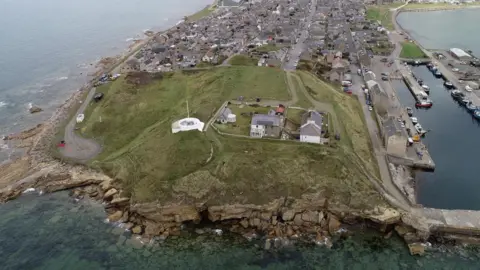
Archaeologists are to return to the site of a 1,200-year-old Pictish power base on the shores of the Moray Firth.
Burghead has the remains of northern Britain's largest known early medieval promontory fort, a type of coastal defensive structure.
Excavations since the 1970s have revealed evidence of ramparts that were 26ft (8m) thick and stood 20ft (6m) high.
The public will be able to watch the latest dig organised by the University of Aberdeen's Northern Picts project between 11 and 25 August
Excavations by the Northern Picts project have unearthed many discoveries since 2015, including decorated bone pins and combs.
Timbers were also found during digs in 2022 and last year.
Experts believe the fort was destroyed in the 10th Century, perhaps by Vikings or through internal conflict.
August's dig is one of a number of excavations and other fieldwork people will be able to visit or volunteer at this summer.
The Society of Antiquaries of Scotland's Dig It! project has compiled a list of the events.
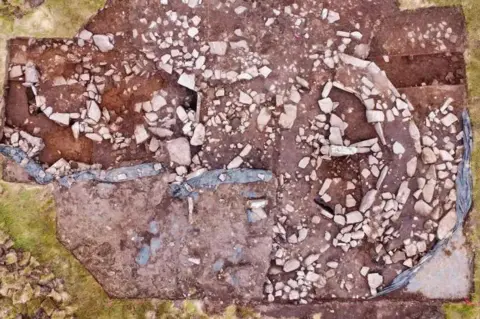
They include a University of the Highlands and Islands Archaeology Institute excavation of the remains of a prehistoric structure at Spurness in Sanday, Orkney.
 Tris Thorne
Stirling Field & Archaeological Society and Bannockburn House Trust are looking for volunteers for a dig at 17th Century Bannockburn House, near Stirling.
Archaeologists are to explore an area where there were once buildings according to a map made in 1750.
Throughout the summer, digging is to continue at Cammo Estate in Edinburgh where there are the remains of a mansion, its walled garden, servants' quarters and stable block.
