The beekeeper who developed an allergy to bees

 BBC
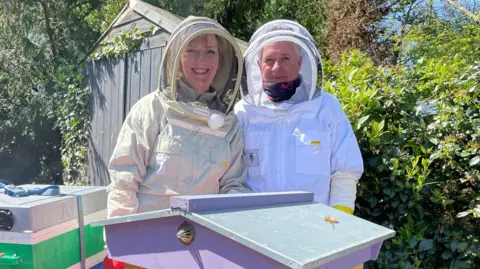
BBCWhen Tony Pole started beekeeping after a throwaway comment from his wife, he didn't realise his new honey-making friends could one day put his life at risk.
Nearly two years ago, one of the thousands of bees that the 62-year-old keeps alongside his wife Sharon at the back of their home stung him on the face.
Within minutes, he started struggling for breath and was given an adrenaline shot by paramedics that may have saved his life.
Tony said he did not expect to be lying in the back of an ambulance when he started beekeeping about five years ago - after buying his wife a hive for Christmas.
One hive quickly turned into four, and the couple started to make their own honey at their house in Groby in Leicestershire.
They built more hives, coming up with creative names for their queens such as Feral Beryl, Lady Jane and Queen Lizzy.
Tony said he was stung many times during his first three years of beekeeping, but as he was preparing to sit down to watch the England men's football team play Spain in the Euro 2024 final, he felt a sharp pain on his face.
Within minutes, he was struggling to breathe and had to call 999.
"I have been stung quite a few times, but it's never been anything like that," he said.
"It's almost like going from being absolutely perfectly healthy, to be in the middle of a really, really bad flu in minutes.
"Without the adrenaline shot, I could possibly have died."
Tony was rushed to the Leicester Royal Infirmary, where he was given an EpiPen to keep at home and instructions to be careful around bees.
This was a problem for Tony and Sharon.
Their bees had become a major part of their lives, and the pair had to have a tough conversation about whether to continue.
They even started to sell their honey at their Nook Corner Coffee Shop in Anstey.
"We did have a long discussion and Sharon was keen to get rid of them," Tony said.
"But she really loves it and I just said to her, 'look, you should carry on doing it'.
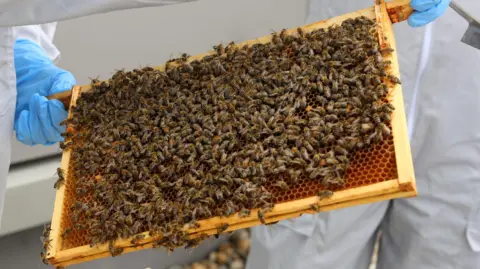
"I'll help with the things that really are away from the bees, getting the honey off and sorting the frames.
"I tend to not get too close now, when she does the inspections, but if she needs help, I'll go and help her."
Tony is part of the 1% of the British population to have an allergy to bee stings, according to charity Anaphylaxis UK.
The severe reactions cause a person's immune system to release a flood of chemicals that can cause airways to close and a drop in blood pressure due to shock.
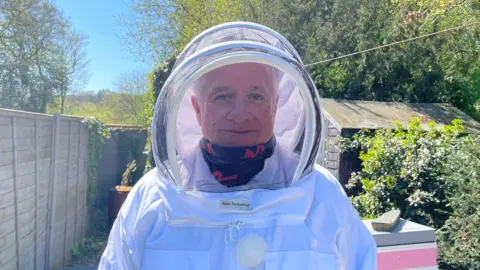
Tony said he had taken measures to ensure his safety while beekeeping such as wearing extra protective gear and taking a more supportive role.
The couple have also reduced the number of hives kept in their garden down to three.
Despite Tony again finding himself in hospital after being stung in the neck in October 2025, he said he would keep helping his wife.
"It's really rewarding," he said. "It's really geeky once you start talking about how clever the bees are and what they do.
"You'd like to think everyone knows how vital they are to the environment, but just watching what they do and how they do things is just so amazing.
"There's always something different - they always do something that surprises you."
Tony also said his wife's love of beekeeping made him want to keep going.
However, Sharon, 56, said having her husband around the bees did worry her.
"I don't relax very well when he's helping me, because it's something else to worry about," she said.
"I do try and read what mood the bees are in, so there are quite a few times I say he can't come down to the hives because the bees are a little bit too lively.
"But he loves doing it and sometimes I can't keep him away."
Tony is now set to take part in a three-year venom immunotherapy course, which will aim to desensitise his reaction to bee stings.
He will be given increasingly strong doses of venom in a bid to change the way his immune system responds to the venom.
According to the Anaphylaxis UK charity, the exact way the therapy works is not fully understood, but it is thought that it might change the type of immune system cells and proteins your body makes in response to the allergen.
"I think I'll feel lousy for a day after the injections, but hopefully it'll make a difference," Tony added.
Listen to BBC Radio Leicester on Sounds and follow BBC Leicester on Facebook, on X, or on Instagram. Send your story ideas to eastmidsnews@bbc.co.uk or via WhatsApp on 0808 100 2210.
