Homeless people living in temporary accommodation hits record high

 BBC
BBCThe number of people in Scotland living in temporary homeless accommodation has risen to a new record high, official data has revealed.
The annual statistics for homelessness showed that, as of March this year, 16,300 households were in the system – the highest since Scottish government records began in 2002.
There was also a record number of children in homeless accommodation, with more than 10,000 youngsters waiting for a permanent home.
The Scottish government and 12 local councils have already declared a “housing emergency”, with the government having announced a 26% cut to its affordable housing budget this year.
Housing minister Paul McLennan described the latest figures as "deeply concerning".
He said: "I know the lack of a settled home seriously affects people’s health and life chances.
"They demonstrate the scale of the challenge we face in tackling the housing emergency and I am determined to work with partners to reverse this trend."
Scottish Conservative housing spokesman Miles Briggs said the "scandalous figures should be a source of shame for SNP ministers".
He added: "After 17 years of this failed and distracted SNP government, it is clear that they are part of the problem, not the solution to Scotland’s housing emergency.”
Scottish Labour's Mark Griffin said: "No amount of SNP spin and deflection can mask the fact that they let homelessness soar and left over 10,000 kids without a permanent home.
“Instead of dealing with the housing emergency taking grip in Scotland, the SNP fanned its flamed by slashing the affordable housing budget and letting housebuilding plummet."
Politicians previously cited record high totals of households in temporary accommodation and rising waiting times for social housing as the main reasons for the housing emergency.
For the last year, BBC Scotland has followed the plight of individuals navigating the homelessness system – and the authorities trying to help them.
Michelle and her three daughters have been in temporary homeless accommodation for 18 months.
The 40-year-old’s family was made homeless after her private let was repossessed by a mortgage lender from her landlord.
Since then, she and her daughters – one of whom has autism – have been moving between homeless flats as the council try to find her a suitable home.
“I didn’t think we would be waiting this long,” said Michelle, a former NHS care worker.
“We were in a hotel for three-and-a-half weeks but were told that within a week we’d be moved to a suitable property.
“But we have just been moved from place to place.”
Affecting mental health
She is not allowed to decorate her ground-floor flat and when BBC Scotland News visited, there was no carpet on the floor.
Michelle and her daughters are preparing to move to their third flat in two years.
She said: “It’s hard. It’s affecting my mental health. The council just say there are no ground floor, three bedroom properties that suit our needs.
“They have told us that it will likely be a five-year wait.”
Glasgow City Council is involved in finding the family accommodation – and is one of the local authorities that has recognised the overall situation as an emergency.
A spokeswoman said: “We are in a housing crisis and unfortunately the demand for permanent accommodation far outstrips availability and supply.
“That means people – particularly larger families with children – are spending longer in temporary accommodation than anyone would wish.”
Michelle’s three daughters, including Devon, 11, were among thousands of children in Scotland’s temporary housing system last year.
 Getty Images
The latest annual figures show:
- There was a record number of children in homeless accommodation, with more than 10,000 youngsters waiting for a permanent home.
- The average time spent in temporary accommodation for cases that closed in 2023-24 was 226 days, compared to 225 in the 12 months before.
- In total, there were 31,870 open unresolved homeless cases – an 8% rise on the previous year.
- Glasgow saw the highest increases, with rises in applications from asylum seekers and refugees being attributed.
- The average length of time to close a homelessness case was 278 days. This was 11 days longer than in 2022-23.
- Males made up 58% of all applicants - the joint highest proportion along with 2020-21.
The previous year's figures had prompted 12 Scottish councils – more than a third of local authorities – to declare their own emergencies since last summer.
Matt Downie, chief executive of the charity Crisis, said the latest figures showed the Scottish homelessness system was under more pressure than ever before.
He said: "Councils are closing cases, but not as quickly as new applications are coming in. They’re working to end homelessness, but they’re not able to keep up with growing demand.
“The Scottish government has made tackling child poverty its number one priority, but this can’t be achieved without stronger action on housing."
Charity Shelter Scotland has been at the forefront of the campaign to urge politicians to declare a “housing emergency”.
Its director Alison Watson has spoken at council meetings, appealing directly for authorities to recognise the long waits and pressures facing homeless families.
She told BBC Scotland: "At the end of the day, we know that austerity measures have driven a lot of poverty, a lot of issues for people keeping a roof over their head.
"But housing does continue to not be seen as a priority by our politicians. I suppose the most significant issue of concern us is decades of underinvestment in social housing.
"Now we don't have a shortage of highly progressive housing rights and homelessness policies in Scotland. But we're failing to invest."
The declaration of the housing emergency has no legal effect, but Shelter Scotland hopes it will spur politicians into more urgent action.
“We have enlarged the right to a home, but we didn't enlarge the supply of homes necessary to make that a reality. Rights that exist only on paper are of very little value.”
She added: “If we had a sufficient supply of social homes, we wouldn't be seeing these record-breaking levels of homelessness that we're now starting to get.
“I think the other key issue of concern here is that it's very clear that local authorities do not have the capacity and resources for their homelessness services.”
 Getty Images
Shelter Scotland and other charities have said the solution to the current problem is to build more social housing.
But the latest data on house-building suggests construction is slowing down.
In 2023-24, the number of new social homes being completed fell by 27%, while the number of those homes being started was at its lowest level since 2012-13.
The Scottish government aims to build 110,000 affordable homes by 2032 – 70% of which will be for social rent. Around 21,000 of those homes had already been built by March this year.
In the 2023-24 budget earlier this year, the Scottish government cut the affordable housing budget by £200m, around 26%.
Finance secretary Shona Robison said this was due to cuts to its capital budget by Westminster.
Fewer houses in the system
Jennifer Kennedy is the director of public affairs for Homes For Scotland, which represents more than 200 builders.
She said the £200m cut has already led to the construction of around 5,000 homes, 1,800 of which are designated affordable housing, being “stalled”.
Ms Kennedy said: “The industry still hasn't fully recovered from the global financial crisis by the time they had to deal with Covid.
“So whilst in that intervening period there has been a gradual increase in the number of new homes that were being delivered, they still hadn't managed to return to the 25,000 peak [of 20 years ago].
“Planning is still the biggest blocker. If you if you were to ask any home builder, it will be the planning system.”
Referring to statistics on house building also being published, she said: “If we continue to see the drop off in starts, that then means that there's going to be fewer and fewer houses coming through the system.
“It doesn't look like there's much scope for it improvement unless there's drastic and urgent action is taken by government.”
 Getty Images
“I think ‘housing emergency’ is a catchphrase for drawing attentions to housing problems,” said housing expert Prof Douglas Robertson, formerly of Stirling University.
“But I’m not sure how the housing emergency is any different from years and years of people previously saying there's a ‘housing crisis’.
“I presume in an emergency you do things to resolve that emergency. I'm not actually seeing either councils or government coming up with anything different than they've done before.”
Prof Robertson said historic policies such as the Right To Buy – where tenants could purchase council properties – have “distorted” the housing system.
“The accommodation isn’t there at the moment, that’s the problem,” he said.
“They’re staying in temporary accommodation of poor quality, hotels for example. Yet the councils say they are not able to build houses because the money is going the wrong direction.”
He continued: “We are dealing with a housing system that is now completely different.
“In the past we didn’t have lots of people with housing wealth owning a second home on Airbnb. The rich now have everything they want in terms of housing, and the poor have nothing.
“Housing is just a reflection of the inequality in society.”
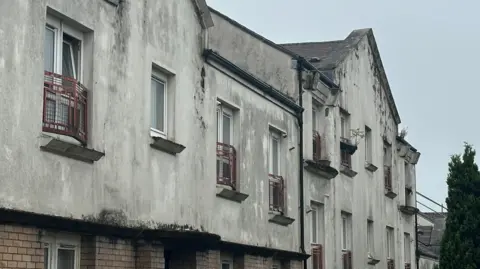
The Scottish government has made no extra money available after its MSPs voted to declare a housing emergency.
Housing minister Paul McLennan said the government’s forthcoming Housing Bill would “help keep people in their homes”.
He said: “The Scottish government is clear that everyone should live in an affordable and high quality home that meets their needs.
“Since 2007, we have supported the delivery of more than 131,000 affordable homes, with more than 93,000 of those being for social rent.
“We will continue to build on that record with almost £600 million of investment in the Affordable Housing Supply programme this year and we remain focused on supporting the delivery of 110,000 affordable homes by 2032.
“The Housing Bill introduces a range of measures, including rent controls and homelessness prevention duties, to help keep people in their homes.
“We will continue to work with tenants, landlords and investors as the Bill progresses through Parliament.”
