Final phase of beach protection work under way

 BCP Council
The final phase of a major coastal protection project is nearing completion.
Three three timber groynes west of Boscombe Pier are being replaced as part of the 10-year Poole Bay Beach Management Scheme, which has already seen 50 renewed along the seafront.
Each groyne is around 75m (250ft) long, with its foundations extending about five metres (16ft) below the beach.
The £42m scheme is aimed at protecting the coastline, from Sandbanks to Hengistbury Head, from flooding and erosion for the next 100 years.
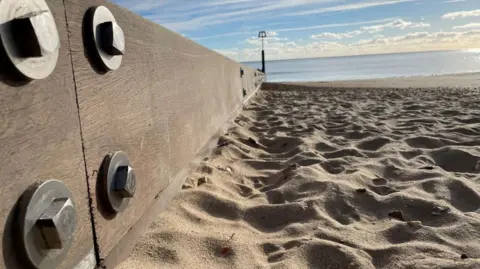
Groynes act like low timber walls running from the promenade into the sea.
Together with regular beach replenishment, they help hold sand and shingle in place, protecting beaches, cliffs, seawalls and promenades from erosion.
Beach users are asked to follow safety signs and keep out of fenced-off areas, even at low tide.
Sand around excavated groynes can become unstable, and these areas will operate as temporary construction sites while work is under way.
'Important milestone'
Andy Hadley, BCP Council's portfolio holder for climate response, environment and energy, said: "Our coastline is one of our area's greatest assets, and this work is about protecting it for the future.
"These groynes may look simple from the beach, but they play a vital role in helping to keep sand and shingle in place, reducing erosion and protecting our cliffs, seawalls and promenade.
"This final phase marks an important milestone in a long-term scheme that is helping make Poole Bay more resilient to the impacts of climate change and rising sea levels."
The Poole Bay Beach Management Scheme is primarily funded by an Environment Agency grant of £36.5m, with an additional £2m local levy and £3.3m council contribution.
Timber from the old groynes is recycled for use on the foundations of new groynes where possible.
When the wood is found to be unsuitable for re-use it is recycled for other projects including at Durley Chine, Highcliffe Castle and Poole Bus Station public spaces.
The groyne renewal works are due to be completed in March 2027.
You can follow BBC Dorset on Facebook, X (Twitter), or Instagram.
