'Extraordinary' sighting of rare bird of prey

 Simon King
A bird watcher has described the "truly extraordinary" moment he spotted a rare bird of prey in flight over a Hampshire beauty spot.
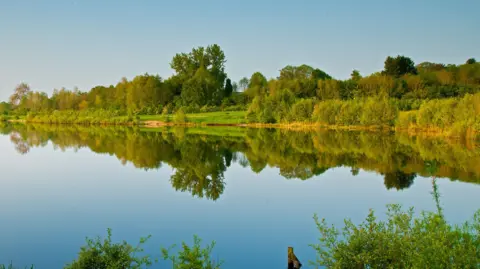
The pallid harrier was photographed at Testwood Lakes Nature Reserve near Southampton in April 2025.
The sighting by Hampshire and Isle of Wight Wildlife Trust's Simon King has now been confirmed by the British Birds Rarities Committee (BBRC).
Pallid harriers, which breed mainly in Eastern Europe and Central Asia, are exceptionally rare visitors to the UK. King said it was a "once in a lifetime moment".
He saw the bird while watching from a hill at the nature reserve on the edge of Totton.
"I've been birdwatching at Testwood Lakes Nature Reserve for over 15 years, and in all that time I've never experienced anything quite like this.
"Seeing a pallid harrier so close was truly extraordinary.
"It's a slender, elegant raptor with distinctive black wingtip wedges, and I recognised it immediately as it flew alongside me.
"These are exceptionally rare visitors, and it was a real privilege to witness one here in Hampshire," he added.
The sighting has taken until now to be verified by the BBRC, the official body responsible for assessing rare bird records in the UK.
Confirmation can take time because pallid harriers need to be carefully distinguished from similar birds, including hybrids between pallid and hen harriers.
It is believed to be the first sighting of an adult male pallid harrier in Hampshire.
 HIWWT/Ian-Cameron-Reid
The trust said that pallid harriers have begun expanding their range westwards in recent years, with small breeding populations in Western Europe, including Finland, the Netherlands and Spain.
Despite this expansion, their global population is decreasing, with an estimated 18,000 to 30,000 mature individuals remaining.
They face significant pressures including the loss and degradation of the habitats they depend on.
King added: "Pallid Harriers are declining in their traditional breeding grounds due to intensified farming and loss of suitable breeding grounds.
"Seeing one here in Hampshire is unusual and highlights how important it is to protect our local wetland and grassland habitats, which provide vital refuges not only for rare migrants but also for many other species."
