Lake signs to warn of algae poisoning risk

 Westmorland and Furness Council
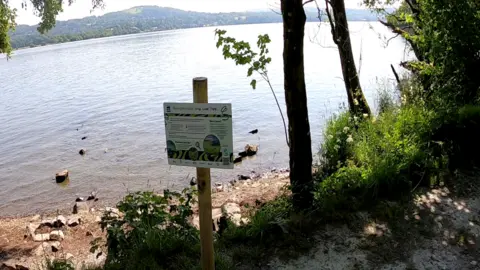
Dozens of signs warning people about the dangers of algae poisoning are to be placed around England's largest lake.
About 40 notice boards alerting visitors to blue-green algae blooms, which can produce toxins that make humans ill and be fatal to pets, will be installed at Windermere, in the Lake District.
Blooms occur naturally but are more frequent during warm, dry weather and are exacerbated by nutrients from phosphate in pollutants such as sewage.
Funded by the Environment Agency (EA), a further 40 signs will be placed at other locations across Cumbria.
The Love Windermere Partnership, which includes organisations such as the EA, Lake District National Park Authority and United Utilities, said it was installing the permanent signs in response to requests for "clearer and more consistent public information".
As well as explaining what blue-green algae looks like, the notices will provide guidance on where to find current information about blooms and how to report suspected sightings using the Bloomin' Algae app.
The microscopic organisms can look like blue-green paint, scum or greenish-brown discolouration.
'Informed decisions'
Until now, temporary notices have been put up whenever there were outbreaks around Windermere.
Liz Cheslett-Davey, catchment co-ordinator at the EA, said the algae could "appear quickly and the conditions that encourage it to form aren't always easy to predict".
Clear on-site signage, she added, would help people "make informed decisions about using the water safely".
Last month it was reported a dog died after ingesting algae at Coniston Water.
Anyone whose animal has been swimming or drinking from an algae-affected area and begins suffering from vomiting, diarrhoea, seizures or breathing difficulties is advised to consult a vet immediately.
Follow BBC Cumbria on X, Facebook, Nextdoor and Instagram and listen to Radio Cumbria on BBC Sounds.
