STV staff to strike on Scottish election results day

 Getty Images
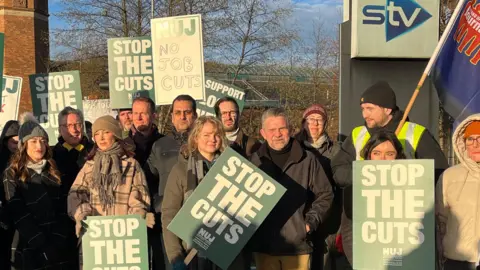
Journalists and technical workers at STV are to strike next month on the day when results are coming in from the Scottish Parliament election.
Members of both the National Union of Journalists (NUJ) and broadcasting union Bectu, which represents technical staff, are set to walk out on Friday 8 May.
The date was chosen to coincide with the vote count for the election and could mean the planned special results programme will be badly disrupted or cancelled.
The dispute is over a pay freeze and not directly linked to planned programme cuts at the station.
Nick McGowan-Lowe, the NUJ's Scotland organiser, said workers were "overworked and underpaid" as its members have seen jobs in the newsroom cut back but with workloads remaining the same.
He said: "Journalists at STV have no faith in the current management at STV , nor their current strategy, but tabling a fair pay offer would be the best first step to regaining their trust."
Paul McManus, Bectu's negotiation officer for Scotland, added that staff at STV had been left with no choice but there was still time for the company to avoid the strike.
An STV spokesperson said: "We recognise a temporary salary freeze is challenging for colleagues, but we've had to take a range of measures to respond to the market conditions facing the media sector.
"Returning the business to a strong financial footing is our priority and will protect the long term interests of our colleagues.
"We are disappointed that the planned day of action will impact our audiences and we remain committed to continuing the dialogue with the joint unions."
The Glasgow-based broadcaster has been affected by a fall in TV advertising.
Last summer its share price fell badly after a profit warning, with the company currently worth less than £50m on the stock market.
In a letter to the unions, STV said: "A temporary salary freeze for this year is [...] our only option at this stage as we prioritise returning (the) business to profitability."
The pay freeze follows STV launching a new radio station at the cost of £500,000 in 2025.
The NUJ has been on strike at STV on three occasions over the past two years.
The last strike was in January over plans for major changes to news programmes and the risk of compulsory redundancies.
Each time all Scottish news programmes were cancelled but network programmes and adverts went out as normal.
STV has already said it will not be running an all-day election results programme similar to the one planned by the BBC.
Instead it announced plans to run a special results programme from 17:00 on 8 May followed by the STV News at 6.
Later in the day it plans to show a special edition of its current affairs programme Scotland Tonight but all of these programmes could be affected if the strike goes ahead.
The pay row comes alongside a controversy over planned changes to news programmes.
STV currently has two entirely separate news services - one for the central belt, the other for the north. This is the final legacy of Grampian Television, which used to provide a range of local programmes for northern viewers.
The company is proposing a merger of the two news services.
The main 18:00 news programme would still include around nine minutes' worth of material only seen by viewers in the north but most of the programme and the short news bulletins at other times would go out across both areas.
The proposals were widely condemned by politicians and business groups in the north of Scotland when they were first announced last September.
But STV has stressed it will still have journalists in Dundee, Aberdeen and Inverness.
TV regulator Ofcom is due to say whether it will allow the changes to happen in May.
