How did 16 cats die in an abandoned garden pond?

 Paula Singleton
Warning: This story contains distressing details
It started with a grim report of the body of a cat floating in a large fish pond at the back of an empty house.
What was ultimately discovered, though, was a scene so horrific it has shocked a community in Coventry and left a string of unanswered questions.
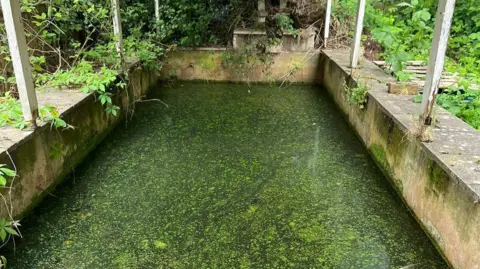
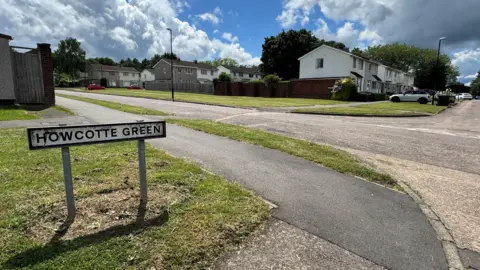
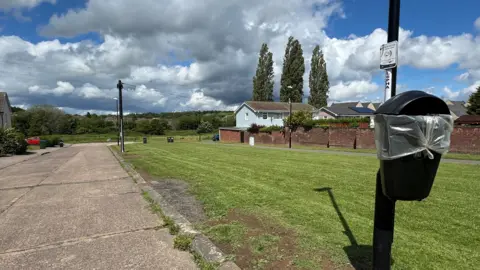
In Howcotte Green, a street of semi-detached homes in Canley, lies an unassuming "garden of horrors", where the remains of 16 cats, including skulls, were found in a 6ft deep water tank when children playing hide and seek raised the alarm.
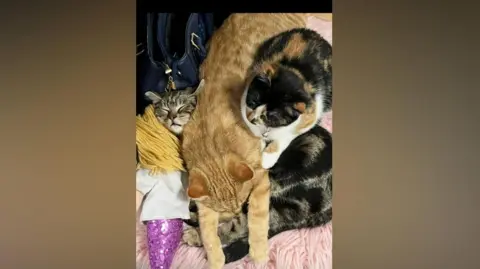
It has been almost three weeks since Paula Singleton, who spent hours trawling the pond armed with a fishing net, made the discovery of what appears to be a mass watery grave. It included two of her own pets that had gone missing weeks earlier.
Some of the images she took of the scene are too graphic to publish. Singleton said one of her cats had its jaw missing while the body of another was found on the grass with no legs, head or tail.
The RSPCA, which is leading inquiries along with West Midlands Police, said it was "very concerned" and was continuing to investigate the incident.
But although the charity said it was keeping an "open mind", it has largely dispelled suggestions of foul play, suggesting it is far more likely the cats have accidentally fallen in and drowned.
Vets that examined the remains could not find evidence they had been physically attacked, the RSPCA said.
"At this stage we have no evidence or information from the public that this was deliberate," the charity added.
"It is possible it may have been a tragic accident with the cats falling into the water and unable to escape, which were not discovered as the house was empty."
Singleton, who owns 10 cats and has taken in many strays in the area, rejects this theory.
Cats are known for a dislike of water, in part due to their evolutionary background, as most cat fur is not water-resistant and can become heavy and uncomfortable when submerged.
"It's crazy to think that they've just fallen in," she said.
"I've seen some of the comments where they've said, 'oh, could they have just been having a drink and fell in?' No, those cats don't pick a pond that big to have a drink out of. They'd rather a puddle."
Shocking discovery
Singleton had posted an appeal for help on Facebook in April when her one-year-old cat Gingernut uncharacteristically went missing, followed by four-year-old Clyde a few weeks later.
She said three children on the street were playing hide and seek on 17 May, when one of the boys decided to hide in the garden, where he spotted a cat floating on the surface of the water.
"He ran home to tell his mum and she said, go and tell Paula, because I am sort of like the cat lady," she explained.
"He came running over to tell me then and he took me down there, but... I sort of had like a sinking gut and I thought, oh, not my little Ginger.
"I could see there was more than one dead cat floating."
 Paula Singleton
The semi-detached house, in a quiet suburb just a short drive from Warwick University, has a small for sale sign outside the front and is currently being advertised for £160,000.
The listing describes the three-bedroom property as having a "good-sized garden" with possible scope for landscaping and an extension.
The BBC has not spoken to the owner.
Since the distressing discovery, Singleton said she had gone back to the property a number of times and noticed boards had been placed over the open water.
Clyde had walked the same path for three years, so she says she knows for sure he had not just simply fallen into the water, which was is about 20ft (6m) by 10ft (3m) and 6ft deep.
Cats 'typically cautious'
Cats are very selective about water sources and tend to prefer fresh, clean, moving water, such as puddles, taps and foundations, with water with visible algae usually less appealing.
Izzy Hocking, from Cats Protection, said they were "typically cautious around water and so are unlikely to fall in".
"However, accidents can occur, particularly where ponds have steep or slippery edges and no accessible exit points," she said.
She said kittens and older or unwell cats may be more vulnerable, as they may have poorer balance or reduced ability to climb out.
"Without an easy escape route, there is an increased risk of exhaustion and, in very rare cases, drowning," she added.
Disposable blue surgical gloves in the water, captured in photos taken by Singleton when she first made the discovery, have deepened the mystery.
She said there was also a box of the gloves on a table in the garden.
Three cats found intact in the pond were currently undergoing post-mortem examinations, Singleton said.
She said the RSPCA initially said she would have to pay for post-mortems and that only two of the cats could be examined because they were thought to be her missing pets.
But she was later told all three could be tested, with a GoFundMe raising about £2,300 to cover costs for the examinations.
Singleton then learned that because the dead cats had been frozen rather than refrigerated after being recovered, it might not be possible to determine how they died.
"[The RSPCA] said they will not be able to tell if they went in the pond alive or dead now," she said.
"I'm truly disappointed. I'm angry."
'Steep, concrete walls'
The charity said it did not arrange post-mortems as it felt the examinations would not provide any evidence of whether the deaths were deliberate or accidental.
A spokesperson added expert vets could not find evidence of skeletal trauma which would indicate the cats had been physically attacked before dying.
"Injuries to paws and the jaw could have been caused by the cats attempting to climb out of the pool, which had steep, concrete walls," they added.
But the charity also said if the post-mortem results discovered new evidence that the deaths were deliberate then it would act.
 Getty Images
While most cats do avoid water, drowning is not unheard of.
In Amsterdam, the council is reportedly spending 100,000 euros installing small staircases along its canals to help cats that have fallen in.
The city's animal welfare organisation Dierenambulance Amsterdam said 19 cats drowned in the canals in a six-month period in 2025, six of them in the city centre.
The RSPCA did not respond to questions about how common it is for this number of cats to drown in the same place, or whether it had dealt with a similar situation.
It has also not responded to questions about what could have attracted the cats to the water in the first place.
On Facebook, dozens of posts in the Coventry Cats UK Lost and Found group are from owners searching for their missing pets.
A number have gone missing in Canley, and while many have been found, others have never come home.
The sad discovery on Howcotte Green has left some wondering if the deserted pond holds the answer.
Follow BBC Coventry & Warwickshire on BBC Sounds, Facebook, X and Instagram.
