Daughters' victory after challenging father's will

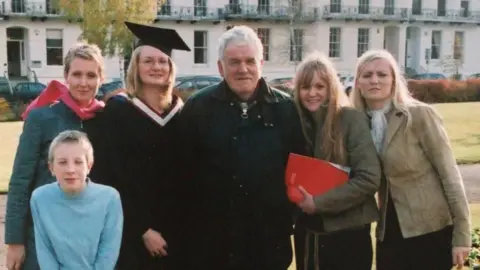 Family handout
Four sisters will inherit their father's estate after successfully challenging a will he made while suffering from delusional beliefs about them.
Michael Gwilliam's daughters said he had always wished to die intestate - without a will - so they would automatically inherit his estate, worth between £750,000 and £1m.
But when he died in 2022 at the age of 79, his daughters discovered he had made a will while experiencing late onset schizophrenia.
The mental health condition caused Gwilliam to suffer delusions, including that his daughters and neighbours were conspiring against him.
He was sectioned under the mental health act in 2014 and wrote the will later that same year. In it, he left a quarter of his estate to his daughters with the remainder to be split between his sister, former partner and three nephews.
"It was such a huge shock because we knew that Dad never wanted to make a will," said Helen Ginger, one of Michael's daughters.
Another of Gwilliam's daughters, Georgina Charles, said her father was "adamant" he did not want to write a will.
"He was so headstrong, we didn't expect, even in his ill state, to have made a will. We just didn't know how it had happened."
The sisters successfully won their High Court case in January, having challenged the will's validity on the basis their father lacked the mental capacity to write it.
The defendants in the case - Gwilliam's sister, former partner and one of his nephews - maintained the will was valid. They have not replied to the BBC's requests for comment sent via their solicitor.
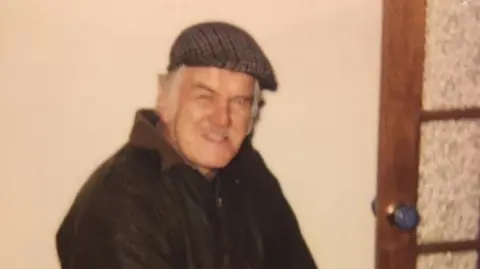 Family handout
It was alleged in court that Gwilliam's sister and former partner made false statements to him about his daughters to get him to write the will, but this was not proven.
Instead the judge ruled that while their statements were not true, the defendants believed they were.
Gwilliam's daughters maintain the comments had a huge impact on their father and his delusions, which included accusing Ginger of not being his daughter.
"At first, when I heard that, it was pretty awful to think that my dad was in that state, when he was so unwell, and he didn't know he was unwell... that he could possibly think that about me not being his daughter," she said.
Charles added: "We'd go to visit and we'd all sit down at the table and have a lovely time.
"All of a sudden, his face would change and he would say: 'You need to get out. You're not supposed to be here.'."
She said her father would "change immediately" because he thought "the things he was being told were true".
"He had moments of 'it's my daughters and everything's lovely', but then went into a panic because he shouldn't have been with us," she added.

Crucial evidence in the case was about how Gwilliam's will was prepared by an experienced paralegal who told the court they considered he had capacity to write it.
However, a mental health nurse who was present at the time said he was not asked to assess Gwilliam's capacity, something known as the "golden rule" in such circumstances.
The firm the paralegal worked for has not replied to the BBC's requests for comment.
The judge said Gwilliam's delusions led him to wrongly think his daughters were stealing from him and that he was sectioned so they could benefit financially. He ruled the false delusions were fixed in his mind and, as a result, he lacked what's known as "testamentary capacity" - making the will invalid.
Ginger said winning the case was an "unbelievable relief" after such a long and difficult case.
"We were vindicated, we knew we were right, we knew Dad and to get those wishes that he always had upheld was just the best thing for me. We've got Dad in the spotlight and we've highlighted what he wanted, his real wish."
Clare Cox, a solicitor at Willans LLP in Cheltenham, represented Gwilliam's daughters. She said if a medical assessment had been produced, it would have been found he lacked capacity to write a will.
"We could see from police records how he was feeling," she added. "He was out patrolling his garden at night barefoot and thinking people were harassing him.
"It also led us to believe that he probably did lack capacity to prepare a will. But also he had delusions about his daughters specifically, that they were trying to have him locked up, which came from when he was sectioned, when they were obviously trying to help him."
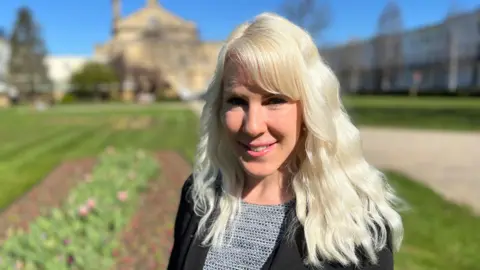
Cox said the case heard a huge amount of evidence about Gwilliam's intentions.
"He would tell his friends, he would tell his daughters he wanted to be intestate because he wanted everything to go to his girls.
"It was a conscious decision not to prepare a will, which is why the family were so shocked and it was so out of character because his historic intentions had always been 'I'm not going to'."
Ginger said the family wanted to make people aware of the issues in their case. They believe more training is needed for those providing will writing services, particularly when dealing with older people.
"They need to have an understanding of capacity, a lot deeper than they have, and to understand mental health needs and the consequences, but also think about talking to families."
Follow BBC Gloucestershire on Facebook, X and Instagram. Send your story ideas to us on email or via WhatsApp on 0800 313 4630.
