Museum gets gravestone linked to Tolpuddle Martyrs

 Fordingbridge Museum
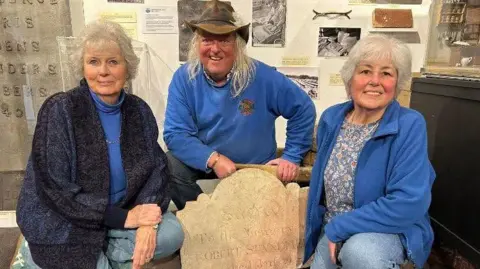
Half of a 19th century gravestone with a link to a key moment in the history of the trade union movement, has been donated to a museum.
The headstone now on display at Fordingbridge Museum, commemorates Robert Standfield, who died in 1832 and was related to two of the Tolpuddle Martyrs.
Standfield's son Thomas and grandson John were among the group of six farm labourers from Dorset, who were sent to an Australian penal colony, as punishment for protesting against their falling wages in 1834.
Museum curator, Claire Booth said the gravestone "reminds us of the difficult lives of agricultural workers trying to exist on starvation wages" at the time.
 Getty Images
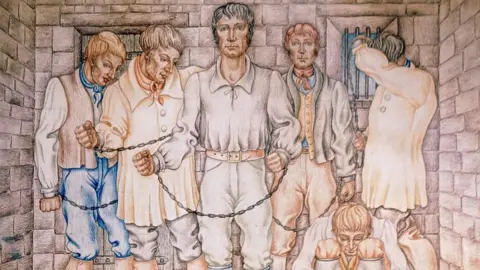
The Tolpuddle Martyrs were George Loveless, James Loveless, Thomas Standfield, John Standfield, James Brine and James Hammett.
They formed a group called the Friendly Society of Agricultural Labourers - a forerunner to a trade union - and swore an oath to protect their falling wages, which had dropped from 10 to seven shillings a week.
Swearing an oath was illegal at the time, so, after a tip-off from land owners worried about possible industrial unrest, they were arrested.
The men were put on trial in Dorchester. News of the story spread and national outrage grew.
They were tried by a jury made up of farmers and the employers of the labourers under trial.
The farmers themselves rented their land from the gentry - and it was the gentry who had opposed the idea of the labourers uniting.
George Loveless, leader of the martyrs, addressing the judge and jury, wrote: "My lord, if we had violated any law it was not done intentionally.
"We were uniting together to save ourselves, our wives and families from starvation."
They were sent to undertake forced labour in Australia for six years, which was a severe punishment at the time.
Four years after their conviction, after a change in Home Secretary and public pressure, the six men were given a complete pardon and they returned to England.
Their case helped strengthen the movements that eventually won workers legal protections.
 Fordingbridge Museum
Robert Standfield's broken gravestone was unearthed by archaeologist Phil Harding in the 1980s during a dig on the site of the demolished Greyhound Pub in Fordingbridge.
It is believed to have been made locally but was broken in the manufacturing process and was repurposed to cap a well.
Standfield's completed headstone sits at his grave in Verwood church yard.
Jane Ireland, Fordingbridge Museum director said the stone was "unique".
"It is part of the history of Fordingbridge as well as being part of a wider national history.
"It also throws a light on the moral and social standards of the 19th Century and those of today."
You can follow BBC Hampshire & Isle of Wight on Facebook, X (Twitter), or Instagram.
