What do we know about the Bedford train crash, one week on?

 PA Media
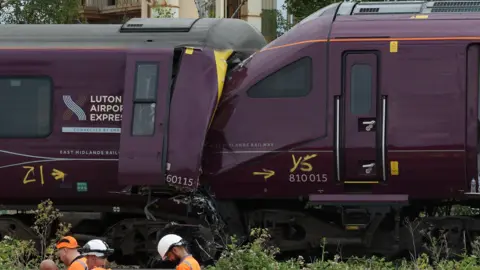
On 19 June, a passenger train bound for London struck another service heading in the same direction, killing its driver and causing 162 people to be injured.
The crash happened near Elstow, Bedfordshire, about 2.5 miles (4km) south of Bedford.
In the week since the collision, tributes have been paid to East Midlands Railway driver Shaun Burton, who died in the crash.
The Rail Accident Investigation Branch (RAIB) has published a preliminary report into the incident, although its full investigation has not yet been completed.
Network Rail has said passenger services on the Midland Main Line are due to resume on Monday.
Where did it happen?
 Justin Rivett
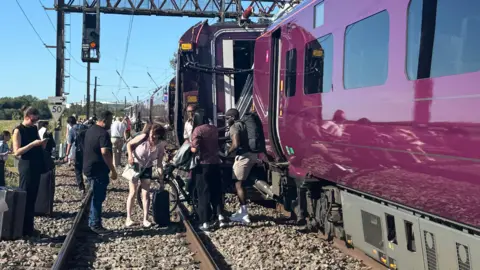
The crash took place between Bedford and Flitwick railway stations on the Midland Main Line.
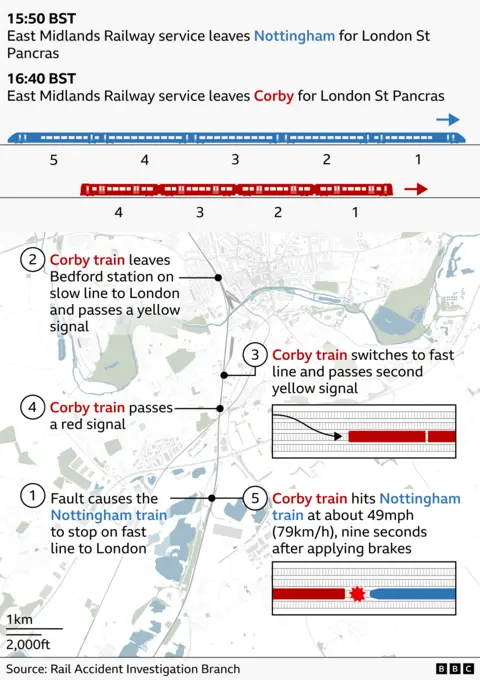
It involved two East Midlands Railway (EMR) trains, the first was a five-car service from Nottingham to London St Pancras.
That train came to an unexpected stop near a signal at Elstow after its brakes were applied because of a fault with its Automatic Warning System.
Meanwhile, a four-car carriage was on its way to the same destination from Corby.
It left platform one at Bedford Railway Station at 17:10 BST and collided with the stationary Nottingham service about five minutes later.
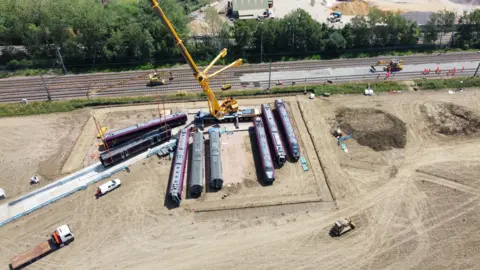
The MP for Mid Bedfordshire, Blake Stephenson, said 600m (1,968ft) of track would need to be replaced and described the crash site as "quite difficult to get to".
He said: "The overhead wires need to be removed, a crane needs access to remove train carriageways and there's been so much damage to the rails that about 600m of track needs to be replaced before the overhead wires can be replaced and then the track can reopen."
A temporary road was built to move the carriages from the track, across a field and on to a main road.
Network Rail closed the route between Bedford and Luton until this coming Monday while repair work took place.
Who was hurt?
The RAIB report said a total of 162 people were injured in the crash, with 102 of those needing hospital treatment.
Cambridgeshire-based Magpas Air Ambulance said it sent 10 medical team members to the scene and treated 30 of the most seriously injured patients.
Daryl Brown, its chief executive, said the charity had been prepared for "20 fatalities".
The day after the crash, British Transport Police confirmed nine people were in a critical condition, earlier this week that number had fallen to three.
An appeal was also launched to support those injured in the crash by three different community foundations.
Northamptonshire Community Foundation, Bedfordshire and Luton Community Foundation and Forever Notts said their appeal was made "in recognition of the cross-county impact of the incident".
 British Transport Police
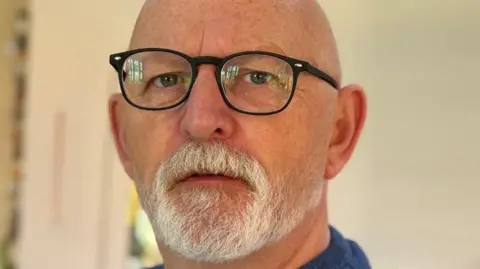
Tributes were paid to the driver who died in the crash.
The general secretary of train driver union Aslef said the 60-year-old was "devoted to his colleagues and enormously popular at his depot".
His family said they had been "devastated by his loss" while adding their thoughts "are also with those affected by this incident".
Tributes also came from Huntingdonshire District Council, where Burton had previously served as a parish and district councillor for The Stukeleys in Cambridgeshire.
Councillor Tom Sanderson said: "He did a tremendous amount for the community and all of us who had the pleasure of knowing Shaun will miss him greatly."
Why did it happen?
RAIB investigators are still analysing evidence from the crash.
Data recorders from the trains, sometimes known as "black boxes", have been recovered.
Investigators have also obtained CCTV footage, signalling data and recordings of radio communications.
Initial findings showed the Corby service had been travelling at about 76mph (122km/h) before its brakes were applied nine seconds before impact.
The maximum speed for trains in this area is between 125 mph (201 km/h) and 100 mph (161 km/h), though this depends on the type of train.
At the point of impact, the train was travelling at about 49mph (79km/h).
Prior to the collision it had passed two yellow signals, which warn a driver they should be prepared to stop at a red signal.
The train then passed a red signal shortly before colliding with the stationary train.
 John Fairhall/BBC
According to the preliminary report, a horn sounds when a train approaches a signal that is any colour other than green.
Drivers must acknowledge the warning by pressing a button, if they do not respond, the emergency brake is automatically applied.
Investigators added: "It is not yet possible to say what indication the driver received from the AWS equipment on the train or how they responded to this."
The full investigation will examine whether all systems were working correctly, the actions of those involved and the factors that may have influenced them.
Once RAIB has completed its investigation, it will publish a final report with safety recommendations.
Line to reopen
On Friday, Network Rail said recovery and repair work at the crash site had been fully completed with "passenger services on the Midland Main Line set to resume on Monday".
East Midlands Railway said it would be operating a full timetable on its Intercity route, while Thameslink said its services would also resume on Monday, after previously scheduled engineering works were completed on Saturday and Sunday.
Rail replacement buses would operate over the weekend between:
- Bedford and Luton
- Luton and West Hampstead Thameslink
- Hitchin and Luton Airport Parkway, via Luton
- Harpenden and Potters Bar, via St Albans
Do you have a story suggestion for Beds, Herts or Bucks? Contact us below.
Follow Beds, Herts and Bucks news on BBC Sounds, Facebook, Instagram and X.
