Domestic rates bills debt hits £1m in Northern Ireland
 Advice NI
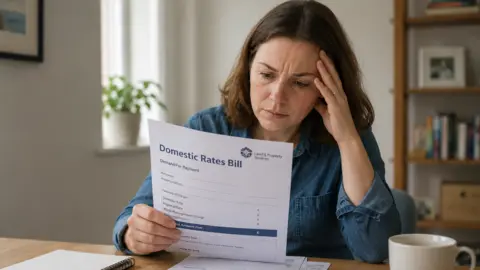
Debt from domestic rates bills increased by more than 50% last year, according to figures from Advice NI.
The charity said the bills are an increasing source of financial pressure, with its debt advice service dealing with more than £1m in total rates debts for the first time.
Along with business rates, domestic rates pay for public services at Stormont and council level, as well as projects such as events, tourism, and waste management.
The average rates bill is now £1,239, having seen a 5% uplift in the regional rate paid by all households in Northern Ireland, alongside an uplift in the district rate set by each council area.
'Should be treated as a priority debt'
 Advice NI
In 2025/26 Advice NI saw users with rates debt of a total of £1,066,170, up from £705,558 in 2024/25.
Advice NI's head of Money, Debt and Quality, Sinéad Campbell, says that stagnant wages and rising costs are pushing more people into debt.
With most users waiting two years before seeking help with mounting debt, Campbell expects that reported rates debt will increase sharply as the cost of living crisis continues to bite.
"Our research tells us that more people are having difficulty balancing the cost of running their home alongside other essential outgoings," she said.
"We want people to understand that rates bills should be treated as a priority debt.
"Falling behind on this payment can lead to serious financial and legal consequences such as a court order for money to be taken directly from your wages or benefits, or in some cases insolvency proceedings that may place someone's home at risk."
Rates debt is just one aspect of the burden facing consumers, with Advice NI saying its clients' average debt is now £12,145. The charity supported 3,500 users last year, facing a total debt of £42.5 million.
What makes up a rates bill?
There are three things that go into your domestic rates bill.
One is the value of your home. As a general rule those with properties worth more pay more although that is subject to a cap.
The second is a Northern Ireland wide regional rate, set by Stormont. That increased by 5% this year, having also increased by 5% a year earlier.
That means an extra £30 this year on the average bill funding Stormont spending – everything from schools, hospitals to housing and roads.
The last element of your rates bill depends on which council area you live in.
Each local council sets their own rate, called the district rate. That money funds most of what councils do in the year – your local leisure centre, regional tourism, and bin collections.
This year Ards and North Down had the highest percentage increase at 4.5% followed by both Belfast City Council and Derry City and Strabane at 4.48%, while Fermanagh and Omagh came in the lowest at 1.96%.
Our rates bills tend to be considerably lower than those paid in the rest of the UK as we don't pay some additional costs, including water charges.
