Buoys placed off Herm to help protect puffins

 BBC
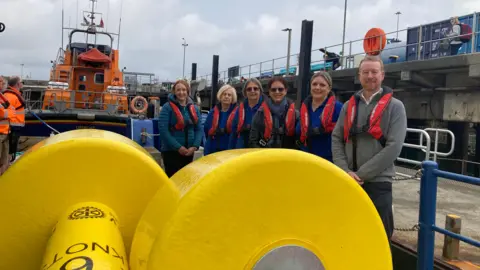
BBCBuoys have been deployed near Herm to help protect puffins.
The two puffin awareness markers have been placed adjacent to Puffin Bay to remind those using boats and jet skis of the six knot speed limit and to protect rafting puffins from disturbance.
Guernsey Ports said the internationally significant birds return to the bailiwick each year to breed.
Earlier this year thousands of dead puffins washed up on beaches in the Channel Islands after they had become starved and exhausted due to not being able to feed during storms.
 Reuters
The buoys were funded by Rotary Guernesiais, after the previous buoys were damaged due to harsh weather conditions.
Paddy Whitford, one of the incoming presidents for the club, saw puffins for the first time as the buoys were deployed.
She said: "It was exciting and slightly sobering to realise they are much smaller than I had realised."
Club president Aimee Curzon said: "I think they are lovely little creatures and it is lovely to point them out as you go past the islands so I think it is a great initiative to support."
Head of sustainability at Guernsey Ports, Lisa Duggan, said: "Puffins and other seabirds are very easily disturbed when they are rafting - so it is really important to keep a distance and slow down."
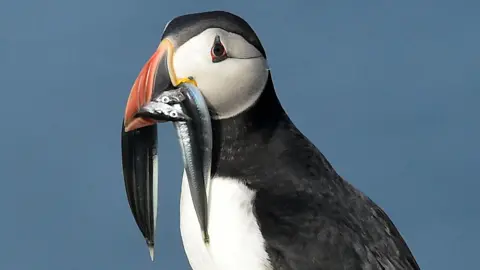
Puffins return each year to the cliffs of Herm, an internationally recognised Ramsar site, to raise their offspring.
Puffins mate for life and return to the same burrow to lay one single egg.
Once the egg has hatched, the parents leave the chick in the burrow whilst they forage at sea, primarily for sand eels.
Both adult puffins and newly fledged puffling chicks gather in groups on the water, known as rafts, to rest and socialise between feeding trips.
Follow BBC Guernsey on X and Facebook and Instagram. Send your story ideas to channel.islands@bbc.co.uk.
