Jurors, lawyers and social workers face 'resilience test' in inaccessible courts

 Vikki Walton-Cole
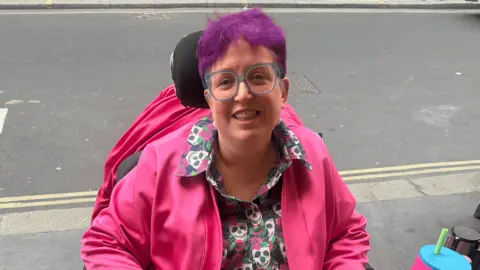
By the time disabled social worker Vikki Walton-Cole arrived at court, she was already "in pain and unable to walk".
She was not then a full-time wheelchair user. But as the court had no on-site or nearby parking, it was a "massive effort" to walk from much further disabled parking, she told BBC podcast Access All.
When she then discovered the courtroom was only accessible by stairs, she "burst into tears".
"That's obviously not a great way to arrive at court as the professional."
Walton-Cole says access issues like these were a "massive factor" in her decision to leave social work "because there's just too many barriers in the court system".
The BBC has heard that inaccessible courts have led to a number of issues for disabled people, including jurors feeling vulnerable, and lawyers having to join cases remotely despite being metres from the courtroom.
Under the Equality Act, courts must provide "reasonable adjustments" to those with disabilities.
A HM Courts and Tribunals Service (HMCTS) spokesperson said: "We are working closely with disability groups to reduce the barriers disabled people face when accessing justice."
Have you been affected by the issues raised in this story? Contact Kateryna at: accessall@bbc.co.uk
Juries are 'supposed to reflect society'
After leaving social work, Walton-Cole experienced another side of court when she was called for jury service last year at Guildford Crown Court in Surrey. She was keen to participate.
Then a full-time powerchair (electric wheelchair) user, she spent weeks asking "basic access questions", but says she eventually gave up after finding the experience "so stressful".
The court said they felt they did everything they could to meet her access needs.
Walton-Cole was repeatedly told she could be excused from jury service, but pushed against that, saying: "As a jury, we're supposed to reflect society."
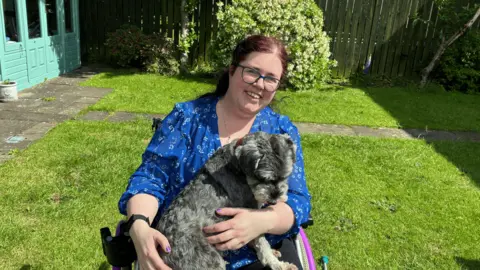
Victoria Gerrard is another wheelchair user who recently received a jury summons. She served as a juror earlier this year in Paisley Sheriff Court in Scotland.
She said there was no accessible toilet in the jury area, and "there wasn't anyone practically saying, 'If you need to use the bathroom, here's how to manage it.'
"It doesn't seem like it had been particularly thought of."
Gerrard could not use the stair-only juror exit, and had to be escorted through public areas.
This meant she regularly passed the accused and their family, who "glared" at jurors and had to be removed by police after an "outburst", leaving Gerrard feeling especially vulnerable.
On the final day of the trial, all other jurors left together and arranged onward travel in groups. Gerrard said she was "left sitting out the front of the building, feeling very exposed".
"No one even came to the door with me."
 Victoria Gerrard
Barrister Holly Girven, who is also a wheelchair user, has praised court staff for being "absolutely excellent," but says she too has faced several access challenges.
She said one court initially refused her access to the upstairs floors of a court in case there was a fire.
Girven described the accessible entrance to Edmonton County Court in London as a steep temporary ramp which she had to be pushed up by security and felt "so unsafe" using.
"I don't think putting essentially a wooden temporary ramp over a few steps you can really say that 'we are truly accessible,'" she said.
 Kateryna Pavlyuk
When a lift at Wandsworth County Court in London was out of service, Girven had to join her hearing via Microsoft Teams from a separate conference room, "while everyone, including my client, went to the courtroom".
"I must have been 10 metres from the courtroom," she said.
"You wouldn't expect a hospital to not be wheelchair-accessible. So I don't know why it's acceptable for some courts not to be."
Several wheelchair users interviewed by the BBC acknowledged the complexity and cost of upgrading old or listed court buildings, but said one simple improvement would be for courts to provide better access information.
The BBC looked at the information provided by all courts in England and Wales and found varying levels of detail on accessibility.
When we contacted courts to try and gather more detailed data on their accessible facilities, we were told by the Ministry of Justice that this level of information was not centrally available.
'Ambushed by inaccessibility'
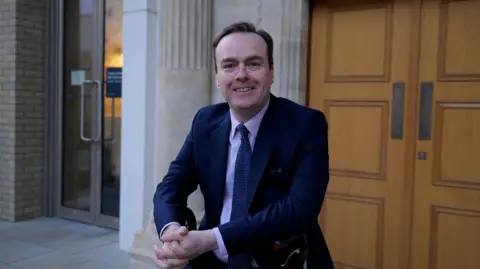
Equality law barrister Gregory Burke, a wheelchair user and the founder of AccessAble, a website which produces detailed access guides, said accessibility is also about information, attitudes and dignity as well as the facilities themselves.
Burke said a coroner once told him that he was "lucky" they allowed him to address the court seated, and he says a judge told him – in front of his client – "not to wreck the place" as he navigated the judge's chambers in a wheelchair.
He stressed these incidents are notable exceptions, and that "overwhelmingly, the judiciary have been very inclusive and accommodating".
But he said disabled court users shouldn't be "ambushed by inaccessibility" and "have to undergo a resilience test" in going to court.
He said this extra "cognitive load" can affect a lawyer or witness's ability to give their best evidence, which could "have a bearing on someone's liberty, or the custody of a child, or whether a business survives or not".
 Gregory Burke
A report by the Magistrates' Association found that inaccessibility "severely damages morale and has led to resignations".
The issues highlighted in the report included a poorly positioned accessible toilet which "risked a wheelchair user falling down a flight of stairs".
The report concluded: "By failing to ensure all court buildings are accessible, the court estate is undermining the efficient administration of justice."
A HMCTS spokesperson said: "We understand that accessibility remains a challenge in some buildings.
"We prioritise making sure courts are accessible to all users by listing cases at suitable venues and equipping our staff with mandatory training on reasonable adjustments to deliver a justice system that meets everyone's needs."
The Scottish Courts and Tribunals Service said they have a webpage for jurors with information on accessibility, and jury liaison officers who can assist disabled jurors.
A spokesperson said: "We aim to make the courts as inviting and accessible as possible for everyone and welcome all feedback on how we can improve."
