Library to close while Raac is removed from roof

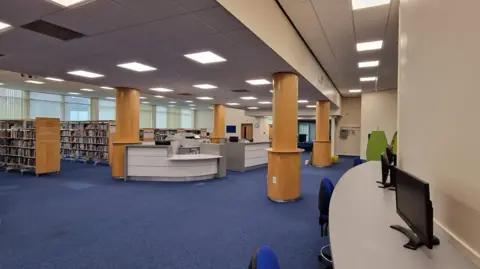 PA
PAA library will close for a month while work resumes to remove unsafe concrete from its roof.
Work to extract reinforced autoclaved aerated concrete (Raac) at Poole Library will continue between 26 August and 25 September.
The removal began in May after the material, which is weaker than conventional concrete, was discovered in 2025 and the building was temporarily partially closed as a precaution.
The next phase of the work would involve continuous drilling, demolition, and waste removal, the council said.
Bournemouth, Christchurch and Poole (BCP) Council's cabinet member for libraries, Andy Martin, said: "We have now reached a stage of the project where the level of noise and disruption means it is no longer practical to continue providing services during the week."
The library will remain open on Saturdays from 09:00 to 17:00 BST, while work is paused over the weekends.
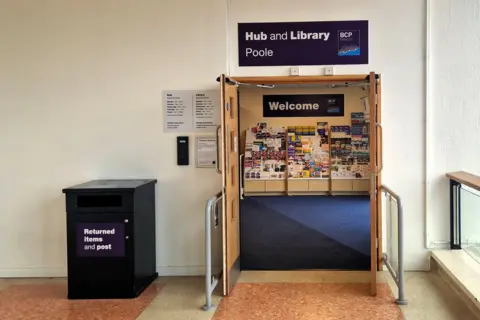 PA
PAMartin said the authority had worked closely with the Dolphin Centre, in which the library was located, and contractors to keep services operating.
"We appreciate this will be inconvenient and would like to thank residents for their patience while these essential repairs are carried out," he added.
According to the Local Democracy Reporting Service, a second period of major repairs is likely to take place later in 2026. The work was expected to last one year.
Library users can continue to return items using the bin outside the entrance.
Alternative library locations nearby include Hamworthy, Oakdale, Parkstone, Branksome, and Broadstone.
Digital services for customer services remain available on the council website, or in-person support can be accessed at the Civic Centre on Bourne Avenue in Bournemouth.
The Dolphin, originally The Arndale Centre, said in 2025 that when it had been initially constructed in 1969 Raac had been commonly used in the construction of public buildings.
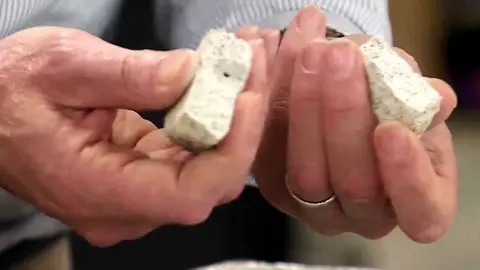
Raac is a lightweight material that was used mostly in flat roofing, but also in floors and walls, between the 1950s and 1990s.
It is a cheaper alternative to standard concrete but less durable and has a lifespan of about 30 years.
It is susceptible to structural failure when exposed to moisture.
