Ex-teacher sceptical of under-16s social media ban

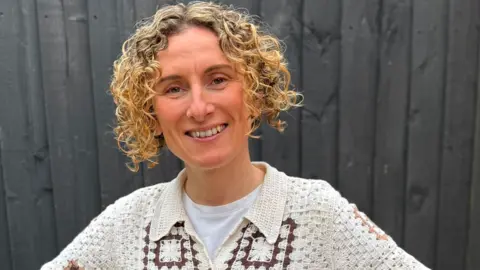 Susie Dunigan
As Prime Minister Sir Keir Starmer pulls the plug on social media for under-16s, a former teacher has questioned how effective the ban will prove, noting that young people are tech-savvy and may find ways around it.
"I'm quite relieved for our young people that there may be some form of safety measures put in for them. I am also a little dubious around how this will work," Susie Dunigan said.
Dunigan is a former Birmingham assistant head teacher and now runs The Enlightened Parent, which works to help give parents and carers information about how to protect children online.
She drew on examples in Australia where they introduced a ban but said there were many young people still on social media.
"Whether they are using accounts where they've said their age is older than they really are or are using other platforms that aren't included in the ban, it'll be really interesting to see how this moves forward," she said.
In Australia, 70% of parents have told the country's internet regulator their children were still on banned platforms.
Dunigan said while harmful content that young people encounter online needed to be monitored, the addictive nature of social media could make that a challenge.
"You are what you see, and I absolutely feel it myself. If I watch certain type of content I definitely feel it has [an] effect on my opinions, the things I do and think about," she said.
"If we talk just about violent content, they become desensitised to these things, to seeing violence, and I'm not saying that every child will then go out and do something, but we know that it does have any big impact on the way that they view violence towards other people."
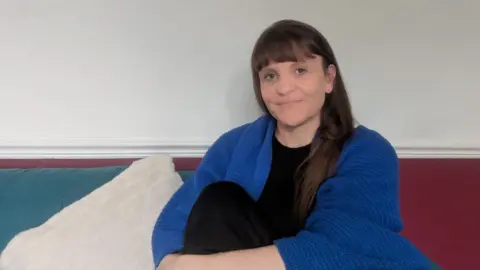 Tonia Dunn
The UK ban, announced on Monday, will cover platforms including Snapchat, TikTok, YouTube, Instagram, Facebook and X, the government said.
An exhaustive list of which sites would be affected has not been released. However the government said it would apply to those "whose purpose is to enable social interaction and which allow users to post material".
Starmer said that the ban would take effect by spring 2027.
"I think it's great that Starmer, is going to put something in place," Dunigan said.
"This is where I think parents play such a big part, because whatever is put in place by external agencies, we as parents have to take responsibility to decide what's right for our children."
Tonia Dunn, a mother-of-five from Boldmere, agreed there was a need for more online regulation after having her own experience.
"One of my children had a YouTube account, which I helped them set up, and they put videos of themselves talking about toys and I looked at who was following the account it was mostly male adults," she said.
As a result, she made the account private, limiting who could access the content.
"One particular account had liked lots of videos of children and a lot of inappropriate, legal but inappropriate videos," she said.
"How can we have a situation where we've got children and adults mixing together online and there's no safeguards?"
Back to 1988?
Although Dunn welcomed the ban, she said children needed to be offered an alternative.
"[In] this generation their play is different, the way they spend their time and their brains have been affected [by] social media," she said.
"You can't just stop something and then expect the world's going to go back to 1988... I don't feel fully confident that how they're going to implement this is going to have the impact that they're desiring."
The government said "highly effective age assurance" measures would be used to check the age of those using social media.
This typically involves requiring companies to use tech that accurately estimates or verifies someone's age - such as face scans or asking for ID.
The regulator Ofcom has been asked to carry out a rapid study to identify the best ways to verify if someone is over 16.
Follow BBC Birmingham on BBC Sounds, Facebook, X and Instagram.
