Olympian says swimming lessons gap disappointing

 Getty Images
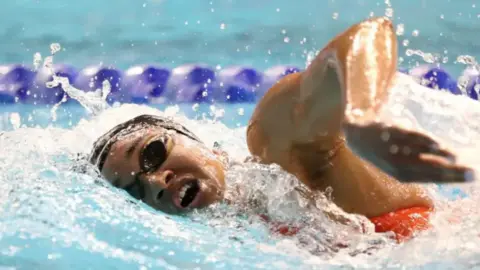
A former Olympic swimmer has described new research into swimming lesson gaps for young pupils as disappointing.
One third of children in the West Midlands are unable to swim 25 metres when they leave primary school, research by the BBC's England Data Unit shows
Birmingham's Alice Dearing, the first black woman to represent Team GB in swimming at an Olympic Games, said: "Swimming is a life skill, it's so important that we have our children growing up with this, knowing basic water safety and being able to keep themselves safe in and around water."
A Department for Education (DfE) spokesperson said it was aware of the gap and it needed "to change".
The data came from a Freedom of Information request and it revealed that 42% of Year 6 children in Wolverhampton can't swim 25 metres - with 46% of Year 6 children in Birmingham in the same position.
"It's a serious issue, with the heatwave we need this awareness and all the help we can get to make sure they are safe." Dearing added.
 PA Media
The research also found 70% of 2024-25 Year 6 leavers nationally could on average perform a safe self-rescue, only half of children from schools with the highest level of free meal eligibility could do so.
A safe self-rescue includes being able to tread water for 30 seconds, children being able to float on their back for 60 seconds and swim 15m to exit the water unaided.
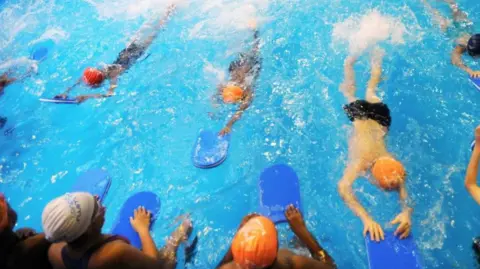
Most school groups only get six weeks of 30-minute sessions to learn basic swimming skills – three hours in total.
Dearing said: "There is a lot of work to be done, I know there are a lot of people working very hard to make sure these issues as we move forward over the next 10 years are diminished, and we see these numbers come down.
"But unfortunately for whatever reason at the moment it's not quite happening in certain areas of the West Midlands."
'Not just a sport'
Alex Barrett, of Walsall-based Swimming Teachers Association, said he believes swimming in some schools is not "consistent"
"We advocate for more access, better funding for transport, and for children to have access outside of school and be able to swim with their families as well," he said.
A spokesperson for the DfE said a new PE Partnership Network would help close the gap for disadvantaged children.
It will bring together schools, local clubs and national bodies like Swim England.
"This means targeted support for the areas and pupils who need it most, so that every child, wherever they live, gets the same chance to learn to swim," the spokesperson said.
Swim England is working closely with the government to support the delivery of school swimming lessons.
"Swimming is a life skill, not just a sport, and every child should have the opportunity to leave primary school able to swim and be safe in, on and around water," a spokesperson said.
Follow BBC Birmingham on BBC Sounds, Facebook, X and Instagram.
