Key lifestyle habits help tackle depression

 Getty Images
A world-leading study has found a new link between key lifestyle habits and reducing depression and anxiety.
Researchers from the Bristol-based Children of the 90s project monitored more than 3,300 people aged in their 20s and early 30s to study their wellbeing.
Key findings showed that strong social connections, emotional and practical support and fewer health problems were linked to a greater feeling of meaning in life and reduced people developing mental health issues.
Isaac Halstead, lead author, said the study "shines a light on the how the presence or absence of meaning in life is associated with mental health".
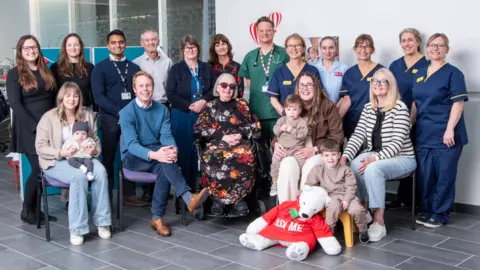
The Children of the 90s project, also known as Avon Longitudinal Study of Parents or Children (ALSPAC), is the most detailed project of its kind in the world and has led to discoveries in all aspects of health and wellbeing from eczema, bodyweight and cancer.
Halstead, a senior research associate at the University of Bristol, added: "Young people in the UK are increasingly under pressure - traditional life milestones are being moved to later in development or potentially becoming less relevant, and their mental health is suffering.
"We wanted to examine at this point in time, what factors lead an individual to have a greater sense of meaning in life or what predisposes someone towards searching for meaning," he said.
 Christy Nunn
Zara Rose, 36, who has been involved in the project along with her twin sister, told researchers her connection with her five children has boosted her wellbeing.
"My entire meaning of life is to live for my children," she said.
"I got my fulfilment through having to immediately finish GCSEs, go straight to university, get a job, buy a house very quickly - everything came very fast just from having to set down roots very early on.
"I lost a lot of my identity through my children, but I have the excitement of one day in the near future living free, being able to go on holidays, experience nights out, going out for meals - I guess it's in reverse to lots of people," she added.
 University of Bristol
Jacob Dyer, 34, was enrolled in the project by his mother at birth. He told researchers he gained his meaning of life by helping others.
Dyer said he had been inspired to become a blood donor and wanted to "do the maximum amount of help to the maximum amount of people to the best of my capability".
"I've come to realise that it could be a chicken and an egg sort of thing where Children of the 90s inspired me to help others," said Dyer.
"The study put blood, organ, stem cell and whatever donations in a positive light and that has influenced me to do more of that."
 Children of the 90s
Researchers found that a belief in a higher power and attending a place of worship were also linked to a greater sense of meaning in life.
Rachel Newton, 26, from the Diocese of Bristol, said having a faith can help answer life's big questions, such as who we are and why we are here.
"My faith is a foundation for everything that I do. It gives me a sense of purpose, which ultimately gives me a good quality of life because I feel like I'm here for a reason.
"I believe that God made me and that he wants me here to fulfil the things that he's called of me," she said.
Follow BBC Bristol on Facebook, X and Instagram. Send your story ideas to us on email or via WhatsApp on 0800 313 4630.
