Firefighters hope for miracle earthquake rescue

 UK International Search and Rescue
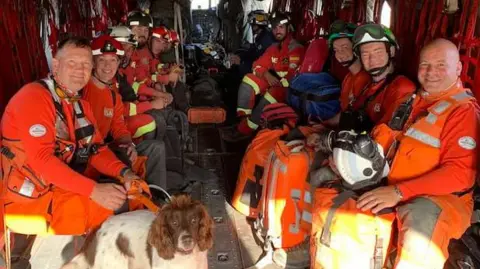
A firefighter helping international search and rescue efforts in Venezuela said his team retained hope despite the window for finding survivors shrinking.
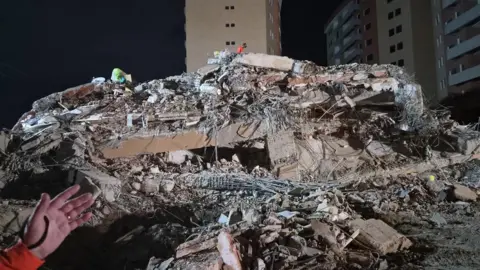
Mark Leeson, from West Midlands Fire Service, is there as part of a UK-wide response team. The country has been devastated by twin earthquakes that hit on Wednesday, killing at least 1,450 people.
"There's obviously a lot of devastation, collapsed buildings, houses, you can see homeless people with no places to go... it's shocking to see," he said.
When it comes to finding survivors, he said a miracle rescue could happen every now and again. "You've always got that hope that you can make a difference," he added.
 UK International Search and Rescue
Tens of thousands more people are missing and search efforts are continuing, but hopes are diminishing more survivors will be found. The British government has announced £2m of humanitarian funding.
Station commander Leeson, normally based in Bedworth, Warwickshire, is part of UK Fire & Rescue International Search and Rescue (UK ISAR).
UK ISAR can deploy within a 6-10 hour timeframe and includes personnel from 14 of the UK's fire & rescue services.
The team sends in search and rescue dogs who are trained to only find living survivors.
The dogs bark when they pick up a scent before the rescue team is deployed.
"We will bring in our urban search and rescue team members.... they are the experts who go in, break through concrete, put through steel and make access to the collapsed building to recover what casualties we can.”
The biggest risk are the aftershocks, but they have not had any at the moment, he added.
 UK International Search and Rescue
Follow BBC Birmingham on BBC Sounds, Facebook, X and Instagram.
