The escape room training doctors for life on the wards

 BBC
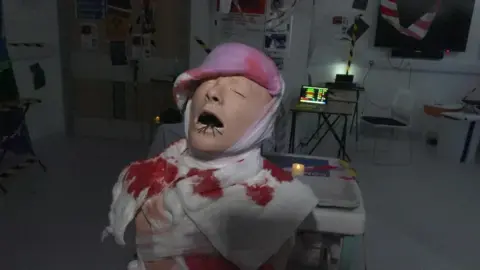
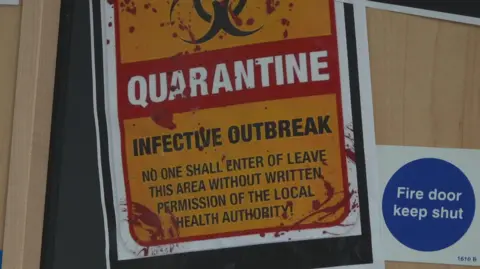
BBCIt's dark, chaotic and the clock is ticking — the two rooms that make up the escape room challenge contain scenes that look more like Halloween horrors than a hospital ward.
They are designed to resemble treatment areas during a pandemic, with dummies dressed as patients groaning and making vomiting sounds in subdued lighting.
Students from the University of Exeter are being tested in a high-pressure challenge designed to mirror the realities of hospital life.
Locked inside, they must diagnose medical emergencies, solve puzzles and work together to escape both rooms in less than 60 minutes.
The unique training exercise comes just months before they begin working on hospital wards.
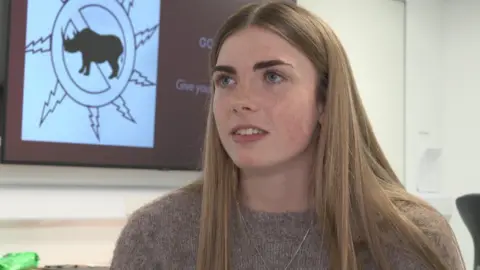
For second-year student Maya Pearson, the experience was overwhelming at first.
"I felt helpless when I went in," she said. "But working as a team and sharing ideas really helped."
The exercise, developed by staff and academics at the University of Exeter Medical School, aims to help students apply what they have learned in a high-pressure environment before moving on to wards.
Senior tutor, Elizabeth Tompkins, said the idea came from the growing popularity of escape rooms and a desire to make learning more engaging.
She added it has been a successful part of their training for five years.
"We wanted to challenge students in a different way and get them applying everything they've learned," she said.
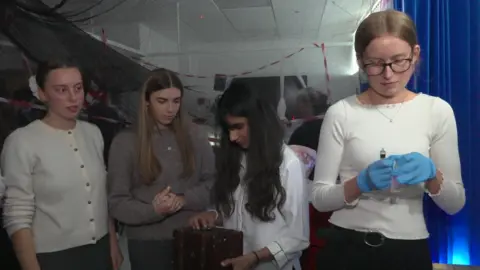
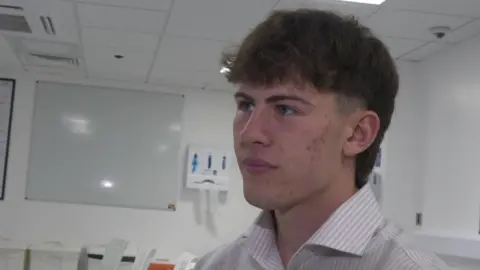
For many, the pressure quickly felt realistic.
Student John Morris said the challenge initially caused him to "freeze".
"But then it all came back — it felt like being in a real situation," he said.
Others said the chaos and lack of structure was what made it valuable.
"It didn't feel like a lesson," said Amelie Allen. "We had no direction — we just had to work it out ourselves."
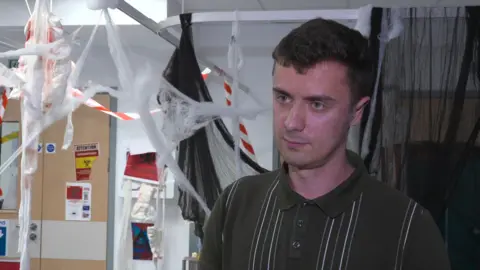
Tutors say that unpredictability is key.
Clinical skills tutor Andy Garcia said the exercise is designed as a final step before students begin working on wards later this year. He added it helps them cope with distractions and stay focused on patient care.
"It's chaotic, but it teaches them to prioritise and stick to their principles," he said.
Despite the pressure, the group we followed successfully escaped both rooms in just over 40 minutes.
Students will begin working on hospital wards in the coming months, with tutors hoping the experience will help them feel more confident when treating real patients.
Follow BBC Devon on X, Facebook and Instagram. Send your story ideas to spotlight@bbc.co.uk.
