US sanctions more Cuban companies and officials

 AFP via Getty Images
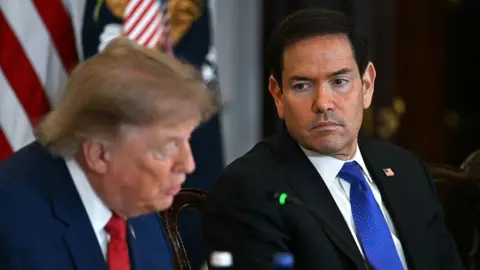
The US has imposed a new round of sanctions on Cuban officials and companies, Secretary of State Marco Rubio says.
Nine state-owned mining, metal and building firms, the Ministry of Construction and officials connected to a Cuban-based international institute have been named in the latest tranche of economic sanctions.
Rubio accused various figures of "ferrying a new brigade of international sympathisers to Havana to network with regime officials" to coincide with the late former leader Fidel Castro's 100th birthday.
Cuba has denounced all sanctions imposed by the Trump administration, which are part of a wider pressure campaign against the Caribbean island's leadership.
Rubio said in a statement that the figures targeted by the sanctions form "part of the regime's raison d'être of exporting Marxism, racial resentment and Communist violence across the world".
He continued: "Today's designations make clear that the Trump administration will not tolerate the Cuban regime's efforts to fund its repression or continue its decades-long campaign of subversive anti-American activities."
The leadership of the Cuban Institute of Friendship with the Peoples (ICAP) was targeted in the latest round of US sanctions.
Founded in 1960 by Castro, the ICAP has traditionally been used by the Cuban government to foster ties with like-minded organisations around the world by hosting visiting groups of activists who also promote pro-Cuban government campaigns in their own countries.
Rubio, however, accuses the group of "misleading and corrupting American citizens with lies, spy tradecraft and malfeasance".
Among those to be targeted is the group's president, Fernando Gonzalez Llort, a member of a spy ring called the Cuban Five, who were part of a prisoner exchange during the Obama-era thaw in relations with Havana.
Cuban Foreign Minister Bruno Rodríguez condemned Rubio's announcement, writing on X that he was trying to "punish" Cuban companies and further "harm" the economy.
Rodríguez added it would prevent the government "from guaranteeing basic services to the population, which are already in a critical situation as a result of the blockade".
Senior Cuban figures across the energy, financial and defence sectors are already subject to US sanctions.
US sanctions and an effective oil blockade have exacerbated already existing shortages of fuel, medicines and food in Cuba.
With the island's ageing electricity infrastructure heavily reliant on fuel imports, hospitals have resorted to using emergency generators, while citizens have been subject to frequent blackouts, triggering rare protests.
The Trump administration has also targeted Cuba's tourism sector, a key source of income for Cuba's beleaguered government, driving down visitor numbers.
