Closed eight-mile railway still fondly remembered

 Bill Martin
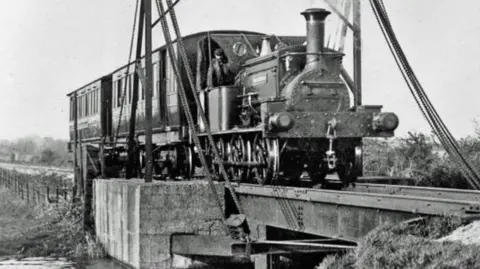
It was slow, unreliable and prone to delays, but an unusual railway in Sussex is still remembered almost a century after it closed.
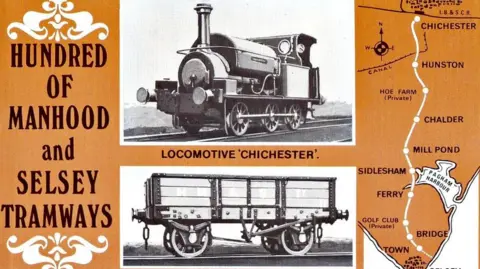
The Hundred of Manhood and Selsey Tramway, later known as the West Sussex Railway, connected Chichester and Selsey between 1897 and 1935 and once carried passengers, farm produce and fish between the two towns.
The eight-mile (13km) route crossed the Manhood Peninsula and became known by several nicknames, including the "Sidlesham Snail".
Sections of the route can still be followed on foot through countryside, farmland and the edge of Pagham Harbour.
David Pearce, of the Manhood Wildlife & Heritage Group, told Secret Sussex the line was built "in a very, very economic fashion" and became known for being slow and unreliable.
Pearce said the tramway was built in just four months at a cost of £31,000 and did not comply with some of the regulations faced by conventional railways.
He added: "Therefore, it had to be called a tramway."
 Manhood Wildlife & Heritage Group
It was hoped the line would improve transport links for local farmers and fishermen while also helping develop Selsey as a seaside resort, he said.
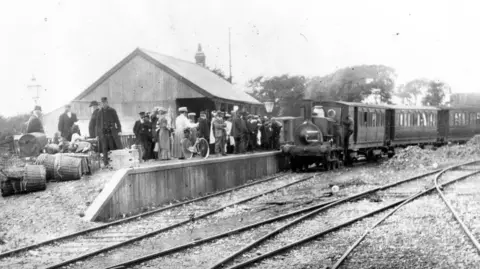
The railway quickly acquired a reputation for its eccentric character. With up to 11 stops along the route, trains stopped and started every few minutes.
 Manhood Wildlife & Heritage Group
Pearce said the line became known by names including the "Hedgerow Line" and the "Blackberry Line" because passengers could reportedly pick blackberries from carriage windows.
Other nicknames were less flattering.
Pearce said: "You had other nicknames as well like the Bumpety Bump and the Sidlesham Snail because it was just so slow and unreliable."
The line became the subject of songs, postcards and local jokes. One postcard read: "I would have written sooner, but I've only just arrived."
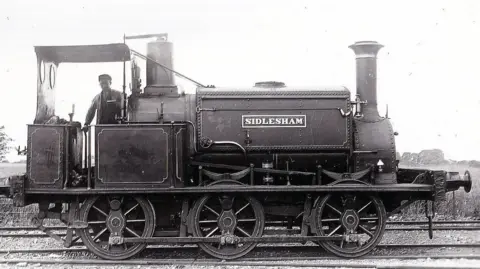
Flooding also added to the railway's troubles. In 1910, water from Pagham Harbour inundated Sidlesham station, forcing passengers to continue their journeys by horse and carriage.
 Manhood Wildlife & Heritage Group
Bill Martin, of the Manhood Wildlife & Heritage Group, said despite the humour, the railway remained an important part of local life.
Today, volunteers maintain walking routes and interpretation boards along parts of the former line, helping visitors discover its story.
Pearce said: "I think a lot of people just don't know anything about it, so to come on this walk helps people to understand and appreciate the history and the nature of where they live."
Follow BBC Sussex on Facebook, X, and Instagram and listen to BBC Radio Sussex on Sounds. Send your story ideas to southeasttoday@bbc.co.uk or WhatsApp us on 08081 002250.
