The Port Talbot writer following in the footsteps of Sally Rooney

 BBC
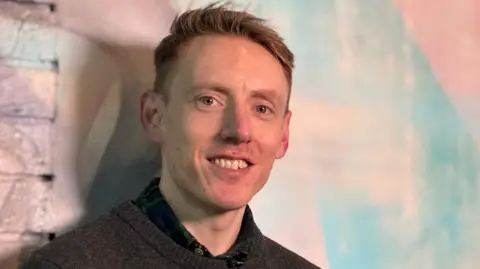
BBCWhen Jon Doyle got a text from his publisher out of the blue, he assumed his debut book was about to be dropped.
But it turned out his novel, Communion, which is set in Doyle's hometown of Port Talbot, had just been included on a list that's previously celebrated Normal People author Sally Rooney and Booker Prize winner Douglas Stuart.
Doyle, who still lives in the family home in Taibach, "punched the air" in disbelief when he found out and said it felt like a "small victory".
Despite an impressive list of actors hailing from the town - Richard Burton, Anthony Hopkins and Michael Sheen - Doyle, 35, said it took a long time to realise his home could rival cities like New York or London as a setting for the kind of books he wanted to write.
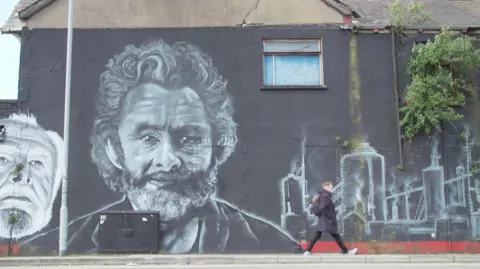
"I'm Port Talbot born and bred," said Doyle.
"My great-grandfather was a steelworker, my grandfather was a steelworker, and then basically all my uncles from the next generation down were in the steelworks as well."
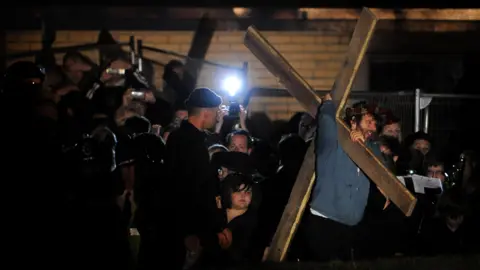
Communion's plot follows the return of an unnamed Hollywood star to Port Talbot to stage a community play which takes over the entire town over one weekend.
It's a nod to Michael Sheen's production The Passion of Port Talbot in 2011, which brought global attention to the town.
The book was written against the backdrop of a difficult time for the town.
In October 2024, Tata Steel's last blast furnace was switched off, with the aim of building a new electric arc furnace by the end of 2027.
Though the new process will be greener, a fraction of the staff will be needed, with a loss of more than 2,000 jobs.
 Getty Images
In Communion, Doyle has combined those events with a fictional version of the industrial action which occurred after Tata's announcement that it planned to shut off the blast furnaces.
"I'd probably finished the first draft before it really became clear what was happening," said Doyle.
"The works have been in various stages of danger for years and years and years. There's always been a blade above our heads."
As he reworked the novel, he said the arguments around the closure were all playing out and the characters reflected the complex viewpoints that emerged on both sides.
"I could sort of look at the arguments on the news and with friends in town and talk to people. It let me tap into all the various different points of view on offer.
"[In the book] people literally contradict themselves in the same sentence. I think you could be a steelworker and you could be proud of where you work, your heritage, your family history within that industry and be concerned about the environment. Those two things can exist within the same person."
'Somewhere I'm proud to be from'
High-profile literary agents started knocking on Doyle's door after the opening chapter of Communion won the Writer's and Artist's Yearbook working class writers' prize.
Doyle said he would not have reached that milestone without the support he received from the charity, Literature Wales.
"It was life-changing," he said.
Doyle was given a mentor, some funding and a community of 14 other writers at similar stages in their careers who champion each other in the most modern way - via a WhatsApp group.
Most recently, Communion was included on the Observer's best debut novelists of 2026 - a list which previously picked out bestsellers including Rooney's Conversation with Friends and The Miniaturist by Jessie Burton.
Doyle said he was proud to be the only novelist on this year's list who does not currently live in London.
He has bought his mother's home in Port Talbot with his twin brother, Liam.
"This is where I'm from and I don't see myself leaving... it's somewhere I'm proud to be from."
But he admits the version of the town he presents in the novel is only one view and that others will feel differently.
 Getty Images
Doyle said he "didn't mind" school, but "wanted to play football more than read".
"I think sometimes when it comes to reading, there's this sense that has to be the only thing you do, you know?
"So the reason kids don't read is because they're on their Xbox all day. Well, I was on my PlayStation all day and found time to read. You can find space to do those things alongside just being a normal kid.
"If we presume no young men or boys want to read, and we don't give them access to books, then they won't read."
Doyle said he wished books could be presented to young people in a way that doesn't "automatically feel like homework".
"Teachers are doing God's work, but the way books are presented in school, it's older books... It's not fun, it's not interesting, it's not speaking to them on a level which other books could.
"If we addressed that problem and made reading something more immediately applicable to those boys at that time in their lives then maybe, because reading's a habit at the end of the day, if you got used to it at a certain age, it's something you'd carry on through, and that's all I did."
