Reservoirs 'exceptionally low' with rain forecast

 Weather Watchers/Malty Von Hop
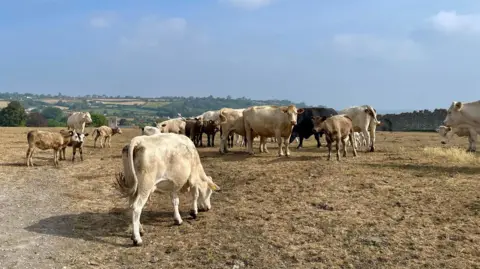
The Environment Agency has announced that the country's top three lowest reservoirs are in Somerset, following the driest spring in more than 50 years and three heatwaves.
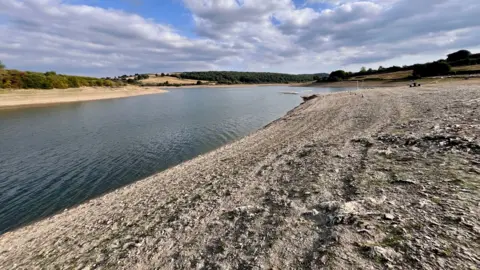
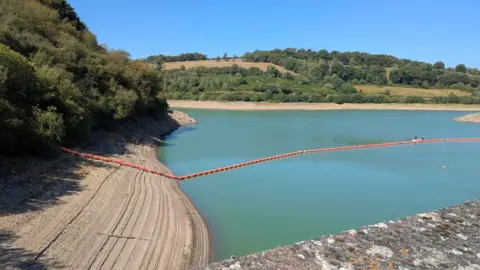
According to the agency, Blagdon and Wimbleball are "exceptionally low" and Clatworthy is "notably low". Forecasters said the "brief splash" of rainfall forecast for this weekend is unlikely to replenish supplies, ease drought conditions or revive parched gardens.
A yellow heat health alert is place across the West until 09:00 BST on Sunday, despite slightly lower temperatures.
BBC Meteorologist John Hammond said long-range forecasts suggest more showers for the end of July into August, but signals are "weak and unreliable".
According to Hammond, some places in the West of England could approach 20 consecutive days of heatwave temperatures.
The temperature threshold for a heatwave differs for each UK county, as it is generally warmer in the south than in the north.
The Met Office said Somerset's threshold is 26C, while Wiltshire and Gloucestershire's temperatures need to surpass 27C for a prolonged period to be classed as a heatwave.
 Getty Images
Hammond said a "consistent spell of cooler, wetter weather" was "really needed".
"Of course, some rain is better than none, for those who are desperate for it.
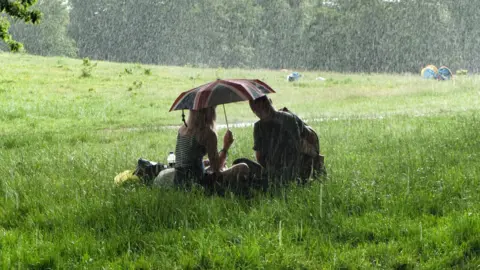
"But for many of us, it will probably be just a brief splash of less than a handful of millimetres. After weeks, even months without a drop, we need more than that," he added.
There are signs of a change in weather as the high pressure - which has suppressed the development of rain clouds for weeks - will briefly weaken.
 Wimbleball Fly Fishery
Earlier this week, the Environment Agency said "prolonged dry weather" had been declared in parts of the country, which is the stage before drought.
The government agency also announced that the national reservoir storage level is seven per cent lower than the long-term average, with the three lowest bodies of water in Somerset.
While overall storage in England is below the long-term average, the level is currently higher than at this point in July 2025 and July 2022.
 Tony Knight
Groundwater levels are seeing a usual seasonal decline, but levels are notably low in the Cotswolds and Wessex Downs, the agency added.
A hosepipe ban came into force for 10.1m Thames Water customers living in parts of Gloucestershire, Wiltshire, Surrey, the Thames Valley and Great London on Thursday.
Under the restrictions, customers are urged to refrain from using hosepipes to water gardens or allotments, clean cars, fill pools or clean windows.
Bristol Water, Severn Trent - which supplies water in Gloucester and Cheltenham - and Wessex Water - which covers Somerset and parts of Wiltshire - have not issued a ban to their customers.
A UK Health Security Agency yellow heat health alert came into force in the West at 09:00.
The warning was issued as the heat is expected to cause minor impacts for health and social care services and there is an increased risk to life for vulnerable people.
It comes as the World of Music, Arts and Dance (WOMAD) Festival is due to take place at Neston Park Estate near Corsham in Wiltshire over the weekend.
Although temperatures are set to be slightly cooler, festival organisers advised attendees to stay hydrated and cover up while in the sun.
'Struggling' nature
Sol Harmsworth, manager of the Heart of BS13 Flower Farm in Hartcliffe, Bristol, said some of his plants had been "choked" by the heat.
"The extreme humidity, the heat and not enough aeration just choked the plants. They weren't sure where they were on the planet," he said.
As a result of the prolonged heat, Harmsworth said he had lost two beds of major cash crops.
He added that he was "adapting" to help nature deal with rising temperatures.
 Weather Watchers/Sunshine Dan
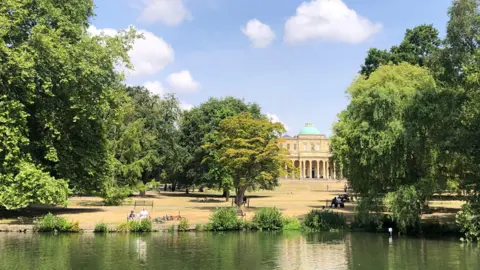
Cheltenham Borough Council encouraged residents to water trees - especially young ones - in parks, on public pathways or in gardens.
Chris Chevasse, senior trees officer at the council, said: "It's been so dry for so long that some trees are really struggling to establish and continue to grow," he said.
"Some of our older trees with reduced vitality will go into decline and possibly die."
He added that the authority was trying to change the species of trees they plant, to grow more with "greater durability to drought".
Keep up to date with the latest forecast on the BBC Weather website or app.
Follow BBC Bristol on Facebook, X and Instagram. Send your story ideas to us on email or via WhatsApp on 0800 313 4630.
