£800m NI peace funding body may be in 'final decade'

 BBC
BBCAn international organisation which has invested almost £800m in the Northern Ireland peace process may be entering its final phase of funding.
The International Fund for Ireland, which dates back to the mid-1980s, has signalled that it may no longer exist in 10 years' time.
The peace-building organisation has tackled divisions between Protestants and Catholics in Northern Ireland and the border counties,
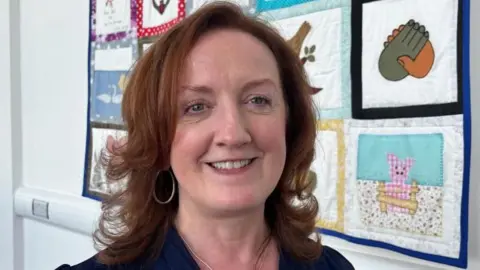
The fund's chairperson Shona McCarthy told BBC News NI: "We are looking at a final decade of the International Fund for Ireland."
It is a significant announcement from an organisation that has helped to fund almost 7,000 projects in the past four decades.
The fund was established as violence raged in Northern Ireland in 1986 during what became known as the Troubles.
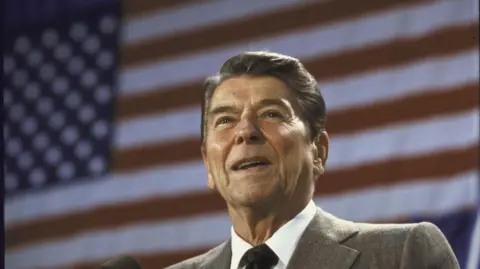
It grew out of the 1985 Anglo-Irish Agreement between the British and Irish governments, and was backed by the then US President Ronald Reagan.
Since then, about £780m has been raised including financial contributions from the UK, Ireland, America, the European Union, Canada, Australia and New Zealand.
 Dirck Halstead/Getty Images
Raising money has been more challenging in recent years.
Although there are still sporadic violent incidents and deep divisions remain in some areas of Northern Ireland, the peace process has taken hold.
McCarthy said a new strategy has been devised for the next decade and there is much-needed work to be done, but she has detected an attitudinal change in some potential donors.
She said: "I've found myself in spaces with these international donors and players and you could see a raised eyebrow of 'we're 40 years on, how many years does this take?'"
Other parts of the world - including the Middle East, Ukraine and Sudan – also need help.
McCarthy said another 10 years of the International Fund for Ireland may be all it has left.
"I think 50 years on, we can't continue to say we're a post-conflict society, we're in an ongoing peace process and expect international donors to back that when there's so much need in the rest of the world," she said.
"We can't look to our international donors and expect them to be on this never-ending journey with us forever. It has to be finite, if we're being honest with ourselves.
"It feels fair that we have another 10 years, and now we just need to concentrate our efforts on using that 10 years really well."
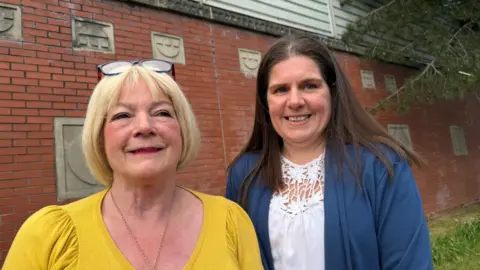
Among the people helped by IFI-backed cross-community work in recent years are Lily Bannon and Michelle Bradley, a Protestant and a Catholic, living on opposite sides of a peace wall in west Belfast.
Through a work programme, Lily and Michelle have become good friends.
"They're inspirational," said McCarthy.
"They're just two ordinary women in Belfast, separated by a huge wall, who have found each other.
"But I also feel sad that still, after 40 years, Michelle and Lily are having to do that circuitous journey around a massive wall in order to get to each other."
There are 39 so-called peace walls remaining in Northern Ireland, mainly in Belfast, according to the latest figures released by the Department of Justice
It illustrates that the IFI, and other peace-building organisations, still have work to do.
