'My mother died without dignity in A&E'

 Victoria Scheer/BBC
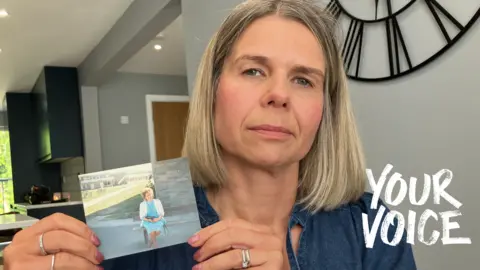
"Mum was denied a respectful way of dying and we have to live with these memories," says Michelle Smith.
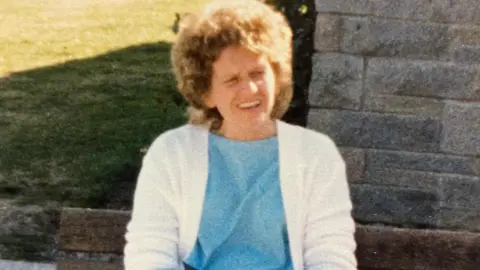
She believes her mother, Joan Howard, should have spent her final hours in comfort, pain-free, in a clean bed and surrounded by her loved ones.
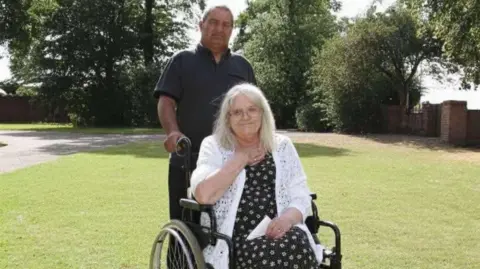
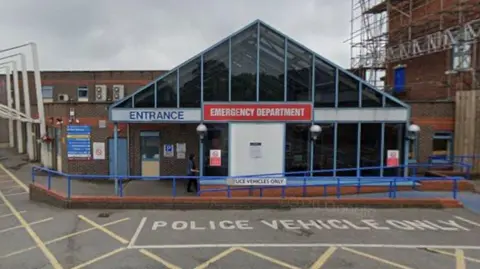
Instead, the blind 74-year-old was trapped in Doncaster Royal Infirmary's accident and emergency department for 27 hours, lying half the time on a trolley and then on soiled sheets in a hot and cramped cubicle.
Joan, from Balby in Doncaster, was admitted on 5 December 2024 after becoming critically unwell following recent treatment for an ulcer and E. coli infection.
Although NHS guidance states patients should be admitted, transferred or discharged within four hours of arrival to A&E, Joan remained in the resuscitation area for the first 14 hours.
When she was finally moved into a cubicle in the main area, Michelle says the space was so small there was no room for a drip stand, forcing nurses to tape her mother's fluids to the wall.
The standard of care continued to decline, says Michelle, with surgical and medical teams confused over who was responsible for Joan's care and the family's requests for help being ignored.
 Family handout
She describes repeated basic care failings, including oxygen not being reconnected after transfer, urine output not being monitored, routine checks not being carried out and poor pain management.
After an enema, a procedure to clear the bowel, she says her mother was left lying on the soiled sheets, forcing Michelle to source incontinence pads to relieve some of her discomfort.
"I could see Mum was deteriorating in front of my eyes and I couldn't help her," recalls Michelle, a former cardiac physiologist.
"No one was listening to me pleading to help my mum."
Michelle says the family's distress deepened when, midway through Joan's stay, they were told that she was not going to die, contradicting earlier medical advice.
Believing she was stable, relatives - including Joan's husband of 50 years - left the hospital.
Joan died a short time later after spending 27 hours in A&E, and with only her daughter present.
 Family handout
Two years on, and the recollection of how her mother was treated still brings up raw emotions for Michelle.
"Nothing I do will bring my mum back and I believe nothing we could have done in those 27 hours would have changed the outcome.
"What could have changed is the way she died, the peace, the humanity, the respect and surrounded by her loved ones - that's what I believe that they took away from us."
Michelle says later visits to A&E with her father showed little had improved, recalling an incident in which he was given a CT scan intended for another patient.
"Do I think anybody wants to do a bad job when they go to work? Absolutely not," says Michelle, 47.
"What I believe is Doncaster doesn't have the communication or the resources to allow these people to do their job, so then they're forced to do a bad job."
Michelle and other patients' relatives got in touch with their concerns via the BBC's Your Voice service.
'We know we can do better'
Michelle's account reflects several of the concerns identified by the Care Quality Commission (CQC) about Doncaster's A&E provision in its latest report published on Friday.
Inspectors found patients were not consistently assessed or monitored and concerns were not always identified or escalated quickly enough, exposing people to "avoidable harm".
Inspectors also identified failings around pain management, delays in treatment and inconsistent oversight of patients waiting for care.
They said while the service aspired to treat people with kindness, empathy and compassion, it was challenged in respecting their privacy and dignity due to pressures on the department.
Doncaster and Bassetlaw Teaching Hospitals NHS Foundation Trust (DBTH), which runs the A&E, acknowledged there was room for improvement.
A trust spokesperson said: "We take any concerns raised seriously and are committed to learning and making changes where needed.
"We are listening, we know we can do better, and we will."
The spokesperson said anyone with concerns should contact the trust directly so that these can be fully investigated where appropriate.
 Google
Robert, a former member of staff, believes the problems at Doncaster Royal Infirmary's A&E are caused by poor leadership, communication failures and a lack of resources.
He says communication breakdowns on occasion have had serious consequences, including an incident where a woman with stroke symptoms allegedly was not triaged appropriately and later died in A&E.
He says stroke pathways and urgent interventions were missed because warning signs were not communicated properly.
Asked if the outcome could have been different, he says: "It's difficult to say but if those interventions had been done, we can say with certainty that the percentage likelihood of her walking out of hospital would have been significantly higher."
He says exhausted and demoralised staff were trying to do their best in increasingly difficult conditions, and describes the hospital environment as unhygienic, with blood left on floors for hours and equipment thick with dust.
He adds: "Doncaster Royal Infirmary has the worst toilet in England."
In December 2025 Robert attended A&E himself suffering from quinsy, a serious throat infection that can block the airway, and found staff lacked basic equipment such as a head torch and drainage tools.
"My missus stood there with her torch on her phone, next to the doctor while I was struggling to breathe, just so he could see what he was doing," he recalls.
 Family handout
Meanwhile, the mother of a 16-year-old who overdosed on paracetamol has described her daughter's A&E treatment in April as "dehumanising".
Jennifer says her autistic daughter was in acute distress when she was assessed in the main reception area with little privacy, before being left lying across chairs near the A&E entrance for several hours while vomiting and becoming increasingly unwell.
Jennifer says she felt staff showed little compassion and failed to check on her daughter while she was attached to a drip in an overflow area shared with adult patients.
"I was shocked how my daughter was treated," she says.
"That wasn't just one rogue staff member. That's a culture that seems to think that that's OK and it's OK to treat children like that."
She also questions why her daughter was not moved to a bed sooner, saying it only happened after she began photographing conditions and loudly referring to NHS guidelines on patient dignity standards.
Jennifer has since submitted a complaint, including a request for CCTV to be reviewed, but says communication from the trust had been poor.
Listen to highlights from South Yorkshire on BBC Sounds, catch up with the latest episode of Look North
