Water voles brought back after more than 25 years

 NT/Katy Anderson
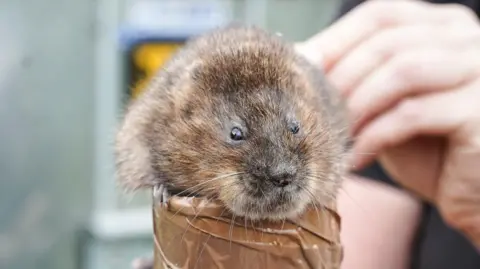
Water voles have been reintroduced to a beauty spot more than 25 years after being declared almost extinct in the area.
Numbers of the animals have declined in recent years due to habitat loss, water pollution and the arrival of the American Mink.
The National Trust North Devon said it was hoping the animals would thrive again after carrying out work across the Combesgate catchment in Woolacombe to restore their habitats and waterways and create the right conditions for their return.
Project officer Paul South said the reintroduction was "an important moment for nature in North Devon" and showed wildlife could recover given the right conditions.
The reintroduction project has involved the creation of 20 ponds and scrapes, removing land drains, planting 26,000 trees and sowing 15 hectares (37 acres) of wildflower seed.
Natural flood management measures and rewetting have also been introduced, with 1,700m (5,577 ft) of watercourse, alongside conservation grazing to support biodiversity.
South said: "We've released about 110 voles. We might top that up depending on how they're doing.
"You'd expect that number to more than double, maybe triple, by the end of the season, and then numbers will drop back down again come the end of the winter.
"If they do really well, they'll expand out, and there's a few neighbouring watercourses that we're keeping an eye on to see if they turn up there as well."
South said the reintroduction was important because the animals "have a right to be there".
He added the reason for their decline is "because of mistakes that we've made in the past".
"They create burrows for other animals to use as dens and create a more complex habitat," he said.
"They're a small mammal, and that just means that they become prey items for a lot of things. So, if you look at things like herons and foxes, they're useful prey items for animals like that - they breed a lot and so they can cope with it."
Water voles were declared "functionally extinct" in North Devon in the year 2000, meaning their numbers were so low they were unlikely to produce a viable new generation.
 NTI Katy Anderson
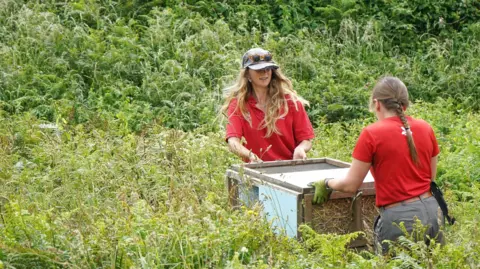
The reintroduction process involves placing them in protective pens on site, where they are monitored. The water voles leave the pens in their own time, helping to reduce stress.
Trail cameras have also been set up to capture the water voles as they begin to explore their new environment.
"What I'm hoping is this is just the start of something a little bit bigger," South said of the project, which has been delivered in partnership with North Devon Coast National Landscape and with funding support from Farming in Protected Landscapes.
"We're relying on a team of volunteers to help monitor the watercourses in the area. So if you live in the area, then it'd be great to get in touch.
"Keep an eye out for burrows, keep an eye out for mink. And you can report both of those things with various mammal societies around the UK. Being observant is the main thing."
Follow BBC Devon on X, Facebook and Instagram. Send your story ideas to spotlight@bbc.co.uk.
