Turkish police beat us with iron rods before we lost limbs to frostbite, Afghans say

 BBC
BBCWarning: This article contains images and descriptions of violence that some readers may find distressing.
A dozen young Afghans who tried to reach Europe in January have told the BBC they were among a group of 50 migrants beaten and stripped by Turkish border guards before being stranded in the snow.
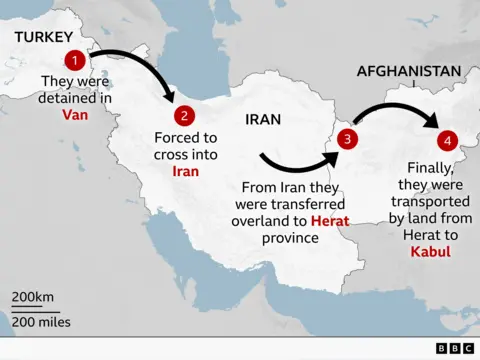
They say they were forced from the eastern Turkish city of Van towards the Iranian border, where temperatures were sub-zero. The group added that at least 20 people froze to death.
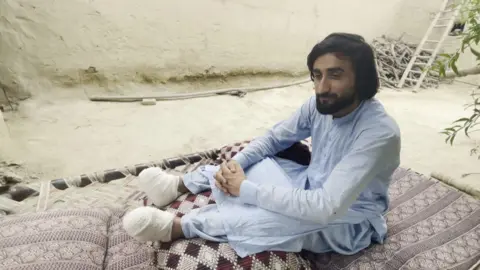
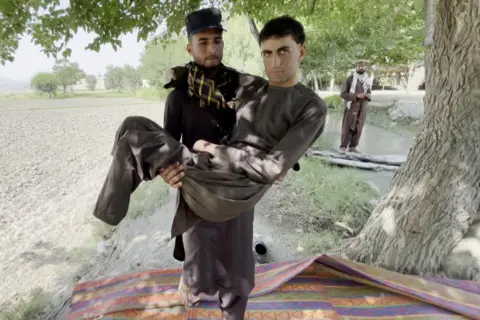
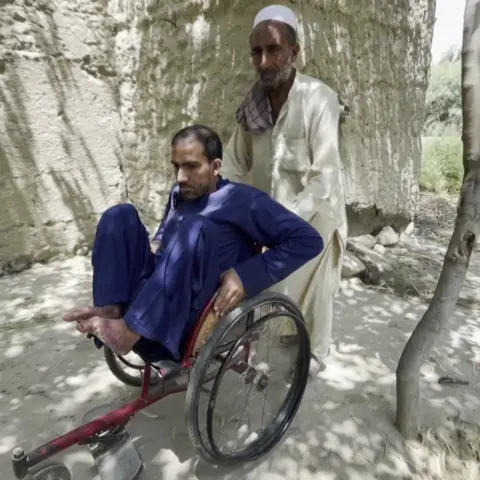
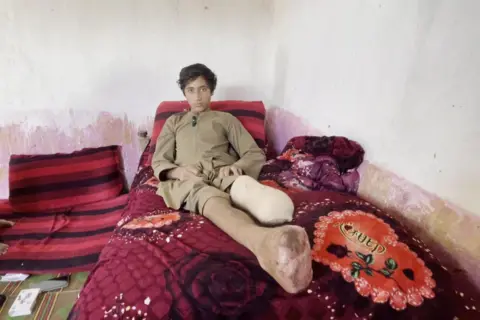
Eleven of the 12 men and boys who spoke to the BBC - including a 13-year-old - eventually lost limbs to frostbite.
The group, all aged 25 or under, was eventually returned to Afghanistan.
One of the migrants, Shahsawar, says he regained consciousness in a Kabul hospital to discover both his hands and legs had been amputated.
"I raised my hands - they felt light. Both had been cut off," he tells the BBC. "My throat closed up and I couldn't speak."
When approached for comment, Turkish authorities did not specifically address the migrants' allegations.
But the foreign ministry said border forces followed national and international laws and provided detained undocumented migrants with all necessary assistance, including food, water and medical care.
 Anadolu via Getty Images
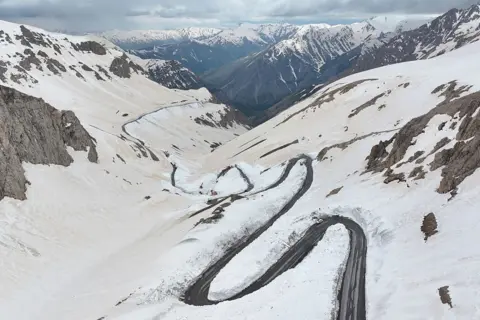
In mid-January, around 50 undocumented Afghan migrants were arrested after people smugglers helped them cross the Iranian border into the city of Van, where temperatures had dropped to -15C.
Shahsawar, 21, says he was detained immediately on entering the city.
Turkish border guards then lined the migrants up and beat them, he says.
"They kept us for several nights in a warehouse, where snow was falling on us. And they gave us only water and dry bread once a day."
"They forced us to do hard labour," adds Alawaldin, 23. "We had to carry wood and clear snow."
Alawaldin was neither able to contact his family nor the trafficker who had promised to take him to Europe.
The migrants who spoke to the BBC describe an exceptionally violent incident on 25 January when they say they were again lined up by border guards, but this time beaten with iron bars.
Stripped of their clothes and with their hands tied, they were forced to crawl on their stomachs toward a hill, Alawaldin says. "Some people's heads were broken and blood was flowing over their shoulders."
Some had been beaten so badly they could no longer use their hands, according to Shahsawar.
With their clothes, shoes and socks removed - left with only a pair of trousers each - the Afghans were released in groups of eight and pushed through barbed wire towards Iran, he says.
It was a stormy night, with heavy snowfall and almost no visibility.
"The paths were covered in snow. And we didn't know which direction to go or whether we would survive."
One member of the group, a boy named Danial, got lost almost immediately. The migrants later learned his body had been found in the snow.
Meanwhile, exhausted and hungry, Shahsawar says he had to take shelter by a large rock. He was soon joined by Asim, 13, and a fellow migrant called Ahmed, whose hands were frozen stiff.
"In the morning, Asim moved on," Shahsawar says. "But we were so frozen that we couldn't even speak.
"Ahmad was lying in my arms. And after a while, I noticed that he had stopped breathing."
A video posted on social media the following month apparently shows Asim being found in the snow by other migrants who had been searching for their companions. The teenager is wet, frostbitten and poorly dressed.
When his rescuers ask if he is alone, Asim, seemingly too cold to speak, points with his hand to the rock where Shahsawar was sheltering. Shahsawar says this simple gesture saved his life.
But that was not the end. The migrants subsequently sought help in Iran but say they were refused hospital treatment.
On 29 January, the Afghan embassy in Tehran said it had taken urgent steps to identify and aid a number of Afghan migrants stranded on the Iran-Turkey border.
Four days later, the boys and men were transferred by the Red Crescent Society overland to Herat Province, Afghanistan, and from there to the capital, Kabul, for further medical treatment.
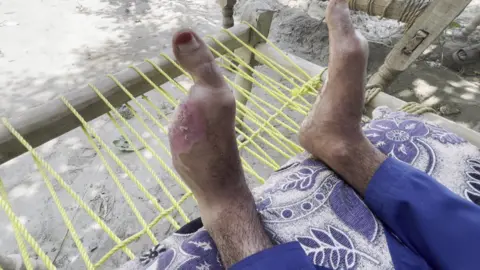
At this point, the frostbite Shahsawar and ten others had suffered was turning parts of their bodies black.
Shahsawar watched his hands and feet darken. His entire body started itching.
When they arrived at the Kabul hospital, his father and brother signed a document, and he was taken into an operating theatre, where both his legs and his hands were amputated.
Frostbite can be successfully treated if medical care is provided quickly - but for these boys and men, it was too late.
Şafak Bozkurt, who chairs the Van Bar Association Human Rights Centre Migration and Asylum Commission, said he was familiar with this type of push-back in the region, and aware of cases of hypothermia.
Afghan migrants have reported multiple similar incidents since 2021, when the Taliban seized power in Kabul, according to Turkey-based activist Zakira Hikmat. She said increased border surveillance in Turkey had forced them onto more dangerous routes.
Mahmout Keçen, another migrant-rights activist based in Van, said the nature of the mountains "most commonly used by Afghans entering Turkey irregularly" meant crossings had to be made in difficult, risky weather conditions.
He has worked on numerous cases involving Afghans and other migrants who alleged "ill-treatment, push-backs, denial of access to asylum procedures, and forced returns" around the Iran-Turkey border region.
The Turkish foreign ministry told the BBC such allegations were unfounded and "unfairly cast a shadow on Turkey's successful efforts in combating irregular migration".
"Due to its geopolitical location on migration routes and hosting a significant migrant and refugee population, Turkey aims to implement a human-centred and sustainable migration-management system that is compatible with civilisational values, that balances security and freedom.
"Thanks to Turkey's effective measures and successful fight against irregular migration, irregular migration flows towards the European Union have been almost completely halted."
The Iranian authorities have also been approached for comment.