How is power generated for Guernsey homes?

 BBC
BBCMost of the power used by Guernsey households is not generated on the island.
Since the turn of the millennium, much of the electricity used locally has come from the European mainland via an underwater interconnector cable called GJ1.
Guernsey Electricity says 90% of the island's power comes from that cable, generated mainly at nuclear power plants.
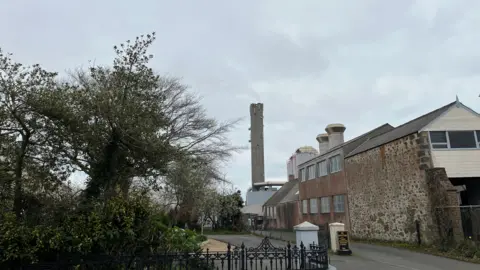
The majority of the rest of the island's power is generated at the power station at The Bridge through the burning of fossil fuels.
Is electricity that comes from the cable cheaper?
Guernsey Electricity's CEO Alan Bates said generation at the power station through oil was more expensive than bringing electricity in via the cable as "we use such low volumes now that we can't hedge against that, so we're completely exposed".
He highlighted the current conflict in the Middle East, which has sent oil prices up, as an issue.
The firm and the States currently have a deal with European energy producers EDF to bring power through the cable via Jersey.
That deal is due to run out soon, and Bates said negotiations on a new deal were almost finished, with the new arrangement set to start in 2028.
"It's a really good contract for us because we've got the capacity to hedge.
"Hedging is really important to take away price volatility and to give price certainty.
"The last time we saw that real price volatility was the [start of the] Ukraine war. As you know most other jurisdictions put their prices up by 100%. We didn't."
Why is a new cable being installed?
At the moment the current cable can only bring in about 60 megawatts (MW), while Guernsey requires between 25MW and 95MW and that demand is expected to increase.
During the last political term Guernsey's States agreed a new electricity strategy, which was centred on the laying of a new interconnector cable.
Plans for that new cable are set to come to the States before the end of September.
Guernsey Electricity is currently looking at where that cable will go, after ruling out a link to the UK - with the choice of going via Jersey or straight to France.
Later this year Guernsey's only cable will be out of action for about a month while repairs are made to the switchgear.
Bates said this highlighted why a new cable was needed, as the island would be solely reliant on the power station for generating power.
He said the firm was likely to borrow money from its owners, the States of Guernsey, to fund a new interconnector cable.
Why have prices increased sharply?
According to BBC analysis last year, a typical low-usage household in Guernsey would spend £637 a year on electricity at the moment.
Depending on the region, in Britain they could expect to save between £7 and £123 a year - between 1% and 19% less than Guernsey.
Guernsey Electricity blamed decades of underinvestment in the island's electricity infrastructure and regulation for prices rising above inflation recently.
Now the company has come up with a 30-year pricing model, after very few tariff increases between 2012 and 2019.
"The good news is over the 30-year model what it basically says is the electricity strategy is actually quite affordable because the average tariff increase over the time comes out less than the RPI assumption," said Bates.
"The problem is the first 10 years don't look so pretty for customers and that's the bit we're working on with government in terms of how can we mitigate that impact on consumers."
What next for energy in Guernsey?
Many of the candidates at the upcoming by-election have stated that Guernsey needs to do more when it comes to renewable energy, with references to a wind farm off the coast of Guernsey and the island investing in tidal energy.
Bates said tidal energy was well suited to Guernsey as it was "predictable".
But he cautioned people against believing it was something that could happen immediately.
"I'd say it's still some way away. Whilst there's a lot of devices in test, that is just that, they are in test," Bates said.
"They can't be used for an island to rely on."
Guernsey Electricity's strategy relies on further interconnection, but the company has said that does not mean people should be put off generating from micro-renewables like solar panels on their homes.
Bates also welcomed the use of new technology like plug-in solar panels, if they were done in a safe way by consumers.
Follow BBC Guernsey on X and Facebook and Instagram. Send your story ideas to channel.islands@bbc.co.uk.
