Swimmers continue to break into 'dangerous' quarry

 @MalvernCops
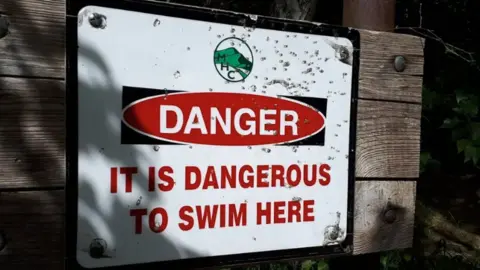
People are continuing to break into a closed quarry in Worcestershire, which a trust has warned is "really, really dangerous".
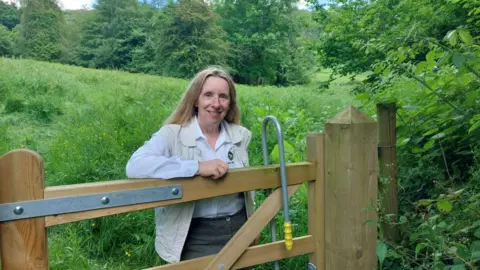
Deborah Fox, chief executive of the Malvern Hills Trust, said "people continually breach the safety fencing" at Gullet Quarry.
It comes after after a series of water-related deaths during the recent UK heatwave, which included a 12-year-old boy.
Fox said: "It's very, very important that when people see or hear warnings not to go swimming in a quarry that they heed them for their own safety."
She added: "Here in Malvern, we have the Gullet Quarry, which was very sadly closed years ago following the deaths of two young men, who drowned in the quarry lake in 2013."
Fox said despite the recent tragedies and the quarry's past, people continued to use the quarry to cool off.
"Over the May bank holiday weekend we did have the people swimming in the quarry," she said.
"They broke into the quarry and were swimming, and this is really, really dangerous.
 Deborah Fox
Fox added: "It's not worth the risk and you could be putting yourself or others in serious danger.
"It's incredibly cold in the water, and cold water shock can seriously affect the muscles and breathing of even strong swimmers, which can lead to drowning."
Cold water shock explained
Ashley Jones, head of water safety and education for the Royal Life Saving Society, urged people to "find a safe place to swim".
He advised choosing an area with lifeguards, and again warned of the dangers of cold water shock.
"A lot of the problems we've seen recently have been cold water shock related," he explained.
"When you get into the cold water too quickly, so whether you run, jump, or dive, you gasp and that sharp intake of breath, if you're under the water, can start the drowning process.
"After that, your heart rate goes up, or breathing rate goes up, and your blood pressure goes up, causing you to panic."
Jones added: "Crucially, enter the water slowly and keep your feet on the ground until you have control over your breathing."
Follow BBC Hereford & Worcester on BBC Sounds, Facebook, X and Instagram.
