Veterans mark 15 years since end of Iraq war

 BBC
BBCSoldiers who served in Iraq have been reflecting on the conflict - 15 years on from the end of the war.
On Friday, the Royal British Legion will mark the anniversary of the end of combat operations with a commemoration at the National Memorial Arboretum in Staffordshire.
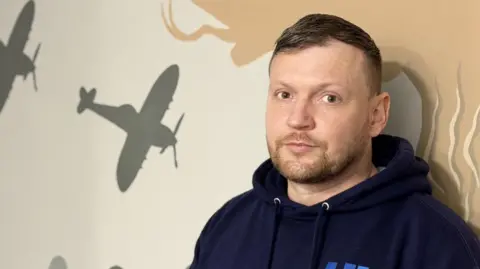
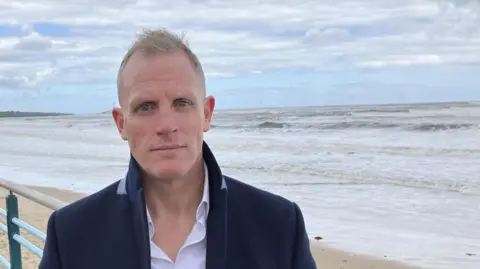
Soldiers from across north-east England will attend the service, including Dominic Conway, a Royal Marine from North Tyneside, and Rikki Drury, a veteran from Redcar.
Drury was 18 when he was sent to Iraq and said being plunged into an insurgency, rather than a conventional war, came as a shock.
"We didn't have the armoured vehicles, we were driving around with no armour," he said.
"When you're fighting an insurgency, anyone is your enemy.
"The hardest war to fight is one where someone is not in a uniform. We weren't expecting that kind of warfare."
The United States had claimed Iraq had weapons of mass destruction - though none were ever found - before the invasion led to the toppling of Saddam Hussein's regime.
Drury, who suffers from post-traumatic stress disorder, now helps other veterans through the group Healthier Heroes in East Cleveland.
"It's heartbreaking to think I'm suffering with my mental health for the rest of my life for a war that achieved nothing in my eyes," he said.
"Others have lost their lives for weapons of mass destruction that were never found."
Conway, from Whitley Bay, was one on the first troops to enter Iraq and said at the start of the conflict allied forces did not meet stiff opposition.
"Resistance was there but it wasn't particularly heavy," he said.
"It seemed the job was done, the insurgency that followed and all the years it carried on for, I don't think that was really anticipated.
"We were there to do the initial assault and, as Marines, that's our job. We come across the horizon, we do the job and hand over to the big army."
Conway has a nuanced view of the decision to go to war.
"Do I think the sacrifice was worth it? Yes, I probably do in terms of we were there to protect people who couldn't protect themselves," he said.
"Saddam did some really nasty things to the Kurds and his own people and so in that respect we did go for the right reasons.
"Politically, it wasn't particularly for the reasons we were told at the time."
