Glassmaker questions future of UK manufacturing

 BBC
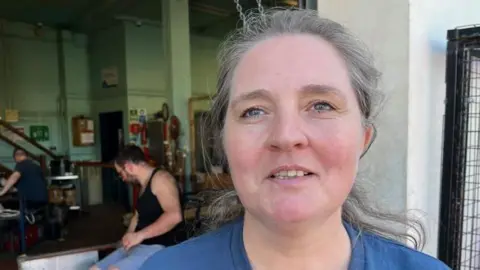
BBCA long‑established Bristol glassmaker has questioned whether manufacturing in the UK is still viable, blaming rising energy costs and taxes for pressure on the industry.
Bristol Blue Glass, which has produced its specialist glassware for nearly four decades, has spoken publicly for the first time since confirming it will close in May.
Its managing director, Suzanne Adlington, said rises in National Insurance and fuel prices had made it harder for energy‑intensive firms to operate.
The government said Budget decisions were intended to support households and businesses, but Adlington said the measures offered little reassurance, asking: "Why would anybody do business in the UK at the moment?"
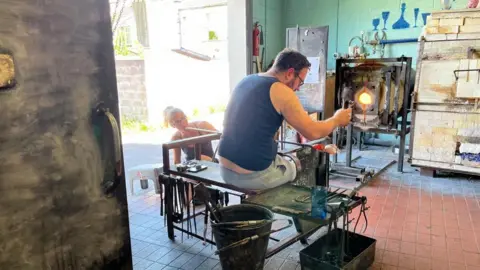
There was visible frustration when Adlington spoke about the challenges facing the business, which revived a Bristol tradition dating back to the 18th century, when the city was a global centre of glass and bottle manufacturing.
Founded in 1988, Bristol Blue Glass went on to gain national recognition, with its work appearing in popular culture, including an ornate pillar of glass running through the centre of Matt Smith's Dr Who Tardis and the goblets in the first installment of the Harry Potter films all made by the company.
Concerns about the company's future first emerged in November, when its lease was due to expire.
Following public support and backing from Bristol City Council, the lease was extended until the end of May and a new site at the city's Harbourside was identified.
'All bets were off'
However, Adlington said a series of price shocks over recent years had intensified, with global events pushing fuel prices sharply higher.
"In the stint of a few months the Iran war happened and then just all bets were off really.
She said increases to the price of fuel "by virtually double" had "crucified" the market "more or less completely".
"We can't go forward raising money in the hope that everything's going to miraculously improve overnight."
She added that VAT on businesses like hers "cripples creativity".
"Why would anybody do business in the UK at the moment? Why would anybody go into manufacturing here?"
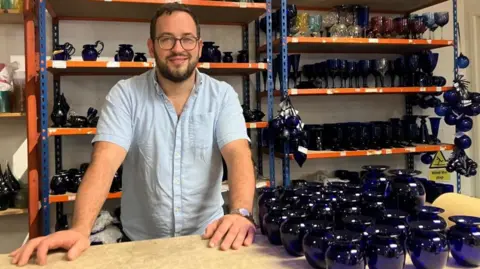
David Barry, the hot shop manager, has been working at Bristol Blue Glass for the last 17 years, his entire adult life.
He told the BBC that he "fell into it by accident" after being made redundant from a job selling fishing tackle.
He said he was "absolutely gutted" to be losing this job, especially after investing so much in it.
"I've trained my entire adult life to be a glass blower and it's been one of the few things I've been good at and I've gone all over the world training, so it's a real shame to lose it."
Barry is hopeful that he can continue to use his skills in some capacity, like teaching in workshops, but is doubtful that he'll ever have another full-time job making glass, due to the withering nature of the industry in the UK.
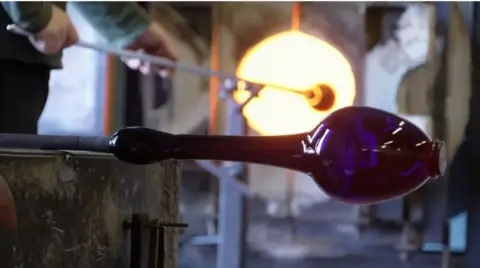
Just 18 miles away, another heritage firm, Bath Aqua Glass, has taken steps to cut costs in an effort to survive.
The company moved its factory out of Bath city centre to Corsham after its 18-year lease came to an end, reduced their visitor experiences from five a week to just two and cut its workforce by more than half.
Its managing director, Themis Mikellides, stressed cost of fuel was always a major pressure, explaining the furnace alone costs £4 per minute to run when they are shaping glass.
He rejected the idea the business should be seen as a luxury, describing it as a "national treasure" rooted in centuries of regional history that dates back to the Roman times.
"This is an opportunity right now for central government to look at things and think 'We can do something to protect this industry, and we can do something to support and nurture...reduce tax altogether, or we can just reduce it massively'."
He added that lowering VAT would benefit both businesses and the government.
"It's better to get 5% of something than 20% of nothing."
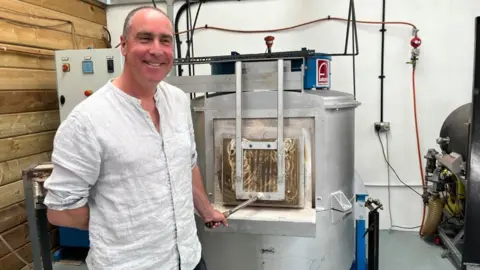
Back in Bristol, Liberal Democrat councillor Andrew Varney said the pressures facing Bristol Blue Glass reflected wider concerns for small and medium‑sized businesses.
He was among those who threw his support behind Bristol Blue Glass in November, when their plight was first brought to light.
He said economic instability, rising energy prices and supply chain disruption caused by war were creating a difficult environment.
Describing the closure as "cruel", Varney said the products the company sells are a luxury item that falls off consumers' agendas once cost pressures strike, and people stick to the essentials.
"I think this business is quite unique because it does have a lot of costs associated with their business - the raw materials they have to get and also the fuel costs.
"But there must be other businesses that are struggling.
"I am fearful that this is just the first of many... unless the government step up and do a bit more to support our smaller medium-sized businesses."
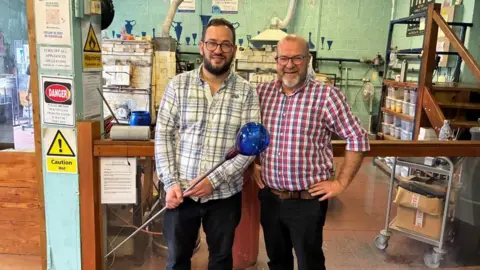
The government said measures announced in the Budget were designed to support households and businesses.
A spokesperson said: "The decisions we made mean we can stabilise the economy and deliver support for families and businesses.
"We are backing business through our Small Business Plan, including a £4bn access to finance boost for SMEs.
"The Energy Profits Levy is a 38% windfall tax on extraordinary profits when oil and gas prices are unusually high.
"Those profits help support households, businesses and fund public services.
"The levy has already raised around £12 billion."
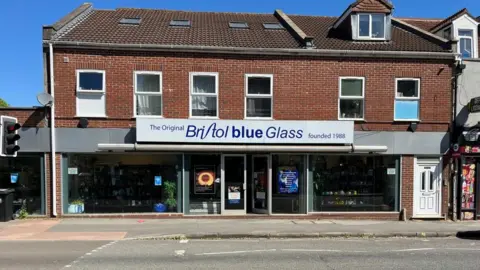
But Adlington said the response offered little reassurance.
"That's like me saying to you, 'I'm going to get a sledgehammer, I'm going to smash your kneecaps, then I'm going to do your ankles and then I'm going to give you the website address for a portal to log onto that you might actually be able to, after several hours of sweating online, be able to get a wheelchair and maybe some antidepressants to stop the emotional pain and stress that you have to deal with.
"We have the highest tax and the highest rates of fuel charges in the world. Not just in Europe, in the world. Why?"
Glassblowing will cease at Bristol Blue Glass on Friday, while the shop itself is expected to close by the end of May.
Follow BBC Bristol on Facebook, X and Instagram. Send your story ideas to us on email or via WhatsApp on 0800 313 4630.
