Cost of living measures 'missed opportunity', says Welsh first minister

 Getty Images
The chancellor's measures to tackle the cost of living, including summer tax cuts at theme parks, are a "missed opportunity", Wales' first minister says.
Rhun ap Iorwerth said "deeper" action was needed to tackle energy prices.
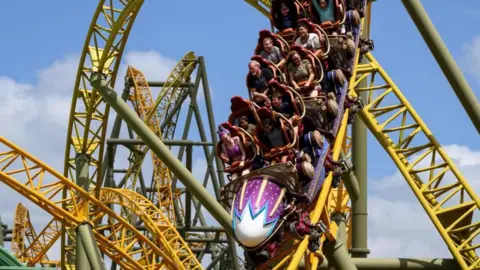
Rachel Reeves announced a cut in VAT at some attractions, also including zoos and museums, over the summer, and a free bus scheme for under-16s in England in August.
Ap Iorwerth, Plaid Cymru's leader, said there were positives to the plans but he also called for control of welfare to be devolved to the Welsh government.
The Labour UK government's Welsh Secretary, Jo Stevens, said the measures were "targeted" at families and businesses.
Reeves has announced a temporary reduction in VAT at attractions, from 20% to 5%, from when schools break up in Scotland at the end of June until children return to classrooms in England, Wales and Northern Ireland on 1 September.
The discount, which will be up to businesses to pass on to customers, will also apply to children's entry to cinemas, soft play and theatres, as well as children's meals in restaurants and cafes.
There will also be cuts to import taxes on some basic foods under a "Great British Summer Savings" campaign.
The chancellor is also extending a 5p cut on fuel duty to the end of the year, instead of phased it out in September.
The reduced tax rate for petrol and diesel was introduced by the previous Conservative government after Russia's full-scale invasion of Ukraine pushed prices up in 2022.
Stevens told BBC Radio Wales Drive this would help anyone driving as part of their work and the VAT reduction from 20% to 5% for visitor attractions would help Welsh families in the summer holidays.
In England this summer, children will get free bus travel although Wales already has a £1 cap on bus fares for the under-21s.
Stevens said the Welsh government would get equivalent funding of £7m for England's bus scheme and she said she hoped the "Plaid minority government" would spend the cash on targeted cost of living support.
Plaid Cymru won 43 of the 96 seats in the Welsh Parliament earlier this month, forming its first government and ousting Labour from power after 27 years.
Labour held 30 of the 60 seats before the poll, in a smaller chamber in Cardiff Bay, and never won a majority during six terms of government.
Speaking to BBC Wales, ap Iorwerth said the chancellor's package of measures were a "missed opportunity, because when we see the impact of high energy prices on hard-up families and on businesses too, and the steps that can be taken and should be taken by UK government on energy prices and off-grid energy prices, that's the further action that we think we need to see from UK government".
He said he would continue to "press" the UK government to help families.
Asked whether the Welsh government would bring in short term measures of its own, ap Iorwerth said he recognised that the cost of living was "number one in the list of things that worry" families, adding that the Welsh government would do "everything we can using the tools at our disposal."
But he did not commit to any new initiatives.
He called for the devolution of welfare from Westminster to Wales, saying it would help Welsh ministers target help.
The first minister said his government had committed to keeping the £1 cap on single ticket bus travel for 5 to 21-year-olds.
Stevens was asked to respond to criticism from former Labour first minister Mark Drakeford that Sir Keir Starmer had offered "so little" to Wales in terms of new powers since he became prime minister in 2024.
Stevens said that the UK Labour government had delivered all the devolution pledges announced in its 2024 election manifesto.
Asked about her criticism of some of the policies of the out-going Labour-led Welsh government, including spending money on planting trees in Uganda, Stevens said she had campaigned for Labour in virtually all Welsh constituencies in the Senedd election.
"What I was told on the doorsteps, right across Wales, was that when people felt that their public services weren't working as well as they should do, that's when they became cross about money being spent at the same time on those policies," she said.
