Why did a police force end up with a spare £4.2m?

 Suffolk Police
Most public bodies have reported feeling the budget squeeze in recent years - but that was not the case for one police force.
Suffolk Constabulary forecast a £4.2m underspend in the last financial year, meaning it will have more money than expected.
Could it result in cheaper council tax bills for Suffolk residents? And how did the underspend happen?
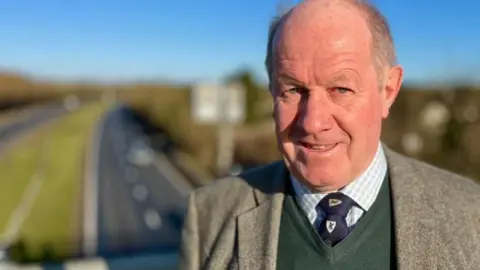
Suffolk Police and Crime Commissioner (PCC) Tim Passmore puts the issue down to a number of factors.
Among them are the force bringing in more money than expected and building projects that were due to happen in this financial year being delayed.
"We are in a good position financially and we start the current financial year in a relatively sound position," he said.
Where does the police get its money and where does it go?
 Ben Parker/BBC
In the last financial year, the constabulary had an overall budget of £182.7m - that includes expected costs and income.
For 2025-26, the government gave the force £104.5m, with £79.8m coming from the police precept, which comes out of council tax payments.
That figure is set to rise by £8.6m in 2026/2027.
Suffolk will receive the ninth smallest government grant of the 43 police forces in England and Wales.
When looking at the forecasted budget, the force expected to spend £190.7m, with a forecast income of £12.2m, leaving an underspend of £4.2m.
The force's largest expenditure is on:
- Staff pay 80%
- Supplies and services 8%
- Building costs 5%
- Transport 1%
How did the underspend happen?
 Martin Giles/BBC
Some police forces are overseen by PCCs, elected political roles that are there to make sure the organisations are run efficiently and effectively.
Conservative PCC Passmore has been in the job since it was first introduced in 2012.
He told the BBC that much of the budget underspend came from "extra income" earned by the force.
The £12.2m forecast income is up from the £10.4m budgeted for.
Passmore also said capital expenditure was "slower than you'd like last year".
This involved the £2.2m purchase of Landmark House in Ipswich, which he said the force "had hoped to conclude in the last financial year - it wasn't."
The underspend also includes £900,000 of "reduced officer costs", which is essentially fewer police officer hours spent at work.
When Passmore was asked about that figure, he said the force wasn't struggling to recruit officers.
"We are keeping the numbers well above 1425," he said. This is the agreed baseline of officers covering Suffolk.
However, he added: "What we also need to do then this year is make sure that officers are spending their time on frontline duties and not doing jobs that civilians could do."
The force had been asked to make savings of £3.5m for 25/26, which it said it was on target to do.
There were also forecasted overspends in catering, grounds maintenance, travel and insurance costs.
How does the force make money?
 Getty Images
On top of the money from the government and council tax, Suffolk Police has other sources of income.
The force has investments, totalling £41m in banks and investment organisations. These work as reserve savings.
Passmore said: "When you have reserves, you get interest rates on them and that was higher than expected, getting on for a million pounds."
Some money from the underspend is expected to be moved into the reserve savings.
The constabulary also makes money from some services it carries out, such as firearm licencing, the fees for which have risen to around £200.
Passmore said the firearm licencing service was "not good enough at the moment".
"That's got to be a top-notch service and I guarantee that is being sorted out," he said.
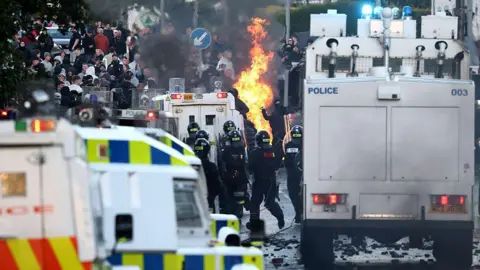
Other income streams for the force are when it helps out another police force - for example during a serious incident or a planned large event.
Passmore said that could be hard to budget for as it could be unexpected.
"Recently, the trouble there was over in Belfast, you get reimbursed by the constabulary that requests assistance," he said.
When asked whether speed cameras were used to make money for the force, Passmore said: "I can absolutely guarantee that that is not the idea."
He explained that fines for speeding went directly to the government with less than 10% of charges for speed awareness courses going to the constabulary, which was "ringfenced for improving road safety."
Is it common for a force to underspend?
In short, no.
Senior leaders of forces across the country, including in Suffolk, have campaigned for more funding from the government and the part of the council tax that the PCCs and mayors control has frequently risen.
Passmore put up Suffolk's by 5% this year.
North Yorkshire Police was looking at cutting officer numbers to help balance its budget.
A PCC in Leicestershire and Rutland was made to U-turn on a lower than maximum council tax increase after concerns were raised that the police force there wouldn't have enough money to function.
Financial errors meant South Yorkshire police was facing a £65m hole in its budget and had to use reserves to pay for day-to-day policing.
So Suffolk actually having a budget surplus is pretty unusual.
Passmore told the BBC he wouldn't be able to commit to a lower council tax increase next year or a freeze but said: "I can guarantee we will fully take that [the underspend] into account when we set the council tax."
What are crime rates like in Suffolk?
Suffolk is the second safest county in England and Wales after its force recorded some of the lowest levels of crime, according to figures from the Office for National Statistics (ONS).
In the county, 43,000 crimes were recorded in 2025 compared with 45,000 in 2024.
However, the number of shoplifting offences rose by 10% and knife crime increased by 16% over the same period.
Suffolk has a population of about 786,000, which equates to 55.4 crimes recorded per 1,000 people - only North Yorkshire has a lower rate.
Do you have a story suggestion for Suffolk? Contact us below.
Follow Suffolk news on BBC Sounds, Facebook, Instagram and X.
