Waiting lists down but 'still long way to go'

 Jamie Niblock/BBC
A hospital boss said falling waiting times for operations and other medical procedures was "fantastic progress", but more needed to be done.
At West Suffolk Hospital in Bury St Edmunds, Suffolk, 29,000 patients are currently waiting for a planned procedure - a reduction of 6,000 from the previous year.
About 66% of patients have been receiving treatment within the 18-week target. The national average is 65.3%, and the Labour government has a target of 92% by the end of the Parliament in 2029.
Nicola Cottington, chief operating officer, said despite "considerable progress" that has been made, "66% is not where we want to be, there's still a long way to go".
The overall size of the waiting list across the country has improved, falling from 7.2m to 7.1m in the space of a month - the lowest for three-and-a-half years.
Cottington said the fall in waiting lists at West Suffolk Hospital had been due to a combination of things, including more efficient use of operating theatres, using digital patient records and improving the speed that patients have tests carried out.
She said more improvements were needed, adding: "A few years ago a performance of 66% would not have been acceptable at all and it's still not acceptable.
"We have to invest wisely, that's in equipment, technology like the surgical robot we've recently purchased and in our staff. We've had people coming in at weekends working to help with the waiting lists."
 Jamie Niblock/BBC
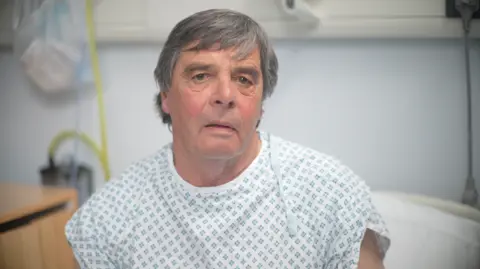
When the BBC visited the hospital, Trevor Wilson was waiting to have his gall bladder removed.
He said he had been waiting almost a year for the procedure and felt like his life was "on hold".
"You just can't plan anything... because if you do, up will come the date and you'll have to cancel it," Wilson said.
He added it would be "great relief" when the procedure was completed as it had been "exceedingly painful", and he was looking forward to booking a holiday in the future.
 Jamie Niblock/BBC
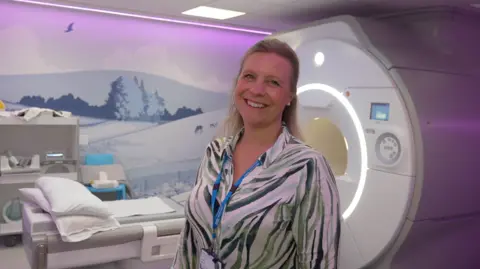
Claire Moore is in charge of the MRI unit and said they were "lucky to have state-of-the-art equipment", which included AI technology.
She said it allowed them to scan "many more patients per hour".
She added that receiving test and scan results quicker meant patients got "better treatment and diagnosis".
Equipment like a new CT scanner had allowed diseases like lung cancer to be picked up earlier.
She said patients with chest pain would in the past have waits of more than six months, but using new equipment that has come down to six weeks.
 Jamie Niblock/BBC
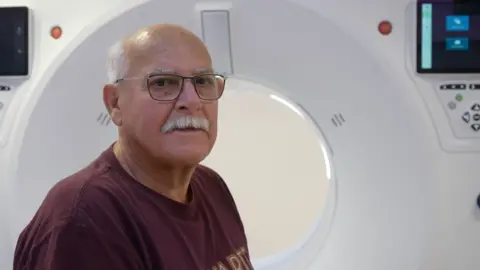
David Catchpole said he had spent "a bit of time in hospital" after a "long history of sarcoidosis".
He said he had undergone numerous tests and had not "waited long at all" for results, which was "important for peace of mind".
Do you have a story suggestion for Suffolk? Contact us below.
Follow Suffolk news on BBC Sounds, Facebook, Instagram and X.
