Air quality testing to protect heathlands

 Dorset Council
Air quality testing at rare and protected habitats has helped pinpoint local pollution hotspots and and will ensure interventions are made, local authorities have said.
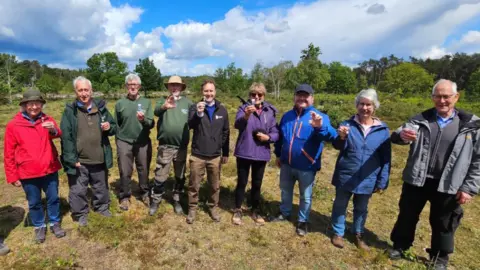
Between August 2025 and January 2026, 15 trained volunteers collected monthly air samples at 14 heathland sites in Dorset, focusing on areas close to busy roads where emissions are most likely to affect wildlife.
The findings revealed that ammonia levels exceeded thresholds known to harm lichens and mosses at every site monitored.
Dorset Council and Bournemouth, Christchurch and Poole (BCP) Council says the data is "vital for ensuring we are taking practical steps to restore our heathland".
Dorset's lowland heath is one of the UK's most threatened landscapes, home to a mix of rare plants, reptiles, insects, birds and mammals.
The fragile ecosystems are particularly vulnerable to air pollution, which can damage sensitive species and alter natural plant communities, says Dorset Council.
The findings revealed that heaths near the A338, A35 and Alderney/Wallisdown roads experienced the highest levels of traffic pollution.
All the data collected will also be used to risk assess the impact of traffic generated by new developments, informing the councils where schemes to minimise air pollution could be implemented.
Mitigation projects have already started, with Avon Heath, Upton Heath and Matchams View, the first to be delivered.
Projects will be delivered annually, focussing on the high and medium priority heaths to start with.
Nick Ireland, Dorset Council Leader and Cabinet Member for Climate, said: "This insight allows us to take practical, targeted action to protect these special landscapes for wildlife and future generations.
"It's vital we reduce harmful pollutants in some of our most important heathland areas. By working together, we can tackle the climate and nature emergency while fulfilling our Biodiversity Duty, which we take very seriously."
