Jamaicans on 'resilience' of country as it marks first Independence Day since Hurricane Melissa

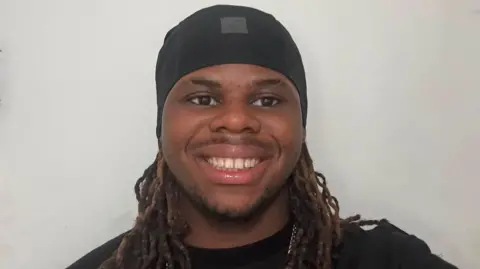 Tamani Clayton
"Jamaica is a country that has a very strong sense of community," says British Jamaican Tamani Clayton.
"The community you live in is really just like a massive family."
It is this ethos which has helped the island in the months since it was pummelled by the strongest storm to hit the Caribbean nation in modern history.
Hurricane Melissa left dozens of people dead, tore roofs off hospitals, destroyed homes and left big parts of Jamaica without power.
The country is marking its first Independence Day since the tropical cyclone hit, a day which BBC Radio 1Xtra presenter Seani B says is a chance for it to celebrate the culture, music and contributions Jamaica has made to the world.
He tells BBC Newsbeat that how people across the world have banded together to support Jamaica during these challenging past months is also something to celebrate this time round.
"Hurricane Melissa really brought that sense of community back to Jamaica, where communities were helping communities," he says.
"Places like London, Birmingham, Bristol, Manchester, Toronto, New York, Miami, Africa, Europe - all of these people that benefit from Jamaica.
"From the music of Jamaica, from the food, the sports - we all gang together to be able to help Jamaica."
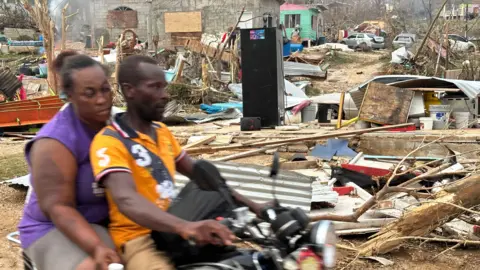 Brandon Drenon / BBC News
Clayton, who lives in London but has family in Jamaica, says he will always be there to support them.
"In terms of being a part of diaspora and helping back home, for me personally, it comes in the sense of, if family out there need anything, you try and help, you try and send food over," the 19-year-old says.
"If they need money for certain things, you try and send money over."
Supporting family is not a new concept to those part of the Jamaican diaspora, though.
He says even before the hurricane, they would fill barrels with food, goods and clothes to send across.
"It was something we were doing before the hurricane, after the hurricane and we're going to continue to do for years to come, it's just a tradition," he explains.
And one which fellow British Jamaican Shaniyaa Holness-Mckenzie can relate to.
"You appreciate that maybe there's things that are here that you can't get over there and there's opportunities that are here that you might not be able to get over there," she says.
Holness-Mckenzie, 29, says she now regularly donates to a charity that helps people in Jamaica in temporary accommodation following the hurricane.
"As someone in the diaspora, I think the best thing that I can do is making sure that people are still aware that the problem isn't over," she says.
"It isn't completely fixed. There are people who still need support."
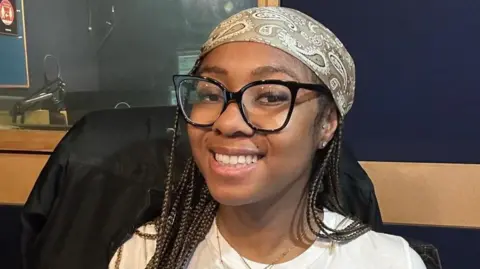 Handout
In the months since Hurricane Melissa, 1Xtra presenter Seani B visited Jamaica including Montego Bay, a tourist area hit particularly hard by the storm, to see the rebuilding efforts.
"[Montego Bay] is a massive tourist area with hotels, with nightclubs, with the beaches, with all of that Jamaican culture there," Seani B says.
"And it got hit very, very hard."
He says that returning to some of these areas "broke my heart" as he could still see some of the destruction nearly nine months on.
But the "resilience" of the people was what shined through to him, and it is what inspired the name of their dedicated 1Xtra programme on Thursday.
"You go to a place like there and you see Jamaican people with that smile on their face, but you still see the hardship that they are suffering after Hurricane Melissa," he says.
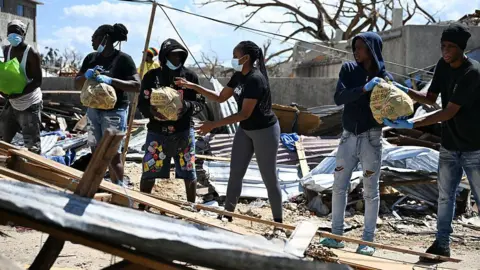 Getty Images
With employment being heavily reliant on tourism and footfall, Seani B says local people are struggling to get work.
"It's so hard for people because there is no system that's in place like in England where you may be able to get some financial help or support," he says.
"So you just have to be so inventive to make it happen for yourself."
And while Independence Day is a celebration, Holness-Mckenzie says there are still further improvements that need to be made.
"I think Jamaicans as a people, they're just so full of life. They're so strong," she says.
"And I know that as much as we're enjoying here, I know people are enjoying there.
"And you don't have to choose one or the other, we can celebrate and we can recognise that there's still things that need fixing."
Additional reporting by Lizzy Bella.
- You can listen to Resilient - A Jamaican Independence Special on BBC Sounds from 21:00 BST.

